

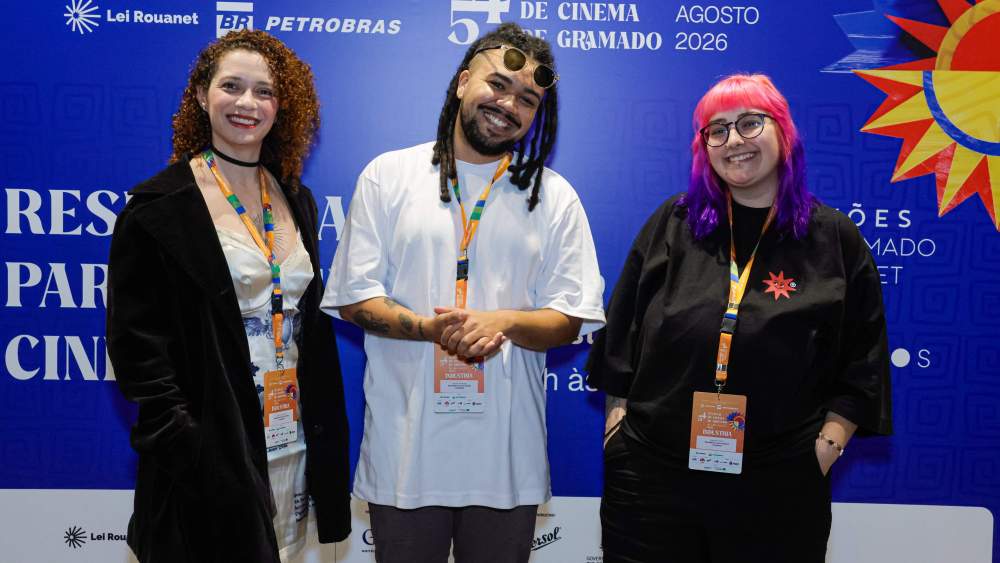
GRAMADO, Brazil — As the first edition of the Residency for Young Filmmakers wrapped on Aug. 19, the Gramado Film Festival has decided to continue the program with a second edition set to take place at its 2027 edition and that the Residency would become a permanent initiative at Gramado, Rosa Helena Volk, president of fest organizer Gramadotur, told Variety.
Volk said they will evaluate the first edition of the Residency and decide whether to keep the current format or make specific changes. The inaugural edition gathered 60 filmmakers aged between 18 and 35, who attended 17 masterclasses and talks during three days.
“The first Residency program was a major success. It is a way of training the filmmakers who, 10 years from now, will have films screening in Gramado, I’m confident,” Volk told Variety. “We will review the program and discuss how we can improve it. We will assess whether 60 participants is the ideal number, whether we should keep just one group or create two, and whether the age range we established was appropriate,” she added.
The filmmakers attended 27 hours of masterclasses and talks with leading execs and talent of Brazil’s film industry, such as distribution and production company Paris’ Márcio Fraccaroli and Verônica Stumpf, production company Panorâmica’s Mara Lobão, actor and director Silvio Guindane, RioFilme’s Leonardo Edde, Amazon MGM Studios Brazil’s Julia Priolli, lawyer Thaís Colli, Globo’s Flávia Pereira Costa and filmmakers Allan Deberton, Luiz Alberto Cassol and Renato Falcão.
Ralfe Cardoso, general coordinator of the Gramado Film Market, stressed the potential of the young filmmakers and their different backgrounds. They are from nine states in Brazil.
Marlon Andrade, a resident of Embu das Artes, a blue-collar town in the São Paulo metro area, has directed five short films and worked in various roles on three others. He worked as production manager on the feature film “Amor Doce Confusão,” helmed by Toti Loureiro, which is due to premiere at this year’s edition of the Rio de Janeiro Film Festival, and served as a camera assistant on Hélio Goldsztejn’s feature-length documentary “Amelia Toledo – Lembrar de Não Esquecer” that opens on Aug. 20.
“My dream is to have a film screened at the Gramado Film Festival, but being selected for the Residency is already a major achievement. Here, we are networking with people from different parts of the country who work in many different areas. Cinema is a collective art form, and the Residency allowed us to meet people with different life experiences, while also learning from established industry professionals through the masterclasses,” Andrade told Variety.
Vitória Mantovani is a director, producer, event organizer and screenwriter from the city of São Paulo. She is the general director of AI Film Awards Brasil, a Brazilian version of an international festival dedicated to audiovisual productions developed with artificial intelligence, which will take place in São Paulo over Sept. 24-26. The event is part of an international platform organized by KM Universe that has already held initiatives in major creative-industry hubs, including Cannes, Venice, Dubai, Marrakech, Paris and Bali.
Carol Guimarães, CEO of WeDo! Entretenimento and founder of e-Teatro WeDo!, Didi Paulini, co-founder of the e-Teatro WeDo!, and producer Sérgio Sá Leitão, director of Instituto ArteCidadania, senior consultant at FGV Projetos and head of LIDE Cultura, are the exec producers of AI Film Awards Brasil.
“Our event aims to broaden the debate over the impact of artificial intelligence on the transformation of the audiovisual industry and to promote the convergence of technology, cinema, advertising and innovation,” Mantovani said.
Gabrielly Pires is from Estância Velha, in Rio Grande do Sul state, where Gramado is located. She has produced three professional short films, besides 10 short films, music videos and documentaries in college. One of them, music video “Morphe,” screened at the Gramado Film Market’s University Film Showcase at Gramado Fest 2024.
“The Residency was useful in helping me reassess the direction of my career. I really enjoy production. Through the Residency, I became interested in distribution and in working in an area focused on helping filmmakers bring their films to audiences,” Pires said.

Leave a Reply