

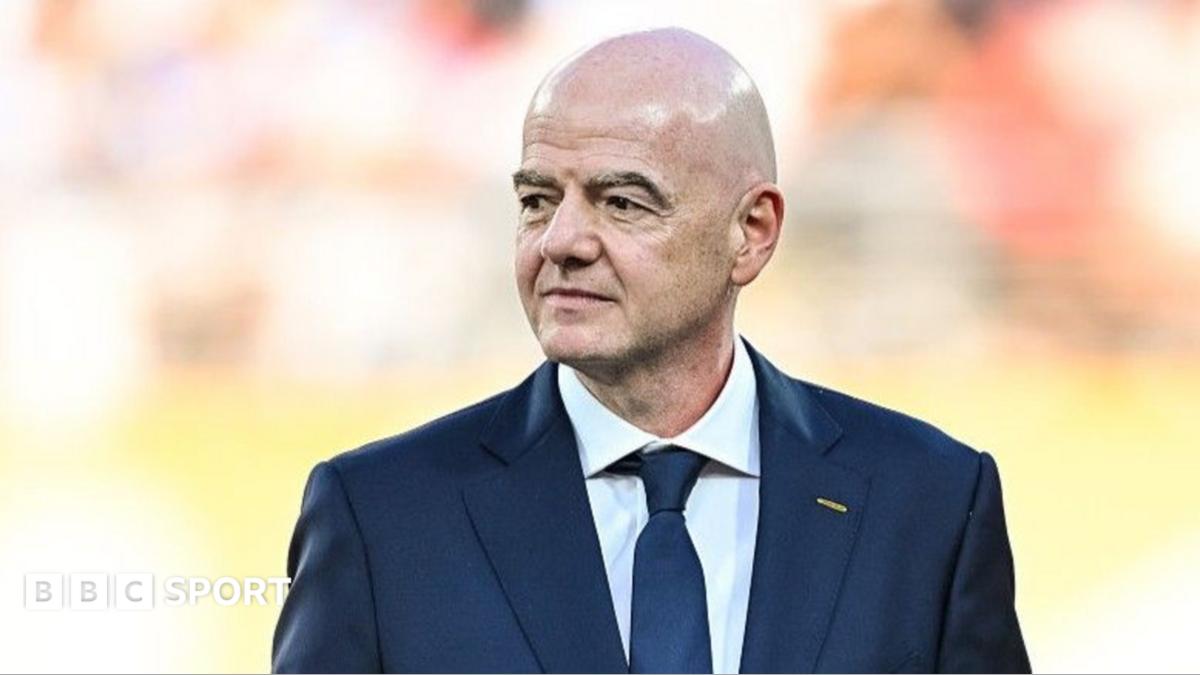
The question many have asked around Infantino’s plan is tied into a separate – but critical – aspect of the fundamental reasons behind this week unravelling.
Fifa is a not-for-profit organisation. It has huge financial reserves – over $2bn (£1.48bn) – and is expected to announce record revenues of about $15bn (£11.13bn) in relation to this summer’s World Cup.
Given that backdrop – and the reality some countries simply did not need the extra $40m (£29.67m) being offered for football development initiatives if they signed up to Infantino’s plan by 19 September – many wondered why private investment was needed in the first place.
It was a question that needed to be asked. But that did not happen in public – or, it has become apparent, privately in Fifa’s corridors of power.
Many of Fifa’s most senior people – from vice-presidents to special advisers and executives – did not have a chance to ask any questions, simply because they had no clue the plans were being drawn up.
Uefa had strongly opposed the plans from the moment they became public. When they were dropped, its response was damning.
“The current Fifa leadership has not only lost Uefa’s confidence but also that of many other members of the football family,” it said in a statement.
“When Gianni Infantino asked for the trust and the votes of Fifa’s member associations to elect him as their president in 2016, he said: ‘Of course we have to be transparent.’
“He told the assembled stakeholders: ‘The money of Fifa is your money. It’s not the money of the Fifa president. You are the national associations and the money of Fifa has to serve for the development of football and not for anything else.’
“On both these promises, he has failed to deliver.”
It was not the first time a lack of transparency had been highlighted.
Sheikh Salman bin Ebrahim Al Khalifa – president of the Asian Football Confederation (AFC), and one of eight Fifa vice-presidents – referred to it too.
He said any future plans that may impact global football should be presented to members “in a timely, transparent and meaningful manner”.
“The future of global football must always be shaped through proper consultation, collective dialogue and respect for the established governance structures of our game,” he added.
Football Australia chair Anter Isaac said trust was earned “not simply through good decisions, but through the integrity of the processes that lead to them”.
“Football has never stood still, nor should it,” he said.
“Some principles, however, should never change. Integrity. Independence. Good governance. Transparency. Meaningful consultation. Due process. These are not constraints on progress.”



Leave a Reply