

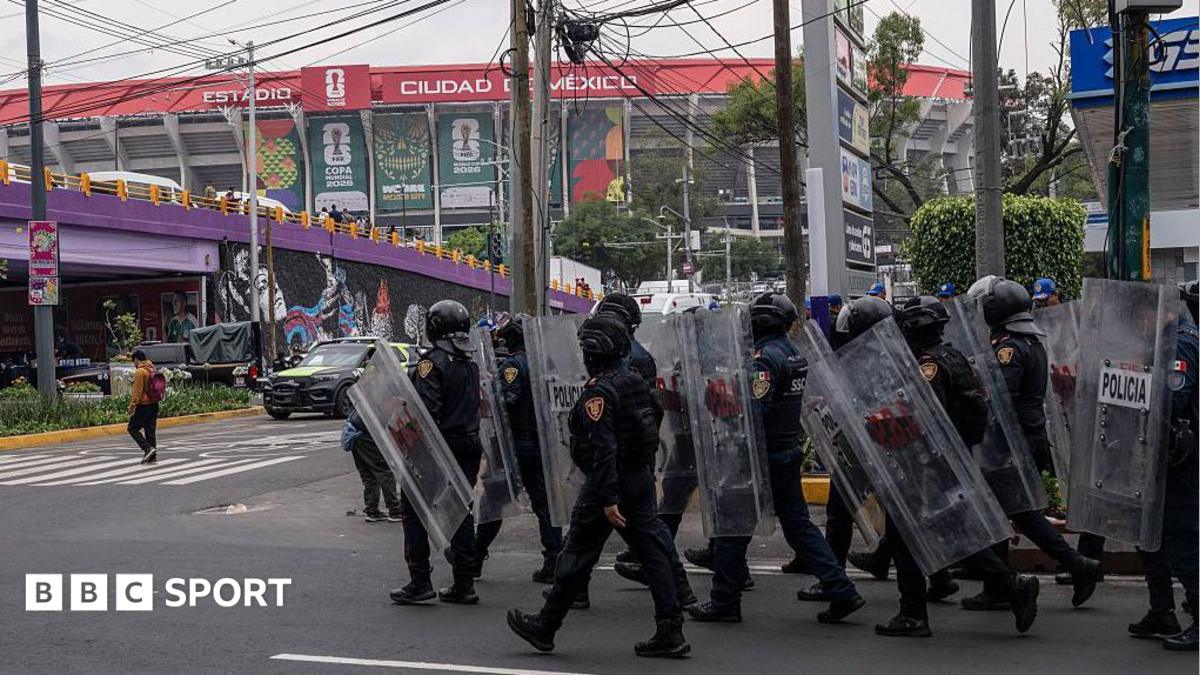
And this spotlight has also spilled over into other protests too.
Further along Paseo de la Reforma, near the headquarters of two of the country’s national newspapers, hundreds of striking teachers had gathered beneath the buildings.
They were protesting against their pay, pensions and working conditions, with many having travelled for hours to be there. Local residents said other public-sector workers had joined them in solidarity.
The deliberate effort to make their message understood beyond Mexico continued, with some protestors translating their chants into English so visiting tourists could understand what they were fighting for.
“We don’t want a World Cup,” they said. “We just want better pay.”
“The World Cup is not made for local people,” one protester announced through a megaphone. “It’s made for rich businessmen who can afford tickets.”
Among many residents, attending a World Cup match is viewed as unrealistic. The suggestion of having a ticket to a game is often met with laughter.
“Tickets are far too expensive. We could never afford those,” is a commonly expressed sentiment.
Instead, many fans said they planned to head to local bars and fan zones to watch the matches and soak up the atmosphere.
So, as kick-off approaches, Mexico City is presenting itself to the world as a vibrant and welcoming city that is consumed by the excitement of hosting football’s biggest spectacle for the third time in its history, the only city to do so.
But amid the flags, fan zones and celebrations, there are also voices determined not to let the moment pass without being heard.
Families searching for missing loved ones, teachers demanding fairer pay, and ordinary residents questioning who truly benefits from the tournament.
For the next few weeks, the world’s attention will be fixed on Mexico. But the question for many protestors is whether, once the final whistle blows, anyone will still be listening.




Leave a Reply