

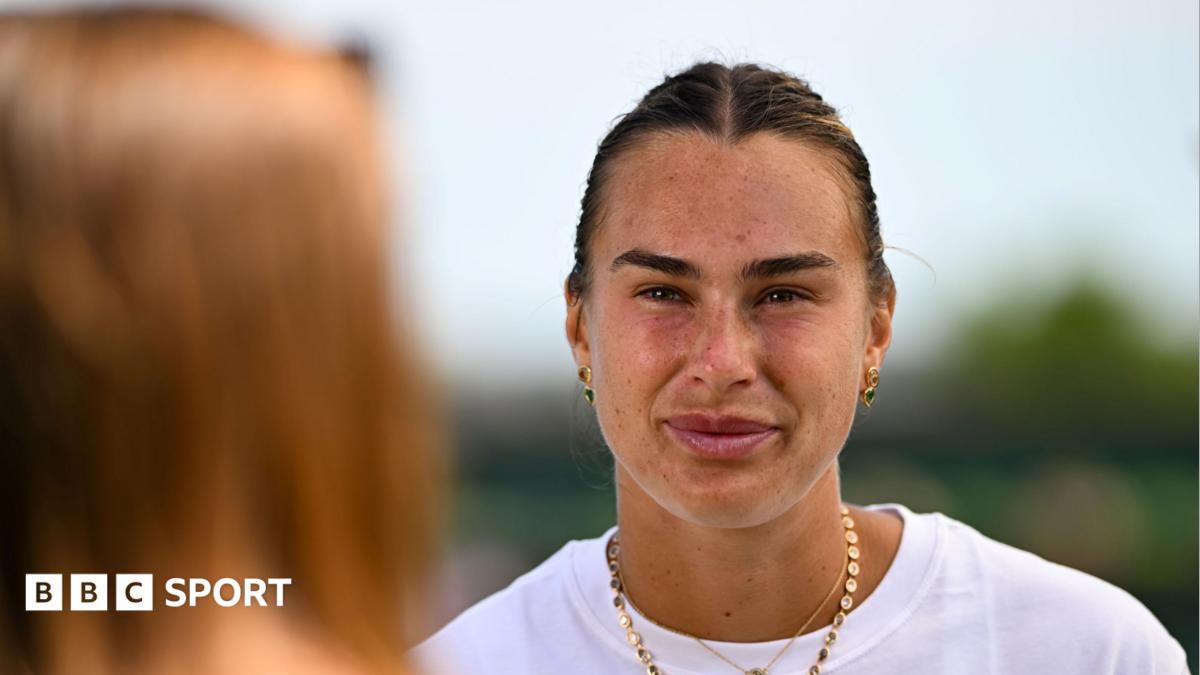
Defending men’s champion Sinner shut down questions about the protest – saying he wanted to talk only about tennis – in a short English language section before switching to Italian.
Others – including defending women’s champion Iga Swiatek and former world number one Daniil Medvedev – also limited their media commitments to one main news conference and one or two broadcast interviews.
It was the second successive Slam where players protested at what they perceive as a lack of action following a similar move at last month’s French Open.
In comparison, seven-time Wimbledon champion Novak Djokovic – who is not participating in the protest – held a 15-minute news conference and spoke to 18 television outlets across about an hour.
“Maybe what we did at Roland Garros partly helped us to push Wimbledon,” said Medvedev.
“We’re not accountants but we’re processing the information we are given. We’re seeing the percentage of the revenue is lower than 10 years ago, so we’re kind of getting less money.
“We’re pushing for something more which we think is fair. Nobody is angry – it is just a discussion.”
On Saturday, protesting players were timing their news conferences, with several agents seen urging moderators to wrap them up.
Sally Bolton, the All England Club’s chief executive, told BBC Sport on Friday she was “surprised and disappointed” by the move to protest.
Australian sixth seed Alex de Minaur was involved in the protests at last month’s French Open but decided he did not want to take part at Wimbledon.
“I think the sense that we had at Roland Garros was everyone was on board, even though we didn’t, as a collective, achieve the numbers that we were looking for,” he said.
“I thought that Wimbledon made a big step in the right direction, and something that should be noted. So this is for me to acknowledge their big step.”

Leave a Reply