

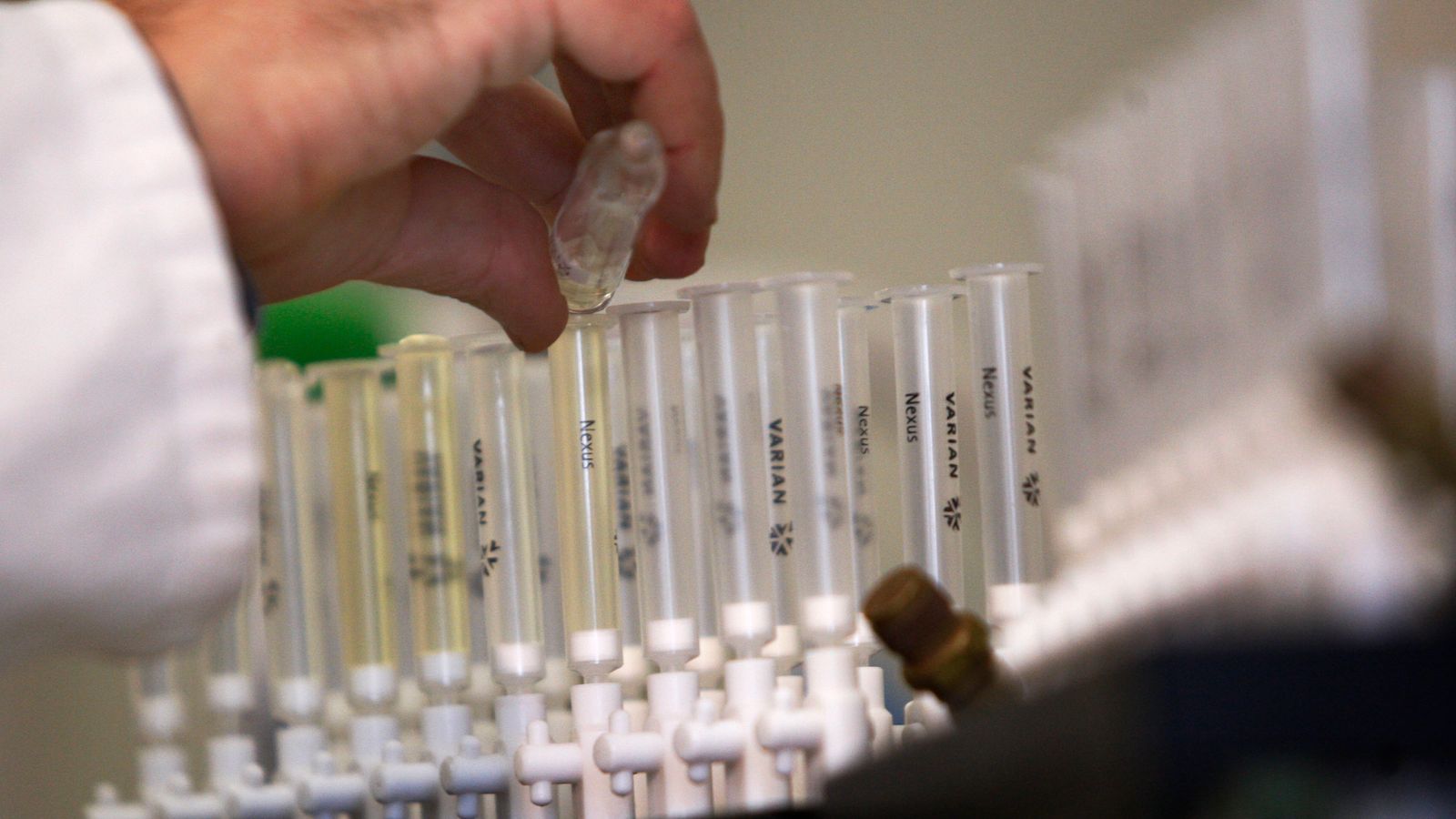
Drugs and doping in sport usually catch the headlines when a high-profile sportsperson is caught out as a drug cheat, or remember the headlines in the mid-2010s when Russia was outed as a state-sponsored organiser of systematic doping?
But during Clean Sport Week (May 11-17), the head of the UK’s Anti-Doping (UKAD) warned of serious health risks to people who aren’t necessarily in the running for an Olympic Gold, but who just love sport and staying fit.

UKAD CEO Jane Rumble says the agency is particularly worried about one type of IPED, known as Selective Androgen Receptor Modulat
Jane Rumble, the chief executive of UKAD told Sky Sports that a survey, commissioned by the agency, revealed a third of young people aged between 16 and 25, young athletes and gym-goers, have been exposed to online misinformation promoting Image and Performance Enhancing Drugs (IPEDs), after seeing them advertised or promoted on social media.
UKAD are particularly worried about how one particular type of IPED, known as Selective Androgen Receptor Modulators (SARMs), have been promoted as a ‘safer’ alternative to anabolic steroids.
Rumble said while speaking to Sky Sports, “We’re deeply concerned about misinformation online relating to image performance-enhancing drugs, and especially SARMs.
“These are products that are, well, none of them have been approved for human consumption, and they are banned in sport, and yet there is information online promoting them to be safer alternatives to steroids.
“None of them have been approved for human consumption. The idea was that they would support muscle growth and also bone structure, but what has happened is that clinical trials have revealed serious health risks associated with these products, hence none of them have been approved.
“To bring that to life for you, the kind of risks I’m talking about are loss of libido, but also heart inflammation, liver damage and failure. Those can be life-threatening.”
The UKAD survey of over 1,000 young people, aged 16 to 25, also highlighted a concerning trend of influencers sharing misinformation.
Forty-two per cent of young people surveyed said they had seen ‘superhuman’ or ‘shortcut results’ content on social media at least once a week in the past 30 days. Nineteen per cent reported seeing such content several times per week or daily.
“We’re concerned about gym goers, we’re concerned about sports fans,” Rumble said.
“What we’re doing is getting the messaging out about these serious health risks in order to understand the prevalence and the actual seriousness of the issue.
“Sixteen to 25-year-olds told us that they are being exposed to this content, promoting SARMs as safer than steroids, at least once a week. Four out of 10 said they saw this content at least once a week. It’s also being sold as a shortcut effect, or [it has] superhuman effects. We’re here to raise awareness to young people, but also to parents.”
UKAD’s concerns run deeply and this year’s Clean Sport Week contains the tagline ‘Built not Bought’.
“We’re very much saying, ‘inform yourself. Don’t swallow the lie about these products.’ And we’re also commissioning further research, which will be out later in the year and will demonstrate just how prevalent this misinformation is.”









Leave a Reply