

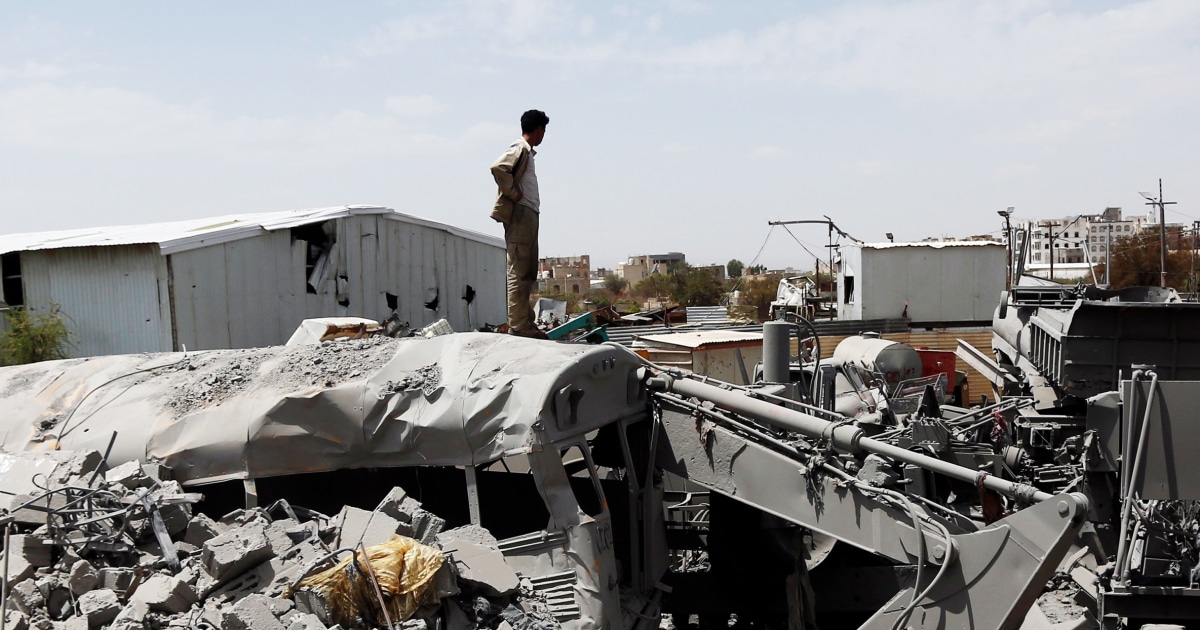
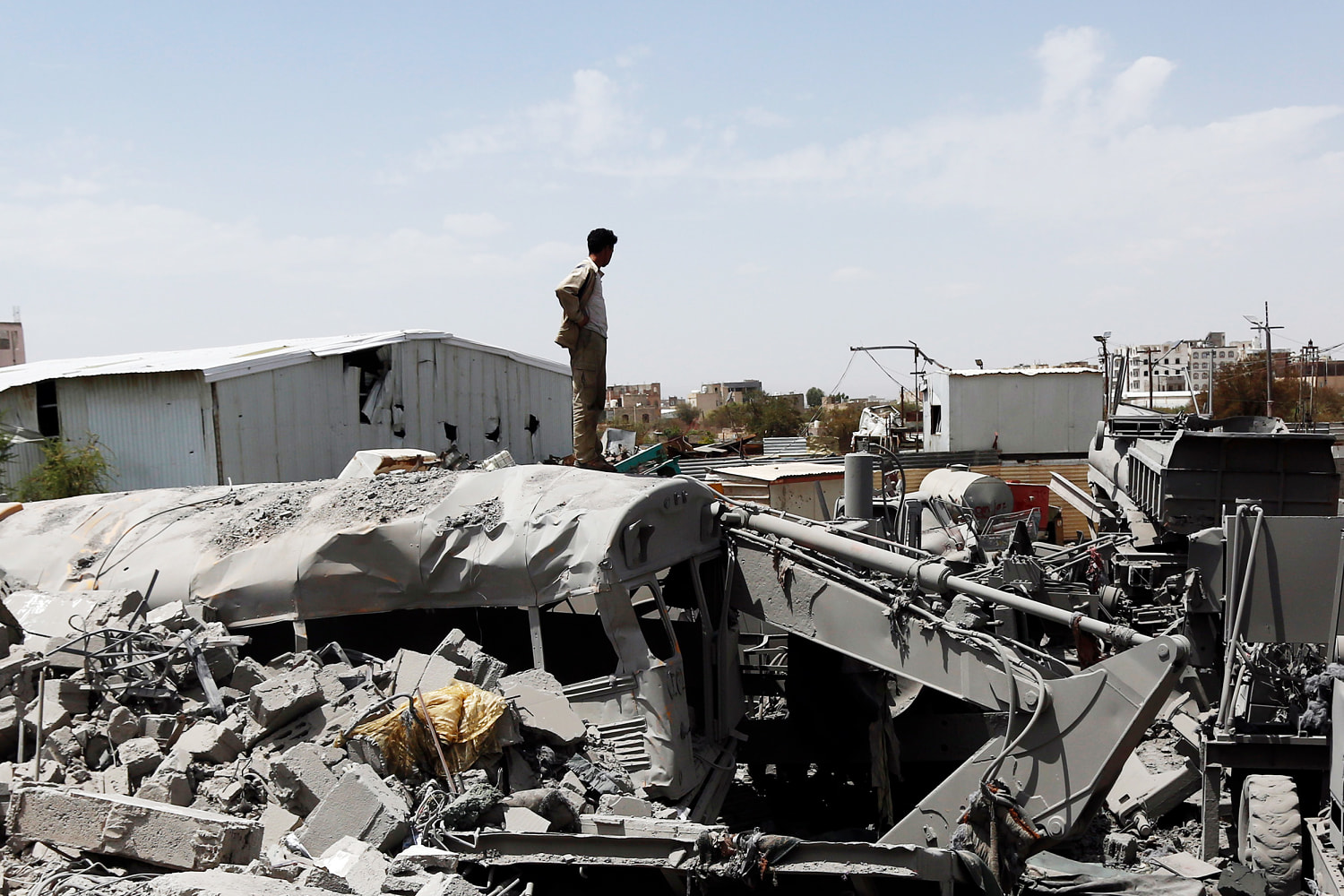
Hundreds of civilians were killed or wounded by U.S. airstrikes in Yemen last year, but the Pentagon has yet to publicly acknowledge the casualties or share a full account with Congress, according to documents reviewed by NBC News and people with knowledge of the attacks.
The three April 2025 strikes occurred during Operation Rough Rider, a 53-day military campaign Donald President Trump launched less than two months into his second term. The stated goal was to stop Iranian-backed Houthi rebels from threatening ships and allies in the region.
Last year, despite detailed reporting from rights groups on possible large-scale civilian casualties, the Pentagon had assessed there had been no civilian casualties from the U.S. air war against Houthi forces in Yemen.
The Pentagon did not respond to a request for comment.
NBC News has reviewed documents showing the back-and-forth between the Pentagon and lawmakers trying to get details on the attacks. In one, the Pentagon wrote to Sen. Elizabeth Warren, D-Mass in March, after repeated requests for information about casualties provided no details on the number of casualties, according to one of the documents reviewed by NBC News.
In the letter, the Pentagon’s assistant secretary for special operations and low intensity conflict, Derrick Anderson, said that U.S. Central Command had reviewed dozens of strikes for possible harm to civilians. Fifteen incidents remained under “active review” and three attacks in April 2025 warranted further investigation, with assessments concluding that U.S. strikes “more likely than not resulted in civilian casualties,” Anderson wrote.
Under Trump, the United States has released less information about military operations compared to previous administrations, rarely holding press briefings at the Pentagon. Administration officials have offered few details about damage to U.S. bases or casualties, and in many cases, release information only after media reports emerge. Officials have rarely acknowledged possible civilian harm from U.S. military operations.
The 2027 National Defense Authorization Act requires that the Pentagon release unredacted civilian harm investigations and all supporting documents for the three strikes in Yemen. Failure to comply allows Congress to withhold some funds, including travel money for Defense Secretary Pete Hegseth. There’s no official deadline, but without those details, the Pentagon stands to lose funding.
Lawmakers have repeatedly requested detailed information about U.S. operations in Yemen that may have caused civilian deaths or injuries but the Pentagon has so far failed to meet their requests, according to congressional aides.
The law also requires the Pentagon to release information about a likely U.S. strike on a school in Minab, Iran, in February, which killed more than 170 people, mostly children. A Central Command investigation into that strike is nearly complete.
During the war with Houthi forces, the U.S. military conducted hundreds of air strikes, hitting more than 1,000 targets in Yemen, and ultimately reached a ceasefire agreement that included a Houthi pledge to stop targeting American civilian or military ships and a U.S. pledge to stop air and naval strikes in Yemen.
The three attacks occurred on April 17, 2025 at the Ras Isa port in Hodeidah, on April 28, 2025 at the “Ayn Wadi Barracks Warehouses,” and on April 6, 2025 at a private residence, according to Anderson’s letter. But the letter did not offer an estimate of the number of civilian casualties resulting from the strikes or more details about the attacks.
Two people with knowledge of the strikes say that about 150 civilians were likely killed in the first two strikes and roughly 200 wounded. It remained unclear how many civilians were killed in the third strike on the private residence earlier that month.
Human rights groups, citing interviews with witnesses and satellite imagery, previously demanded the U.S. investigate two of the April air strikes as possible war crimes, saying that dozens of civilians were killed or wounded in the attack at the Ras Isa port and another strike in northwest Yemen.
Amanda Klasing, Amnesty International USA’s national director for government relations, condemned the Trump administration over its handling of the air strikes.
“The Trump administration’s response has been abysmal. The Pentagon has made no public progress in addressing the air strike on the Yemeni migrant detention center that killed dozens of civilians, much less taken steps to stop it from happening again.” Klasing said.
“Instead, this administration has gutted the Pentagon’s programs meant to prevent civilian harm and has evaded any public accounting for cases of civilian harm, including the Minab school strike this year in Iran,” Klasing said.
Although Congress in 2019 adopted legislation requiring the Pentagon undertake an array of steps to reduce harm to civilians in military operations, an Inspector General investigation found that the department under Defense Secretary Pete Hegseth slashed funding and cut staff for the effort.
Ras Isa port in Hodeida is a key hub for humanitarian aid shipments with a large civilian work force, and the April 17 U.S. strike killed or wounded dozens of civilians, according to a Human Rights Watch report last year. The group AirWars, a nonprofit that documents and investigates claims of civilian casualties in war zones, reported that 84 civilians were killed in the strike and 150 wounded.
At the time, U.S. Central Command said the strike was designed to cut off revenue to Houthi forces receiving fuel at the port.
“This strike was not intended to harm the people of Yemen, who rightly want to throw off the yoke of Houthi subjugation and live peacefully,” CENTCOM said in a statement afterward.
The second strike cited in the Pentagon’s letter to Warren referred to a site in northwest Yemen, the same attack that rights groups pointed to in their reporting at the time, according to two people with knowledge of the attacks. A report from Amnesty International said a U.S. strike hit a detention center for migrants on April 28, killing or wounding dozens of civilians. The Pentagon described the target in the April 28th strike as “Ayn Wadi Barracks Warehouses.”
The strike in northwest Yemen was so concerning that, according to Anderson’s letter, U.S. Central Command also conducted a “command-directed” investigation to determine whether any policies were violated or if there was any misconduct by U.S. forces.
The undersecretary of defense for policy, Elbridge Colby, had written to Warren in June 2025 — two months after the three deadly U.S. strikes — saying the Pentagon “has not assessed that civilian casualties have resulted from recent U.S. operations in Yemen since March 15, 2025.”





Leave a Reply