

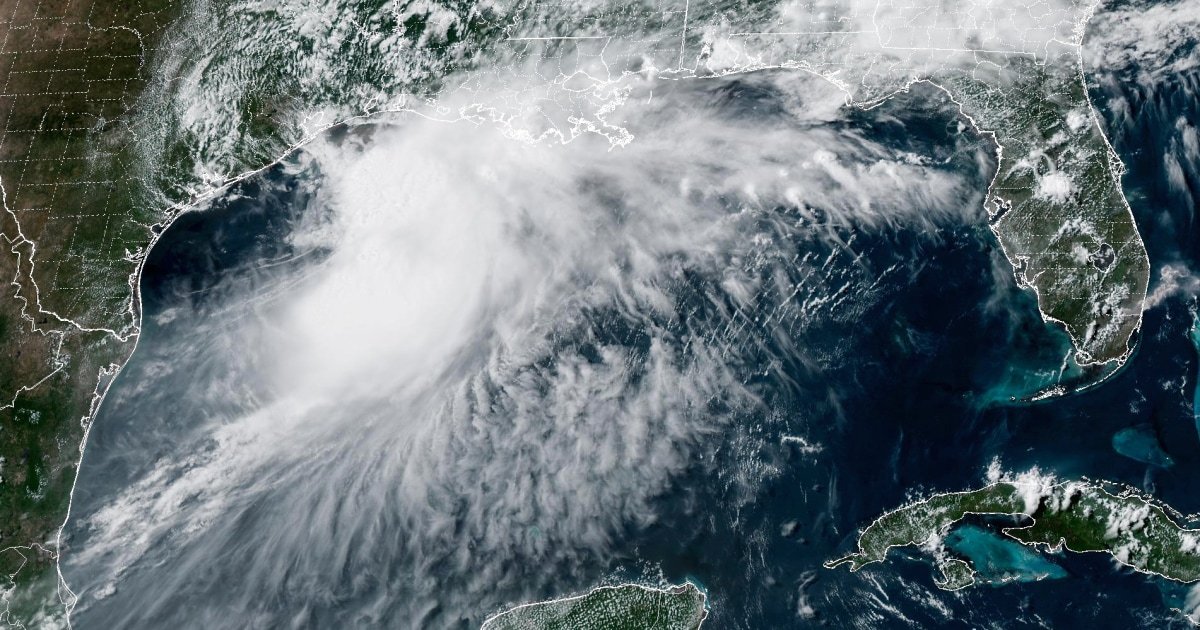
Southeastern states can expect a prolonged deluge with the possibility of intense flash flooding as Tropical Storm Arthur moves through the area.
Subscribe to read this story ad-free
Get unlimited access to ad-free articles and exclusive content.

Arthur, which formed off the coast of Texas, is the first named storm of this hurricane season. Storms receive names once their wind speeds reach or exceed 39 mph.
National Hurricane Center forecasters said Wednesday that Arthur’s wind speeds had reached about 45 mph with some higher gusts. They expected 5 to 10 inches of rain through early Friday along the Texas coast, before the storm douses parts of Louisiana, Mississippi, and western Georgia and Florida. As much as 20 inches of rain could fall in some unlucky areas.
“Heavy rainfall and life-threatening flash flooding remain the primary hazard with this system,” forecasters said Wednesday morning.
The highest flash flood potential over the next three days stretches from Lake Charles, Louisiana, to Montgomery, Alabama, with the highest rainfall totals expected near Mobile, Alabama, according to the National Hurricane Center.
Zachary Handlos, an atmospheric scientist at the Georgia Institute of Technology, said the potential for flash flooding will be determined by how quickly the storm moves through the region.
“What it comes down to is, is the rainfall going to park itself or become stationary over any of these locations?” Handlos said. “That is a little harder to predict.”
Parts of Texas are already dealing with severe rainfall. On Monday, Gov. Greg Abbott issued a disaster declaration for 101 counties due to severe storms.
Before this month, Handlos said, large portions of the Southeast, like northwest Mississippi and Louisiana, had been dealing with a prolonged drought. Recent rainfall has helped quench the dryness, but it could also prime the region for flooding as Arthur moves through.
“After going through most of March, April and some of May with almost no precipitation, things have kind of switched,” Handlos said.
“If you have more saturated soils or regions where there’s water that’s pooling up and maybe not drying out fast enough, now you’re just dumping an additional amount of moisture on top of this, which can lead to localized flooding,” he added.
Houston and Atlanta are both hosting World Cup games amid the wet weather. Houston canceled its FIFA Fan Festival on Monday due to rainfall and opened with shorter hours on Tuesday. Handlos said he did not expect major issues with the games themselves, though.
“There’s a match right now in Houston. I think they’re west of the worst of it, in terms of impacts,” Handlos said. “In Atlanta, I think the worst-case scenarios are probably that people are gonna get wet, there might be some minor flooding, and if anyone’s in a car driving, just get ready to get stuck in traffic.”
Arthur is the first storm in what is expected to be a relatively mild hurricane season. National Oceanic and Atmospheric Administration forecasters predicted in May that the season will feature just three to six hurricanes (storms are considered hurricanes once winds reach 74 mph) and between eight and 14 named tropical storms.
An El Niño pattern has developed in the tropical Pacific, which is a main reason for the mild forecast. El Niño is associated with less hurricane formation in the Atlantic but a more active season in the Pacific.
El Niño often leads to high vertical wind shear, a term that describes the difference between wind speed or direction at different layers of the atmosphere. Hurricanes thrive when there’s low wind shear, so El Niño tends to prevent hurricanes from organizing.
However, ingredients are in place to fuel any storms that do develop.
“Even with an El Niño occurring, the sea surface temperatures in the Gulf and the Atlantic are still fairly warm, and they’re warm enough that a storm could still pop up if the right ingredients come together. That’s what we’re seeing with Arthur now,” Handlos said.
“Even if we have less total named storms this season compared to previous years, all it takes is one named storm,” he added.







Leave a Reply