

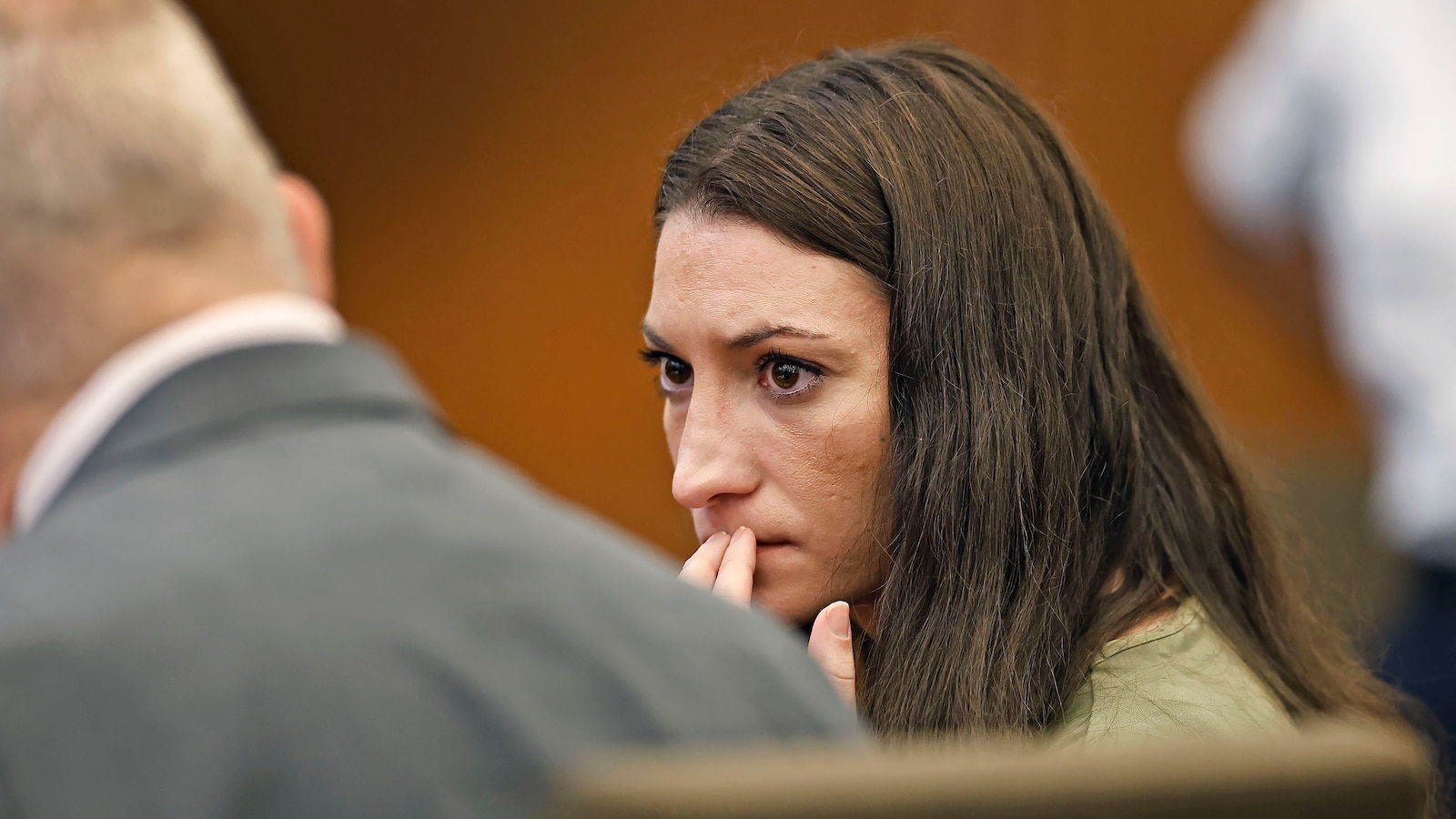
PLYMOUTH, Mass. — In the months after the birth of her third child, Lindsay Clancy ‘s mental health collapsed. Manic, unable to sleep and stricken with thoughts of harming herself, she sought care from experts in postpregnancy mood disorders, was put on multiple psychiatric medications, and when nothing worked, checked in to a psychiatric hospital.
Nineteen days after she was discharged, she strangled her three children at their Massachusetts home.
A jury is set to hear opening statements Monday in Clancy’s murder trial, which will feature dueling views about her culpability and mental state.
Prosecutors are set to argue that Clancy, a former labor and delivery nurse at Massachusetts General Hospital, carefully planned the killings and bears full responsibility for their deaths.
Clancy’s lawyer, Kevin Reddington, will argue that at the time of the killings she was suffering from postpartum psychosis, a rare mental illness linked to the stress, sleep deprivation and hormonal changes that follow childbirth.
The trial is expected to take several weeks.
Elyse Hershon, a Boston criminal defense attorney and legal analyst, said the verdict will likely depend on how the jury views Clancy’s “intent and mental capacity.”
“Whenever there are deaths of children, it rattles emotions. Because these actions are incomprehensible and the outcome so horrific, people tend to want to hold someone responsible,” Hershon said. “Some people naturally will identify and sympathize with Clancy and her postpartum depression, and others will not be able to understand how one could end their children’s lives, and demand responsibility.”
While postpartum depression is fairly common among women who have given birth, postpartum psychosis is estimated to afflict only 1 to 2 per 1,000 women after delivery. Symptoms include hallucinations, delusions, paranoia, mood changes and thoughts of harming yourself or others. Most women who have the condition, however, do not wind up harming their children.
Prosecutors say Clancy strangled her children — Cora, 5, Dawson, 3, and Callan, 8 months — on Jan. 24, 2023, after sending her then-husband, Patrick, out for some errands. She then jumped out of the home’s second-story window and was paralyzed from the waist down in the fall.
At the time, she had been getting psychiatric care for about four months. On the day of the killings, she said she heard voices telling her, “This is your last chance. Kill the children so you can kill yourself,” according to her lawyer.
If convicted of murder, Clancy faces life in prison without parole. If found not guilty due to a lack of criminal responsibility, she would be committed to a state mental health facility.
The case has parallels to several others involving mothers accused of killing their children.
In 2001, Andrea Yates drowned her five children in a bathtub in Texas. Her attorneys she suffered from severe postpartum psychosis and, in a delusional state, believed Satan was inside her and that killing the youngsters would save them from hell.
Her initial murder conviction was overturned and in a retrial she was found not guilty by reason of insanity and committed to a state mental hospital.
Another Texas mother, Dena Schlosser, was found not guilty by reason of insanity in 2006 after she killed her 10-month-old daughter by cutting off her arms.
Nicole Cirino, the director of the division of reproductive psychiatry at Baylor College of Medicine, who has been an expert defense witness in infanticide cases, said many of the women who harm their children while in the grip of postpartum psychosis believe their actions are helping the child.
In their own minds, “they may be saving their children from damnation,” Cirino said.
Clancy and her former husband, Patrick Clancy, filed lawsuits accusing her medical providers of failing to properly diagnose and treat her condition.
Awareness about postpartum psychosis has grown since the Yates case, but Cirino and other maternal mental health advocates said prosecutors rarely consider a mother’s mental state. Illinois is the only state with a law allowing for undiagnosed or untreated postpartum depression or postpartum psychosis to be a mitigating factor in sentencing.
“Women who kill their children in the throes of this medical illness, postpartum psychosis, are seriously and profoundly mentally ill. They are not evil,” said Dr. Catherine Birndorf, the CEO and founder of The Motherhood Center in New York City, which treats mothers with perinatal mood and anxiety disorders.
“To me it’s illness until proven otherwise,” she continued. “The fact that we consider it criminal until proven otherwise is problematic.”











Leave a Reply