

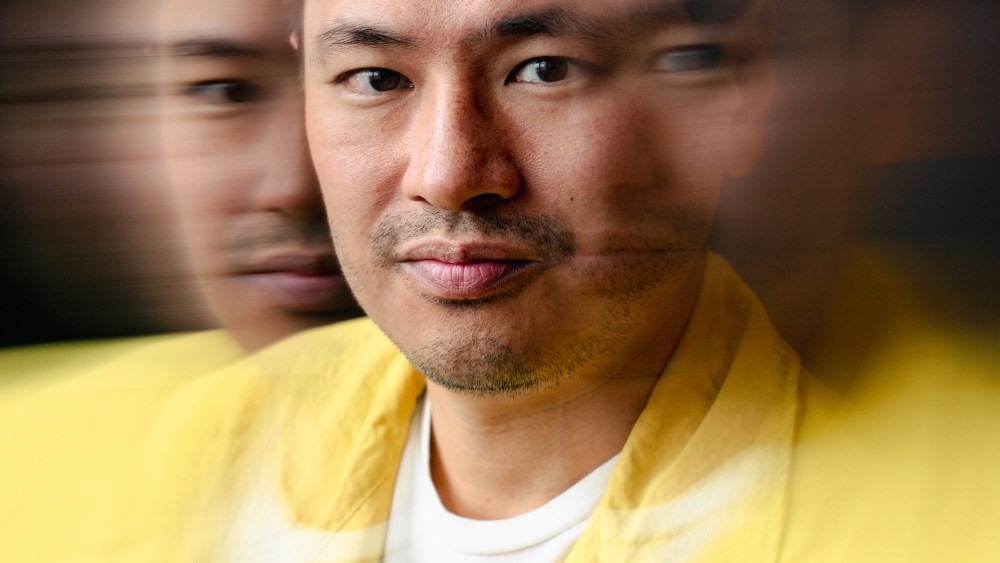
Pablo Torre would like to set the record straight.
In the fall of last year, after he uncovered a wacky sports scandal ensnaring NBA superstar Kawhi Leonard, billionaire Los Angeles Clippers owner Steve Ballmer and a fraudulent environmental sustainability company called Aspiration, the muckraking journalist popped up on “The Dan Patrick Show” and let slip that he’s considering looking into the Knicks’ signing of Jalen Brunson. He’s still feeling the aftershocks 10 months later.
“I’m getting stopped on the street regularly by people saying, ‘Leave Jalen Brunson alone,’” Torre says. “It’s been a consistent theme as a New Yorker of people threatening me. Even Rick Brunson reached out to me being like, ‘What are you up to?!’”
To answer Jalen’s dad’s question: No, he’s not “sitting on some investigation” of the King of New York. But it’s a testament to Torre that the mere mention of his interest in one is enough to strike fear in the hearts of fans, players and even their parents, like a baby-faced assassin.
As host of the Meadowlark Media podcast “Pablo Torre Finds Out,” an addictive mélange of a chat show and true-crime docuseries wherein Torre breadcrumbs the reporting to his pals, the 40-year-old has emerged as the new face of sports journalism. He lights up social media with such stories as deep-dive investigations into Jordon Hudson and Bill Belichick’s cursed union, Jeffrey Epstein’s ties to Harvard athletics and how the Clippers circumvented the NBA salary cap by having Leonard receive a $28 million no-show endorsement deal from Aspiration, whose co-founder was recently sentenced to 14 years in prison for defrauding investors (Ballmer among them). In May, the Aspiration story earned Torre and his team the Pulitzer Prize.
“He values journalism’s core principles in a way that’s old-fashioned and modernized,” offers Dan Le Batard, co-founder of Meadowlark and Torre’s long-time pal. “It’s a bit like seeing the most rudimentary of primitive tools turn into a spaceship because people aren’t valuing this thing anymore, and it’s because it requires speaking truth to power.”
The rise of “Pablo Torre Finds Out” comes at a time when the rest of sports media has turned its back on impact journalism. “Real Sports With Bryant Gumbel” is gone, Deadspin’s a ghost ship and ESPN, the self-proclaimed “Worldwide Leader in Sports,” not only hobbled “Outside the Lines” but transformed itself into one giant sports-gambling ad. It makes it that much more refreshing to see Torre and his merry band of misfit journalists expose the rich and powerful and have a lot of fun doing it.
“PTFO,” as it’s come to be known, was partially inspired by Torre’s fascination with “Ryan’s World,” a YouTube channel featuring Ryan Kaji and his family unboxing gifts.
“I was like, why the fuck is there a channel called ‘Ryan’s World’ with another vaguely Asian young man who’s opening presents endlessly, and why does he get millions of views and make NBA max contract money?” asks Torre. “It’s because he is perpetually being surprised and being joyful in his discovery.”
So Torre took that “unboxing ethos” and applied it to investigative journalism: The toy became pages of reporting in folders, and the folks doing the unboxing were his friends (doubling as expert witnesses) who had no clue what was in them. Torre, meanwhile, would serve as dungeon master, steering the gang through exhibit after exhibit.
“Most other podcasts are just chat,” explains “PTFO” showrunner Chris Tumminello. “Our show is highly produced and highly edited, so we’re thinking a lot about how we structure conversations and how we hold back information and reveal it later, documentary-style.”
Adds Torre: “If you can illustrate how you arrived at your findings, people might come to appreciate that the journalistic process is harder than it otherwise looks, and there’s value in that.”
Torre’s parents immigrated to America from the Philippines, settling in New York City. As a child, his father would whisk him off to sporting events he found so “intoxicating” that he kept a little notebook on him where he would compile statistics of players he liked.
“As a Filipino American kid who was the first in his family born here, sports was the passport to conversations with other kids I had little else, at least superficially, in common with,” he recalls. “I was able to hold court with them, then play basketball with them. Sports was the glue.”

Pablo Torre interviews a guest on “Pablo Torre Finds Out.”
Getty
An aspiring lawyer, Torre didn’t gain a passion for journalism until his time at Harvard, where he eventually became executive editor of the Crimson. He was also classmates with Mark Zuckerberg and the 199th person to join Facebook, owing to his dormmate and friend Priscilla Chan (they’ve since lost touch).
After college, Torre worked at Sports Illustrated, followed by ESPN in 2012, joining as a senior writer. He became a rotating guest on a number of shows, from “The Sports Reporters” to “The Dan Le Batard Show,” and guest host of “Around the Horn” and “Pardon the Interruption.” As one of the only Asian Americans on ESPN at the time, Torre stood out like a sore thumb.
“Before I officially started at ESPN, I was at a barbecue at a friend’s house with a bunch of people I’d never met before,” remembers Torre. “Someone asked me what I did and I told them I’d just started working at ESPN. And he goes, ‘Oh, tech support.’ There is no prior precedent where someone can intuit that you’re not in tech support.”
He shakes his head: “How is it that the most populous group doesn’t have representation in popular culture?”
Torre’s time on “Around the Horn,” a sports show where journalists compete with one another via rapid-fire takes, proved transformative. He would practice with a stopwatch, mastering word economy, and realized he had a knack for sports punditry (and public speaking). And, after witnessing his colleagues being laid off from print media, he made a conscious decision to transition to TV as a “survival instinct.”
In 2018, Torre became co-host of ESPN’s “High Noon,” alongside Bomani Jones; the show was canceled in February of 2020, while he was at the hospital for the birth of his first child.
“I remember being on my phone in the hospital, with my wife next to me, and getting an alert that ‘High Noon’ was being canceled. My daughter was born that day. It was all very cinematically on the nose,” says Torre. “It was incredibly anxiety-inducing because I was like, ‘How am I going to provide for my child?’ And the pandemic was happening.”
Nevertheless, he persisted. Torre took over for Mina Kimes as host of the podcast “ESPN Daily,” grinding out five shows a week. It felt as though he was “running this tiny publication inside of ESPN” where he got to pick the stories, help cast who was on the show and sat in on the edits. More than anything, he learned how to structure stories for audio consumption. He’s particularly proud of his story on how the name “Jalen” became the most popular name in sports, which won him an Edward R. Murrow Award.
“I felt like these muscles were being activated,” he recounts. “I remember the joy I felt reporting that and putting it out into the world, and the sensation I had toward the end was, ‘What if I could report these episodes myself?’”
In spring 2023, Torre was offered a daily show by former ESPN president John Skipper and Le Batard, who’d just formed Meadowlark Media; Torre countered with a podcast that would air three days a week and provide deep-dives, chat show elements and interviews. With that, “PTFO” was born.
And it only continues to grow. Since partnering with the Athletic, “PTFO’s” cross-platform following is up 99%, while monthly full-episode consumption is up 161% year over year, according to Meadowlark Media. Over half of “PTFO’s” YouTube views are in the evening, meaning “people are watching it like an evening television show,” states Meadowlark CEO Bimal Kapadia.
There’s also the little matter of that Pulitzer Prize for audio reporting. Torre is immensely honored but isn’t exactly sure what to make of it.
“It’s the greatest professional development of my life and I don’t know if it’s going to make my life easier or harder,” he confesses. “Are you burdened by that expectation? Are you going to let yourself slack off, which I’m clearly not wired to do? Are you allowing yourself to feel the joy that your boss thinks you’ve earned? I think it goes back to that sense of insecurity as an Asian American working in media. This all seems fragile to me.”


Leave a Reply