

Health Secretary Robert F. Kennedy Jr. said Tuesday the cyclosporiasis outbreak was “under control” even as health authorities continue to search for answers about why thousands of people in the U.S. have gotten sick.
Subscribe to read this story ad-free
Get unlimited access to ad-free articles and exclusive content.

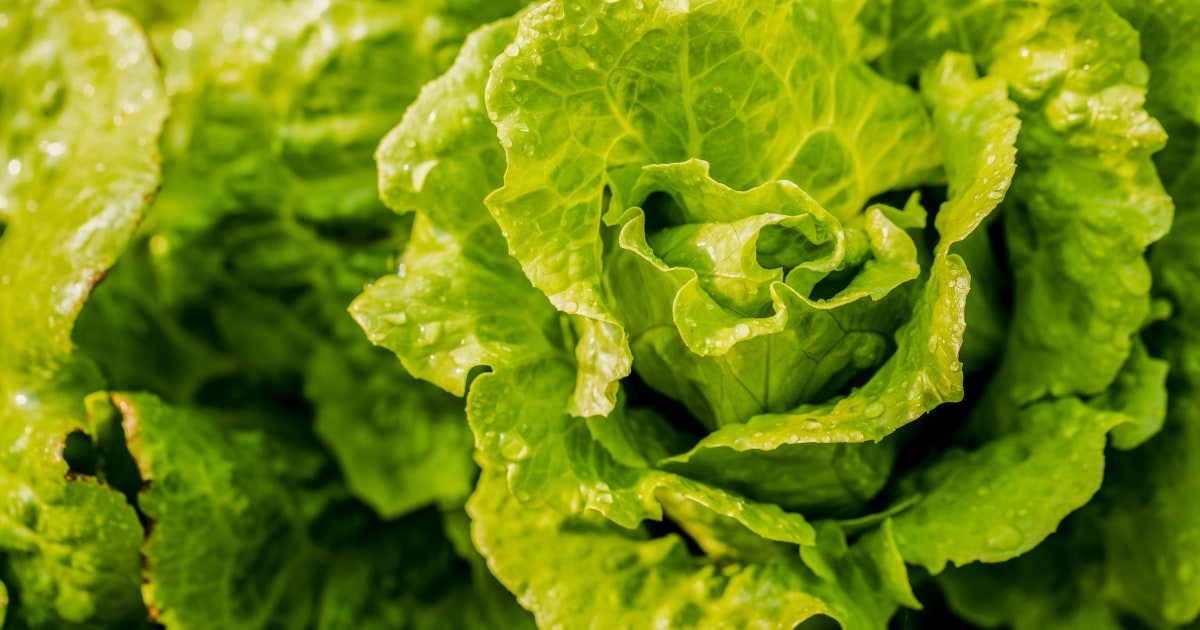
The Food and Drug Administration has linked the outbreak, which mainly causes severe diarrhea, to shredded iceberg lettuce from a Taylor Farms facility in central Mexico.
But Mexico’s health secretary, David Kershenobich, said Tuesday at a news conference that the country’s own investigation had not found evidence that the outbreak originated there.
The parasite in question, cyclospora, is notoriously difficult to trace — scientists must use highly sensitive tests to detect it in food. People can also get sick weeks after having eaten contaminated products, so by the time health officials become aware of an outbreak, all of a product worth testing may have been eaten or discarded.
Scientists rely heavily on information about who developed symptoms and what they ate to trace an outbreak to its source. A positive test result is not necessarily needed to determine the culprit.
“We have done extensive forensics, epidemiological forensics, and we’ve identified the source of the outbreak,” Kennedy said Tuesday.
FDA Commissioner Kyle Diamantas was less definitive in his description of the outbreak, telling Fox News on Tuesday that the data “strongly supports” Taylor Farms as the responsible party.
Diamantas said Monday on a media call that cases linked to the outbreak were identified as recently as last week, “which means it’s imperative for us to take action to ensure contaminated product is not making its way to the market.”
The Michigan Department of Health and Human Services, which has counted 6,571 cases in the state as of Tuesday, said on its website that other food items cannot be ruled out as potential sources of the outbreak, adding that “no specific type of produce, grower, or supplier has been identified as the source.”
Taylor Farms voluntarily recalled all iceberg lettuce grown and processed in central Mexico on Friday out of what it described as “an abundance of caution.” It has also stopped sourcing iceberg lettuce grown in central Mexico for the rest of the growing season.
It supplied the recalled product to Taco Bell locations in Indiana, Kentucky, Michigan, Ohio and West Virginia, as well as selected Walmart locations across the country under the Marketside brand.
To date, no samples from the Taylor Farms facility in Mexico have tested positive for cyclospora — though the FDA reported one result over the weekend that turned out to be a false positive.
01:30
What to know about Cyclospora after Taylor Farms false positive
00:0000:00
An FDA official said the agency was quick to announce the result because the sample was not part of the voluntary recall, so it seemed to have urgent public health implications. However, quality checks by the FDA’s laboratory personnel showed that the positive result was an error.
Keith Schneider, a food safety professor at the University of Florida, said the FDA is likely to be testing more than just lettuce at this stage of the investigation.
“They may be testing irrigation water. They may be testing soil samples. They may be testing workers associated with that single field or those several fields that would have supplied that product to those locations at that time,” he said.
Kennedy responded Tuesday to concerns that federal agencies were not conducting enough cyclospora surveillance after having scaled back a program called FoodNet. A year ago, the CDC told 10 states that they no longer had to actively monitor for cyclospora through FoodNet, which helps states understand how common foodborne illnesses are outside of outbreak settings.
“Those criticisms are invalid. We’ve had no cuts in our surveillance program,” Kennedy said. “We did cuts in the FoodNet program, but they were for redundant surveillance, and all the states will tell you that we’re still doing forensics. We’re still doing surveillance in all the states.”
Several state health departments told NBC News they continue to report cyclosporiasis cases to the CDC that are picked up by local health departments or labs.
But food safety experts worry that, without active surveillance, many cases will be missed.
“What we’ve been doing is pulling pieces out of the puzzle, and it’s going to make it really hard for us to figure out what the cause of this outbreak is,” said Barbara Kowalcyk, director of the Institute for Food Safety and Nutrition Security at George Washington University. “It’s going to make it hard for us to see the context and how this fits in with trends over time.”






Leave a Reply