

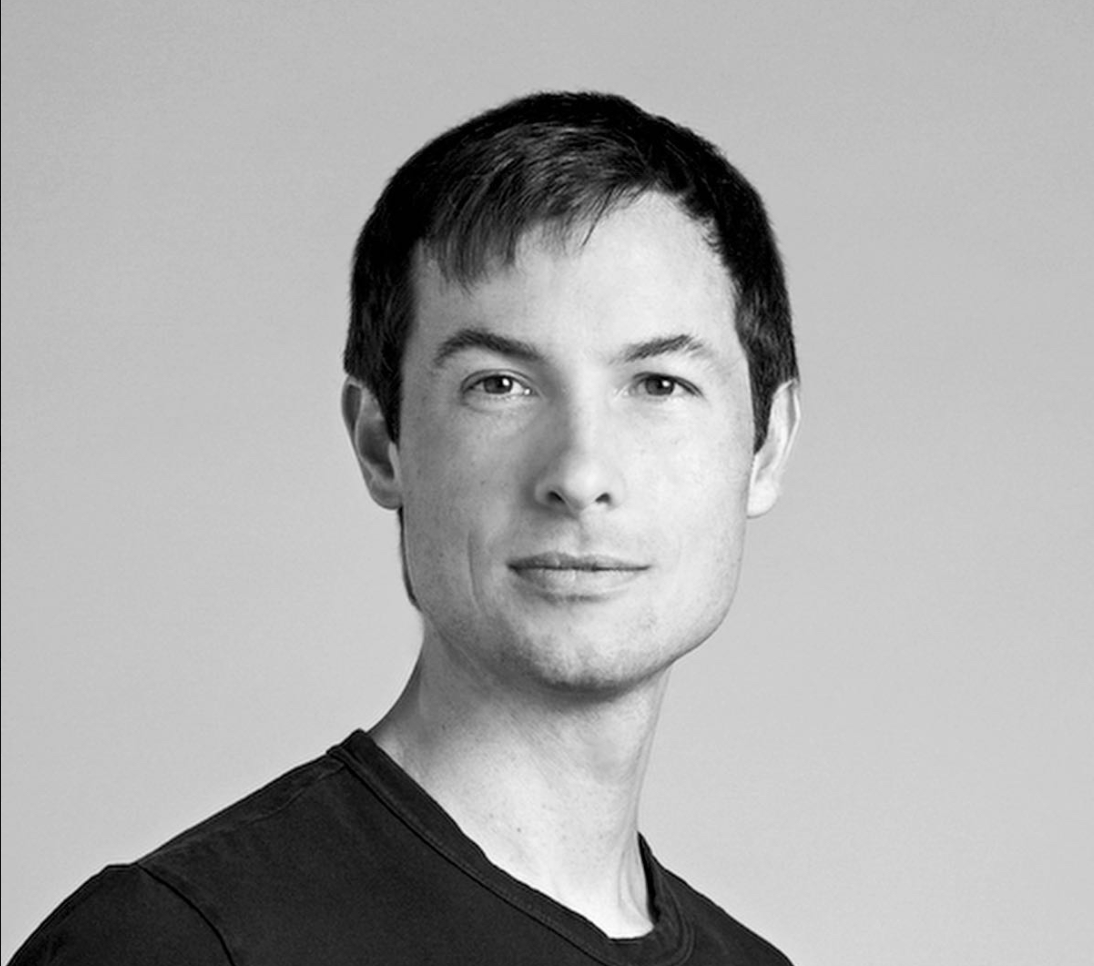
Reed Jobs is easy to like. He’s motormouthed, self-deprecating, prone to video-game analogies, and clearly loves his work. He doesn’t particularly want to discuss the fact that he is Steve Jobs’s son, but he’s not uptight about it, either. When our producer, Maggie, asked if he was on a MacBook for our video call Thursday morning, he didn’t miss a beat: “Are you kidding?”
What he’d much rather talk about is Yosemite, the oncology-focused venture firm he launched in 2023 to, in part, build biotech companies from scratch, out of early academic research, using a mix of philanthropy and outside investment capital. Three years in, Jobs is ambitious about turning Yosemite into a serious player, not just because he wants to win but because he thinks the opportunity in front of him is expanding faster than he expected thanks to AI’s impacts on both drug discovery and clinical trial design.
Among the portfolio companies he’s proudest of are Azalea, born from a grant to Jennifer Doudna’s lab and now in the clinic, and Quarry, a company built with serial founder Craig Crews around a novel therapeutic approach called induced proximity, wherein a drug works by physically dragging a disease-causing protein next to the cell’s own breakdown system (instead of trying to block it directly).
When we last sat down with Jobs at TechCrunch Disrupt nearly three years ago, Yosemite was brand new and biotech was still reeling from its post-pandemic crash. Now, the firm has a team of 17; a cluster of blockbuster drugs are all losing patent protection in roughly the same window, creating all kinds of new opportunities; and AI has gone from a curiosity to, in Jobs’s words, a huge part of what Yosemite does. We caught up on all of it.
This Q&A has been edited for length.
TC: You announced the first close of your second fund earlier in the year, targeting $350 million. What’s the state of the union at Yosemite?
RJ: One of extreme activity right now. We’ve had incredible traction, and we’ve brought on a lot of really important new partners. Yosemite is a unique venture organization for two reasons: we only work in oncology — that’s 40% of biotech — and we like to make our own companies ourselves. We don’t think the cures for cancer are sitting out in pharma waiting to be discovered; we think we need to go make them with new knowledge. To de-risk those ideas early, when they’re still gentle ideas in university labs, we use a little philanthropy in a completely no-strings-attached way. Two of our 20 companies in the first fund came directly out of a grant.
How much of that $350 million is going into companies you’re spinning up yourselves versus companies you’re joining?
About a third goes into companies we’re making ourselves — either our own ideas or ones we build alongside academics, at places like Yale, Berkeley, and Stanford. That takes a lot of time and energy, which is why it’s only a third. The rest goes into companies other people made that we want to join. Separately, 2.5% of the fund’s [assets under management] goes into a donor-advised fund — that’s completely no-strings-attached grant money, plus $1 million a year from our management fees.
It’s early days, but what’s the case you make to prospective LPs on performance relative to other life science VC firms?
It’s extremely early for us, but Yosemite has the ability to create new areas of medicine before other firms get there. My team has pioneered a couple of these: epigenetic gene editing [technology that changes how strongly a gene is expressed, rather than altering the underlying DNA sequence itself], and safe delivery of gene editing to specific cells — a bottleneck for the whole field for the better part of a decade. If you want to be first, and you want to help discover new areas, that’s what we’re going to be best at.
Earlier on, you were worried about how conservative biotech investors had become. Has that changed?
It has, actually. When I launched Yosemite in 2023, the XBI [ETF/index] was still down massively from its 2021 highs and pharma hadn’t gotten acquisitive yet. What’s changed in the last three years: interest rates are better, and pharma is entering its largest patent cliff in history while sitting on record cash reserves from the pandemic. That’s added up to an acquisitive spree over the last eight months or so. We’ve seen huge exits, like Eli Lilly buying Kelonia for $7 billion, and massive wins in antibody drug conjugates. One high-profile one: Revolution Medicines, going after KRAS [one of the most commonly mutated cancer-driving genes, long considered nearly impossible to target with drugs] in pancreatic cancer, has doubled the survival rate for [the most common form of pancreatic cancer] — from 12 to 24 months. That’s only happened in the last year.
Last year you talked publicly about your concerns over proposed NIH cuts.
Unfortunately, there’s still pressure from the federal government, but it’s less of a long-term threat than it was. Last year, for the first time in history, an administration asked for a cut of up to 40% of the NIH budget. For context, the biggest cut that ever happened was 1% in 2009, in response to the global financial crisis, and that cost 7,000 NIH scientists their jobs. Gratefully, the Senate and House — this is extremely bipartisan — totally rejected the 40% cut. This year they came back asking for 12%, still the biggest cut of all time by an order of magnitude, and I expect the same rejection. NIH funding has more than 90% approval. Personally, I think we should go on offense — I’d increase it to something like $100 billion. On a dollar basis, it hasn’t grown in about a decade, so relative to inflation, it’s actually shrunk.
Where is AI already changing healthcare delivery?
American hospitals are some of the most technologically naive places in the economy — there’s still a huge amount done on fax, on floppy disk. One example: call centers, like 911 triage, are expensive to keep open 24/7 and are ripe for AI. There’s also electronic health records, radiology, pathology. But where I get really interested is clinical trials — the biggest cost and time sink in drug development. A Phase 3 cancer trial costs about $260 million, and only one in three succeeds. The biggest cost is patient recruitment and retention. AI could help build a synthetic control arm [a computer-generated stand-in for the untreated comparison group, built from existing patient data], so instead of recruiting a full control group, you only recruit the active arm — that halves the patients you need and massively increases speed. The FDA is leaning into this right now.
What about AI in drug discovery — is it overhyped?
I think it’s a fantastic advancement, for democratizing science and for accelerating things. What AI is doing right now is accelerating a lot of grunt work — not necessarily doing it better, but doing it incredibly fast, with reproducible outcomes.
AI has [also] been great at finding pockets we’ve never been able to hit before. Historically we could only drug about 15% of the genome, because we couldn’t drug proteins interacting with other proteins — the chemistry was too hard. That’s changed in the last couple of years, hand in hand with AI. Take Revolution Medicines: they’re the first to drug KRAS, which for decades had no [natural dent or crevice on its surface for a drug molecule to latch onto and block] — it’s basically a smooth oval, a death star. About 10 years ago, scientists at Amgen found a weird cryptic pocket in it, leading to the first drug against it, Lumakras. It only worked for one specific mutation; what AI has done is find all the other variants we can now target and show creative new ways to block it.

What undruggable targets are your companies going after?
The biggest one of all: p53. We’re going after it with three different companies and several strategies. It’s a tumor suppressor gene — famously, elephants don’t get cancer, and one theory is they have dozens of copies of p53, while humans have just one, which is easily taken out. p53 is the most frequently suppressed gene across human cancers; almost every cancer has to knock it out to exist in the first place. If we could turn it back on, or attack its mutated forms, that’s one of cancer’s Achilles’ heels, and it’s never been done. We think we found something to hit that exposed [marker] across all the different ways p53 gets mutated.
Tell me about Tune Therapeutics.
Tune has been the premier epigenetic editing company in clinical development for the last couple of years, targeting hepatitis B, which affects over 250 million people and is the primary driver of liver cancer. The technology lets us add or remove methyl groups [small chemical tags that attach to DNA and act like a dimmer switch, turning a gene’s activity up or down without changing the gene itself] at specific sites in the liver. Every cell in your body has the same DNA but expresses it differently — think of gray hair: melanin gets methylated and turned off, so your body still makes hair, just less robust. That’s the same process behind aging immune systems and slowing metabolism. Hepatitis B looks foreign to your body, so we’re aiming to methylate and silence the virus itself, the way about 1% of people who spontaneously clear the virus seem to do naturally.
Meanwhile, Histosonics is a device company, which seems unusual for Yosemite.
You’re right, we don’t usually do devices. It’s the first company using histotripsy at scale for liver tumor destruction, using noninvasive therapy — creating small air pockets, then collapsing them to destroy tissue in a very specific area, similar to an ultrasound rather than a CT scan. Their lead programs are in pancreatic and liver tumors — most pancreatic cancer metastasizes to the liver, so it’s a natural pairing. We think this becomes a huge part of therapy for both.
How many companies are in the portfolio now, and any failures yet?
Close to 25 across both funds. Two haven’t worked out for scientific reasons — we tranche these investments against scientific milestones, and since we’re so early, sometimes things fail on the science. That’s what we’d expect.
How do you advise founders weighing a big check from big pharma? You get the funding, but it cuts off other options.
Pharma is a key partner, but founders need to see it as a moving target — priorities shift a lot depending on leadership. After COVID, many pharma companies lost money in infectious disease and moved out of the space entirely — Pfizer, for instance. Staying attuned to who’s actually active in your area is probably the most important thing.
How can founders who want to get in front of you do this?
We have an open door. When we look at grants and companies, we take people’s CVs out of it — I don’t want to know whose idea it is or what title someone holds. We’ve funded Nobel laureate labs and first-time grant recipients, and I’m equally happy with either outcome. We look at every modality — small molecules, radiopharmaceuticals, gene therapy, immunotherapy, AI, digital health. Please email us. Any idea that can affect cancer patients, we want to know about it.
Does storytelling matter as much for biotech founders as in other industries?
Unfortunately, yes — I’ve seen companies with great science fail because of bad storytelling from the CEO. But usually the founder and CEO aren’t the same person. The founder is often the academic — the chief scientist or chief medical officer — and the CEO is a professionalized operator whose job includes raising capital and telling the story. That division of labor works well.
Three years into running Yosemite, what’s been the biggest surprise?
We now have the first trillion-dollar pharmaceutical company, Eli Lilly, because of GLP-1s — the best-selling drug class in the world. We’re also seeing early signs GLP-1s may be protective against neurodegenerative disease and cancer, unrelated to weight loss, because obesity is one of only two “pan-disease” risk factors — the other being smoking — that raise your risk across nearly every disease category. That’s made people look with fresh eyes, fresh ambition, and real capital at huge disease areas that had gone cold. Genes like KRAS, Myc, beta-catenin, and p53 — the pantheon of oncogenes that have evaded us for decades — are now, we think, within reach. I didn’t expect Yosemite to be moving this fast. This time is more important than I realized, which is both scarier and more empowering.
Before you go, what do you make of the longevity industry?
I don’t want to die anytime soon, and longevity is important to me personally. But I don’t think we — or anyone — really knows what we’re talking about yet. Ask a geneticist and they’ll tell you about telomeres; ask an immunologist and they’ll tell you about T cells losing efficacy; ask a metabolomicist and you’ll get a different answer still. There’s no grand unified theory of aging the way there is in physics. I don’t think you “have” a longevity problem — I think your body ages differently across different cell types, and the interaction of all that is what we call aging. Optimizing that per person is exactly what healthcare should be doing, but I don’t know how you turn longevity into a one-size-fits-all business.
When you purchase through links in our articles, we may earn a small commission. This doesn’t affect our editorial independence.





Leave a Reply