

One of the world’s most active volcanoes could begin erupting again over the holiday weekend, according to the U.S. Geological Survey.
Kilauea, located on Hawaii’s Big Island, is showing signs of imminent activity, according to the Hawaiian Volcano Observatory. Summit inflation — or the physical swelling or uplifting of the ground surface of the volcano’s peak — is underway, it said.

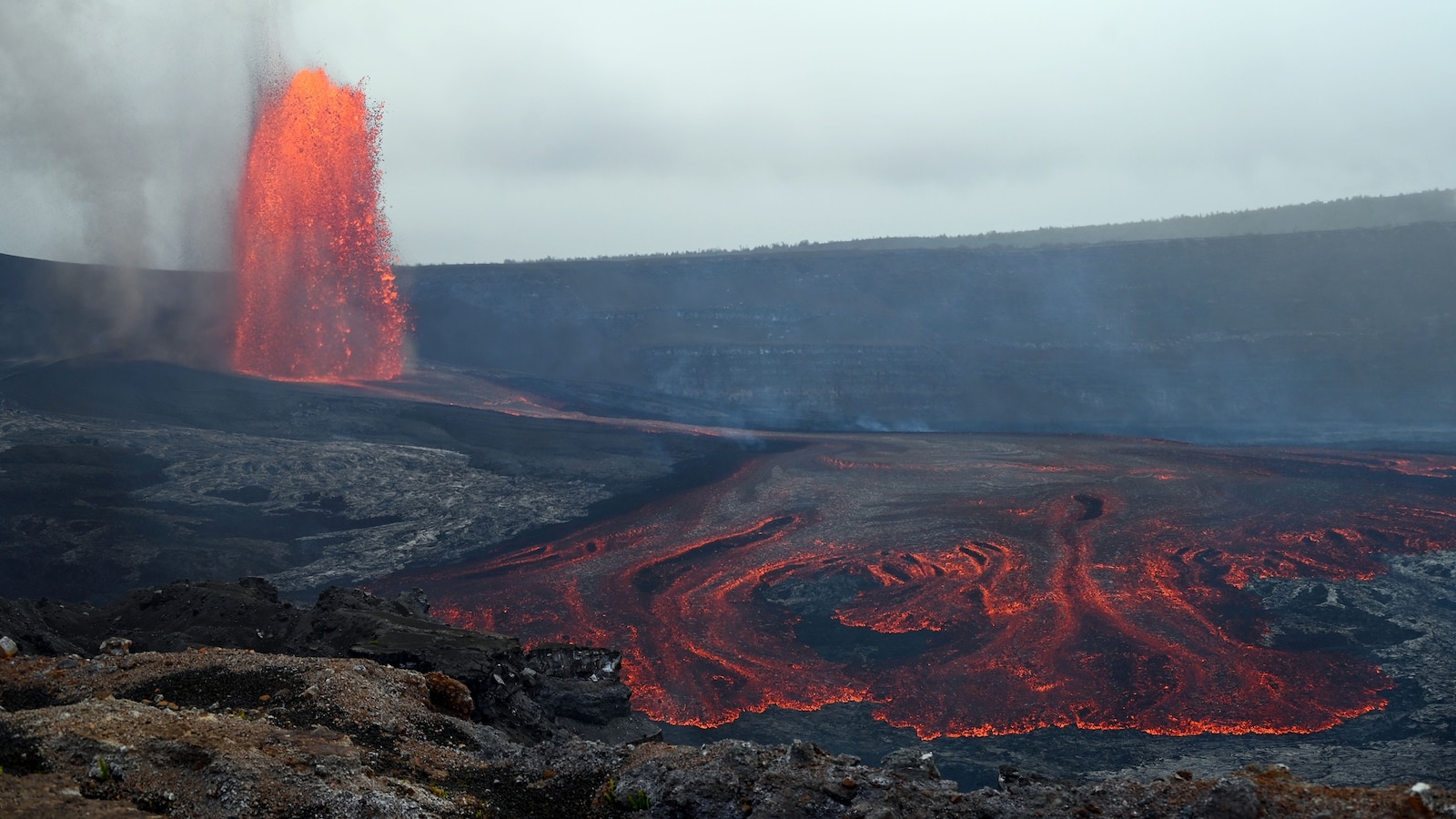
The lava fountain from the north vent in Halemaʻumaʻu at the summit of Kīlauea viewed from the south rim at approximately 3 p.m. HST on May 5, 2026. Channelized lava flowing from the north vent fed lava flows on the floor of Halemaʻumaʻu crater.
M. Patrick/USGS
Model forecasts indicate that episode 48 of the current series of eruptions will begin between Sunday and Tuesday, according to the USGS.
The USGS has issued a code yellow, indicating that the volcano is exhibiting signs of elevated unrest above known background activity.
On Thursday, glow was visible from both eruptive vents in the Halemaʻumaʻu crater. In addition, low-level seismic tremors are continuing, despite the eruption being on pause.
“The rapid return of inflationary tilt and glow from both Halemaʻumaʻu eruptive vents indicates that another lava fountaining episode is likely,” the USGS said.

A close-up view of lava on the floor of Halemaʻumaʻu crater and the southwest side of Kaluapele, Kīlauea’s summit caldera, during episode 47 on May 14, 2026. These flows remain hot and may slowly move in the days immediately following an eruptive episode.
L. Gallant/USGS
Dozens of eruptions have occurred since the current series began in December 2024. Some of the episodes produced high fountains — some up to 1,500 feet, geologists observed.
Episode 47 began on May 14 and ended abruptly nine hours later. The eruption caused lava to fountain from the north vent and tephra — or hot glassy volcanic fragments — fell within Hawaiʻi Volcanoes National Park.
The eruption also caused fine ash and Pele’s hair, the term for strands of volcanic glass produced by lava fountaining activity, to fall outside the park.
Other concerns from eruptions include high levels of volcanic gas due to the potential for far-reaching impacts downwind. Materials such a pumice, scoria and reticulite can also fall on the ground within one to three miles of the eruptive vents, the USGS said.

The lava fountain erupted by the north vent during episode 47 on May 14, 2026, reached about 650 feet (200 m) in height. It fed lava flows that covered portions of the floor of Halemaʻumaʻu crater and the southwest side of Kaluapele, Kīlauea’s summit caldera.
L. Gallant/USGS
Various volcanic fragments have been known to fall on Highway 11, west of Hawai’i Volcanoes National Park.
Instability, ground cracking and rockfalls are present around the Kilauea caldera, which is why that area of Hawai’i Volcanoes National Park has been closed since 2007.










Leave a Reply