

Mosquitoes and the diseases they carry are expanding into new territory. Rising temperatures, changing rainfall patterns, and global travel are reshaping where disease-carrying mosquitoes can thrive, according to the World Health Organization (WHO). Cases of dengue, a viral illness spread by mosquito bites, more than doubled in a year, from 6.5 million reported globally in 2023 to a record 14.6 million in 2024, the WHO says.
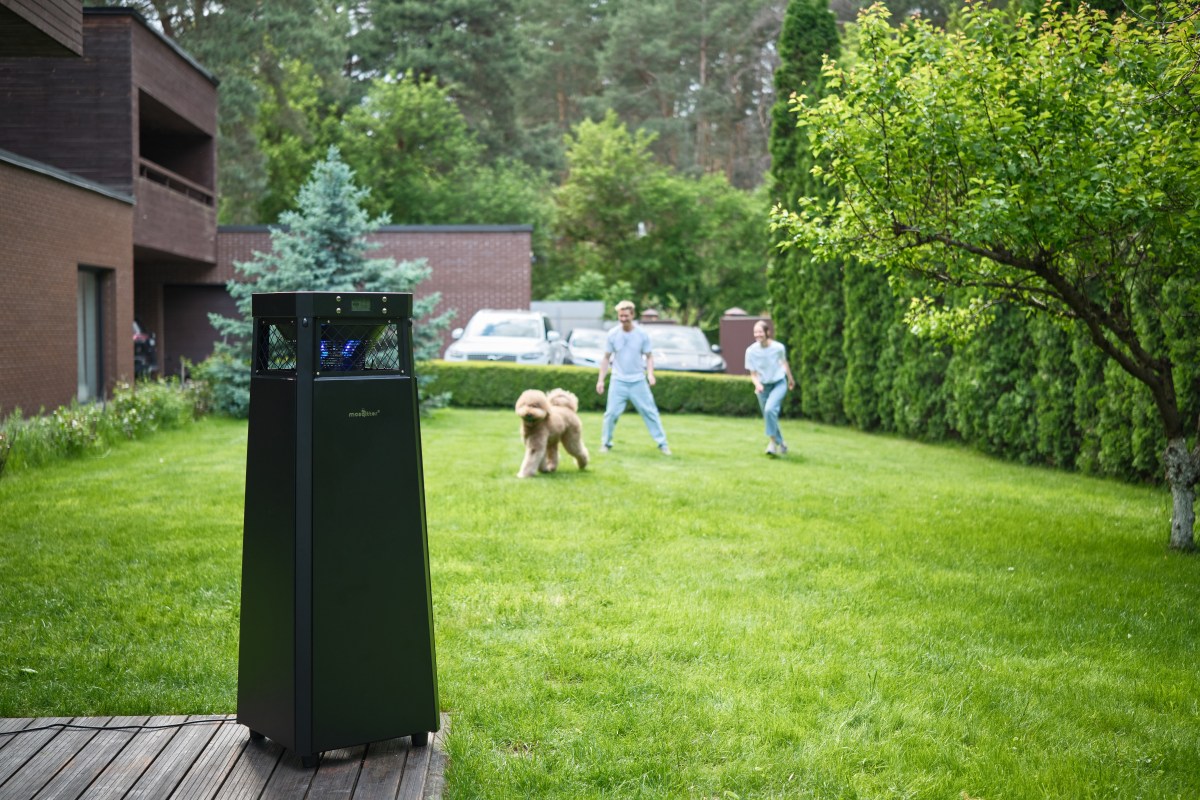
A 30-person, Pennsylvania-based startup, Mosqitter, thinks fighting that problem requires more than killing mosquitoes. The company started by building chemical-free devices that lure and trap female mosquitoes by mimicking the heat, scent and breathing cues of humans.
Anastasiia Romanova, co-founder and CEO of Mosqitter, told TechCrunch that the company set out to bring more sustainable mosquito-control products to a market still heavily reliant on chemicals. Romanova says it now has more than 5,000 devices operating across five continents, up from just over 250 when TechCrunch last covered the company in 2022. The startup now wants to turn its traps into an AI-powered monitoring network that can identify mosquito species, track changes in their numbers, and give earlier warnings about emerging disease risks.
Mosqitter began its R&D in Ukraine in 2019 and launched business operations in 2021, which the company considers its official go-to-market year. The company started by examining mosquito behavior. Female mosquitoes, the only ones that bite, seek blood before laying eggs. They lay eggs on a roughly three-week cycle, typically 100 to 200 at a time.
“We saw an opportunity: if we could catch the female mosquito at the point when she is about to lay eggs, we could potentially reduce the mosquito population and prevent it from growing,” Romanova said. “That’s why we combined elements such as heat, similar to the temperature of human skin; scent that imitates human skin odor; and light. In the Grand model,” which is the company’s highest-end offering, “we also use CO2 to imitate human breathing.”
Mosqitter, presenting Wednesday as part of TechCrunch’s storied Startup Battlefield competition happening this week in downtown San Francisco, is using AI to identify the mosquitoes its devices catch. Its computer-vision system analyzes biological characteristics to distinguish between species, Romanova told TechCrunch.
To identify a mosquito, Mosqitter runs an image through its neural network, checks the result against external datasets, and has entomologists validate the findings. It then assigns a confidence score based on how closely those assessments align.
“You can think about it as three judges analyzing a case and producing a verdict,” Romanova said.
Mosqitter also feeds environmental data, including weather, wind, and humidity, into its system. The company says that as it collects more data, it plans to use those inputs to forecast changes in mosquito populations and potential health risks.
Mosqitter’s product portfolio currently centers on two devices. Mosqitter Grand, its flagship product, is designed for larger areas and public spaces, while Mosqitter Mini targets smaller residential spaces and can also be deployed as a portable monitoring device. The startup plans to officially introduce its Febris Monitoring System next month, adding a data layer to monitor mosquito populations and assess the potential spread of mosquito-borne diseases.
“It’s very important to understand that Febris does not diagnose disease,” Romanova said. “We can’t say with certainty that a particular mosquito carries dengue. What we can say is that a particular mosquito species is present, and knowing that can help indicate an increased potential risk associated with diseases that species can transmit.”
The company is looking for B2B partners globally, particularly distributors with established sales networks and relationships with governments and retailers, Olga Diachuk, COO and co-founder of Mosqitter, said. Unlike Mosqitter’s hardware products, Febris targets institutional customers, including governments, public-health and mosquito-control agencies, airports, municipalities and universities that need continuous mosquito monitoring.
Brazil, which has a high burden of dengue, is one example of Mosqitter’s expansion. Mosqitter has built local manufacturing and sales operations there, according to the co-founders. The startup also considers the U.S., Greece, India, Ukraine and Nigeria key markets, and it uses a different sales approach in each.
In Greece, Mosqitter works with a long-established pest-control company. In the U.S., it sells its Mini device directly to consumers through Amazon and its own website. The company is also working with the UK Health Security Agency to deploy Febris at locations including Heathrow and Gatwick airports. International travel can bring in mosquitoes and mosquito-borne diseases from other regions, and Romanova says this highlights the need for more continuous monitoring.
“We think this part of the business could grow substantially with the Febris Monitoring System because governments are major buyers of mosquito-surveillance data,” Romanova said.
Mosqitter Mini retails for $199, while its professional Grand system costs $1,999. The company makes money from hardware sales, while Febris adds a recurring revenue stream from monitoring, dashboards, analytics and data services.
Mosqitter is on track to generate more than $1 million in revenue in 2026, Romanova said. Revenue from Febris has only recently started coming in, but the company projects the data business could bring in more than $3.5 million next year, based on the value of contracts it is currently bidding on.
Mosqitter is raising a $5 million round in two tranches, starting with $1 million and followed by another $4 million. The startup said the split is tied to milestones it plans to reach with its Febris Monitoring System. To date, Mosqitter has raised $1.9 million.
There’s also a story behind the name. Despite what most people assume, “Mosqitter” isn’t a mashup of “mosquito” and “quitter,” Diachuk said. It combines “mosquito” and “eater,” a name that made more sense when the company was focused primarily on catching mosquitoes.
When you purchase through links in our articles, we may earn a small commission. This doesn’t affect our editorial independence.






Leave a Reply