

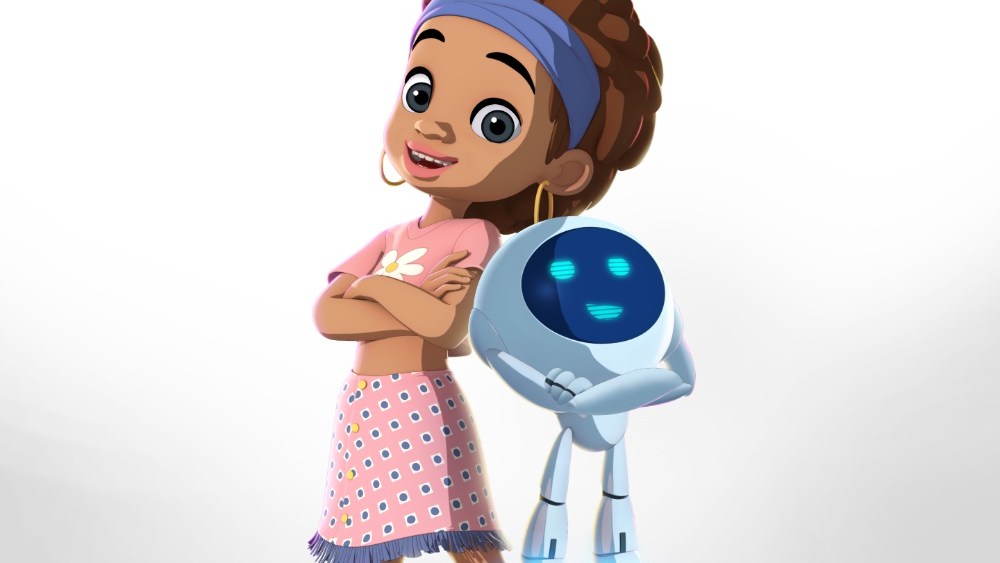
Kling AI has signed on as AI production partner on “Minibots,” the animated feature previously announced at AFM 2024 with “Mulan” director Tony Bancroft attached.
The company disclosed the partnership at the Cannes Film Market, where it also confirmed that Bancroft will handle character design on the project and that “Terminator 3” writer Michael Ferris has written the script.
John Adams of Evolutionary Films and BAFTA nominee Diane Shorthouse are producing. The announcement came at the close of Kling AI’s panel, “From Creative Possibility to Production Reality: Kling AI in Cinematic Workflows,” held at the Palais des Festivals’ Main Stage.
Alongside the “Minibots” partnership, the company launched what it is calling its next-gen initiative – a program that will offer qualifying filmmakers cash incentives and compute resources for productions that advance the use of AI in filmmaking.
The panel brought together three directors working with Kling AI across major productions. Jon Erwin – founder and chief content officer of Wonder Project and CEO of Innovative Dreams – detailed how his Amazon Prime Video series “House of David” drew more than 50 million viewers in its first season. His follow-up project, “Moses,” starring Oscar winner Ben Kingsley, moved from concept to broadcast-ready first episode in roughly five months, with principal photography completed in a single week with a crew of around 100. “The normal cycle of time at a streamer is three years for that process,” Erwin said. “It’s amazing how fast content can be made.”
Chinese animation director Wei Li, known for “Big Fish & Begonia” and Annecy 2021 Official Selection “Jiang Ziya: Legend of Deification,” said his Kling AI collaboration “Born of the Tide” – produced in a traditional Chinese ink-painting visual style – has cut both production time and budget by roughly a third compared to his prior animated features. He said he hand-drew approximately 80% of his own storyboards and built 3D layout models for around 70% of scenes to maintain spatial and perspective consistency.
South Korean director Eekjun Yang of Mateo AI Studio / AI Content Lab at MBC C&I, whose full AI feature “Raphael” is targeting theatrical release in Korea, said his team of seven produced the science-fiction film at a cost far below what a conventional shoot would have required – which he estimated could have run between $700,000 and $2 million with a crew of 150 to 300. “Probably the biggest misconception is the idea that we’re using AI just because we want to make films cheaper and faster,” Yang said via interpreter. For a director without prior feature credits or access to traditional investment, he said, AI was not a creative choice but a prerequisite.
All three panelists cited Kling AI’s 3.0 model and its native 4K output as central to meeting streaming and theatrical delivery standards. Erwin said his productions deliver to Amazon in 4K HDR and that his upcoming theatrical feature “Young Washington,” which opens in the U.S. on July 3, meets the highest cinema specifications using the same toolset.
The panel also coincided with Kling AI’s approach to its second anniversary. “Two years in AI is like six years in real life,” Kling AI head of operations Yushen Zeng said, noting the platform has passed 30 product iterations and now serves more than 60 million global creators and 30,000-plus enterprises.



Leave a Reply