

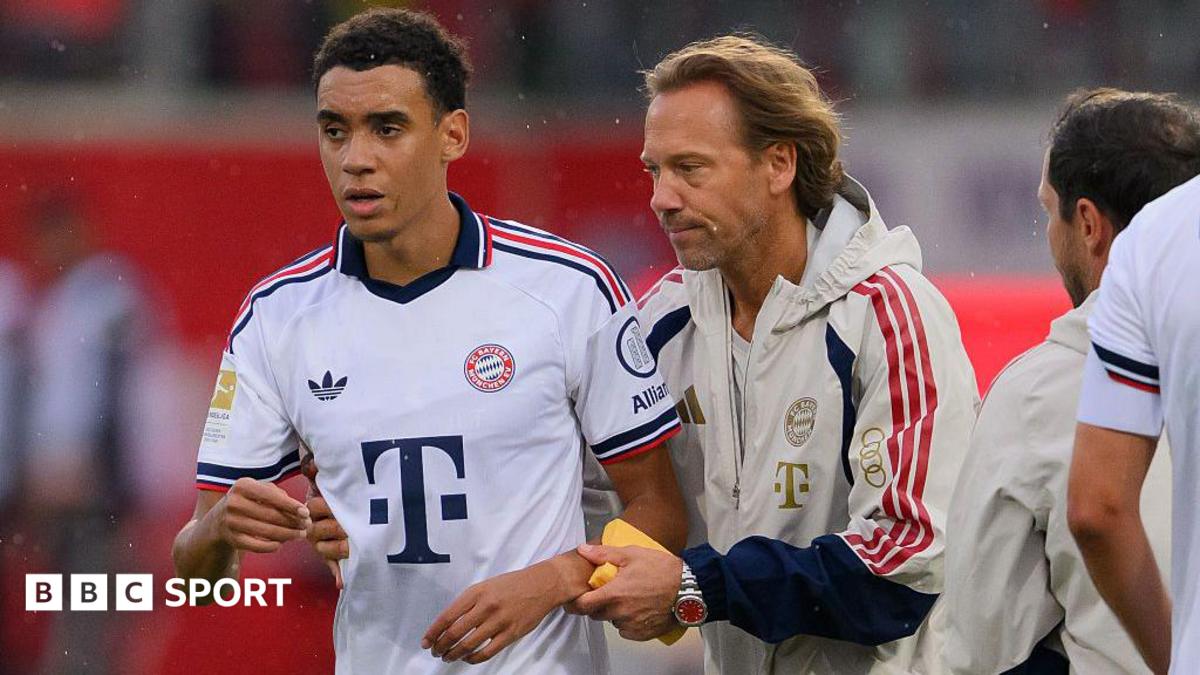
Following his collapse on Tuesday, Musiala posted a statement on Instagram where he said the seizures have become part of his everyday life.
Absence seizures are a type of generalised seizure that commonly affect children and young adults.
There are two types of absence seizures: typical and atypical.
Dr Meneka Sidhu, a consultant neurologist at the National Hospital for Neurology and Neurosurgery in London, said typical absence seizures usually last seconds and the person affected may appear to be daydreaming or looking blank.
In an absence seizure, a person has varying degrees of loss of awareness and can result in the person affected losing balance and being unresponsive during the seizure itself.
“It can be very short-lasting, and the person can continue like nothing happened,” she said. “With atypical absences that last longer, people may have automatic movements like fidgeting with their hands, eyelid fluttering and lip smacking. Some people may fall.”
Repeated episodes of an absence seizure over more than 24 hours can be an indication of epilepsy, although the seizures can be treated with medication.
“For anybody affected by epilepsy, it is important to try to identify triggers,” added Dr Sidhu. “For people who play sport, triggers may include hyperventilation and dehydration.
“When effectively treated, there is no reason absence seizures should stop anyone playing sport.”
Musiala’s condition is one that has been managed by other elite athletes.
Rugby player Tommy Freeman started having absence seizures as a 14-year-old and, after later being diagnosed with epilepsy, he now manages the condition by taking tablets alongside playing for Northampton and England.

Leave a Reply