

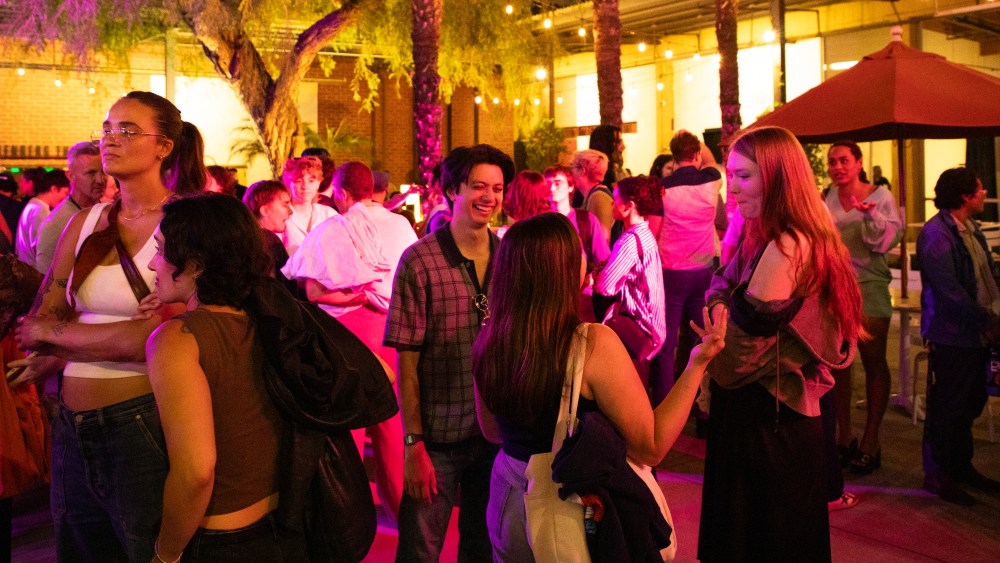
Outfest looked a little different this past weekend.
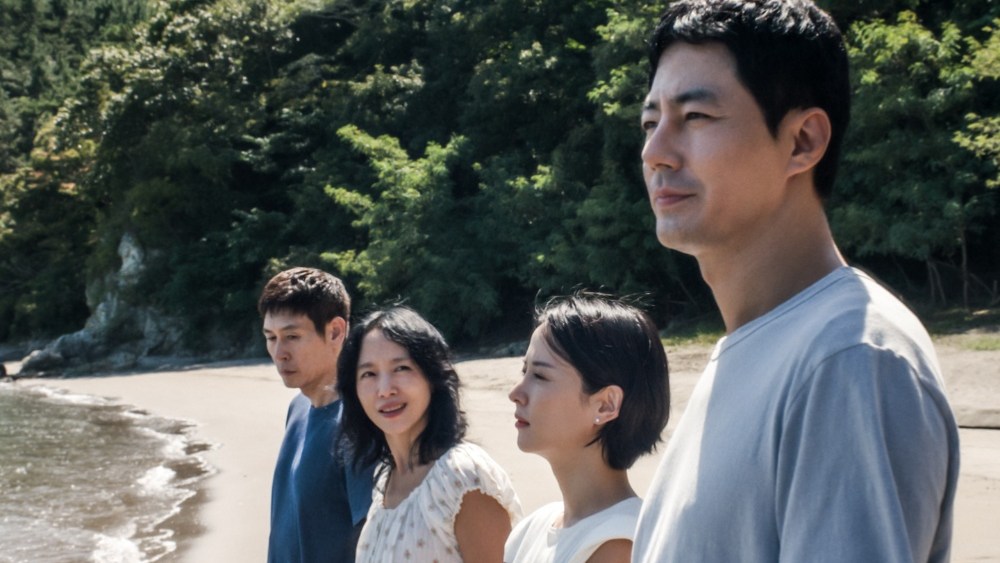
Instead of the usual 11-day window over the summer, the festivities ran for four days from July 23-26, with screenings and conversations held at the Los Angeles LGBT Center’s Renberg Theatre in Hollywood. The program featured over 30 films and shorts, headlined by Gregg Araki’s “I Want Your Sex,” Brydie O’Connor’s “Barbara Forever” and Alexandria Stapleton’s “The Brittney Griner Story.”
OutfestNEXT is all part of Outfest’s strategy to strategically scale down after a two-year hiatus, caused by financial troubles, a legal battle with a former executive director and unionization of the organization’s workforce that culminated in mass layoffs. “It really left a hole when we weren’t doing our traditional summer festival,” interim executive director Christopher Racster tells Variety. “It is a chance for us to experiment.”
But most screenings held at the Renberg Theatre, which holds 183 people, were sold out or on standby, and conversations with filmmakers and members of the community continued in the bustling courtyard long after the credits rolled. Clearly, there was a hole in the heart of L.A.’s queer film community without a yearly festival like Outfest bringing people together.
“I call it the unfortunate opportunity,” Racster says of the “perfect storm” that caused the organization to shutter. He references the SAG-AFTRA strikes starting in July 2023 that made it nearly impossible for donors to continue their contributions, the Dylan Mulvaney Bud Light incident that led corporations to “retract” their support of queer organizations, and “management issues” within Outfest’s own organization.
As Outfest looks to rebuild and reestablish itself as a mainstay L.A. film festival, a new board of directors was appointed last September to spearhead the organization, led by president Lucas Bailey, who joined Outfest in January 2024 after working as an attorney for NBCUniversal, Peacock and Netflix.
“I won’t say that it’s been an easy couple of years. We upset a lot of people in our community, and we have done our best with this new board to repair things,” Bailey says.
He adds: “I also like the fact that we’ve now got a spectrum of ages. I’m trying to bring in younger people who are early-to-mid level career, who have the energy and time to help shape this next chapter.”
“Our focus has been on clear and transparent financials, and a sustainable business model,” Racster says. “The sad thing is, with all nonprofits or any organizations that’ve been around as long, you go through cycles. There’s no one who’s stable for 45 years. It’s just unfortunate that it happened and that people were injured in the process.”
Racster, who previously served as Outfest’s executive director from 2011 to 2019, says he was able to bring back two-thirds of the staff that he originally hired.
“That makes me feel great because they understand us from the inside,” he says. “It allows them to have an opportunity to have some agency that they haven’t had over the past couple of the years.”
While Racster, Outfest’s only full-time staff member, says he’d like to continue hosting OutfestNEXT twice a year, “growing it beyond just that time frame” is a long-term priority to attract more press, agents, managers and distributors.
The organization also does one-off screenings throughout the year. In April, Outfest hosted a screening of “The Other Two” actor Noam Ash’s new film “Bookends,” which he wrote and starred in alongside F. Murray Abraham and Charlie Barnett.
“We had our screening sell out in a couple of hours, which I think is really a testament to the audience the festival has built, and how much hunger there is for these films,” Ash says, who was part of the festival’s host committee to help spread the word about Outfest’s return to summer programming.
“What people don’t recognize is that when places like Outfest go quiet for a couple of years because of our own problems, you miss a whole pipeline of people getting their start and getting their first opportunity to exhibit,” Bailey says, adding that Outfest alumni have gone on to screen their work at festivals like Sundance thanks to their long-standing relationship.
For performers and screenwriters on the rise like Ash, festivals like Outfest are not just an opportunity to connect with the larger LGBTQ+ community, but a chance to get noticed by executives and dealmakers; “Bookends” recently landed a U.S. distribution deal after playing the festival circuit, including stops at Frameline and the Santa Barbara International Film Festival. It will release theatrically next February.
Ash says, “On a professional level, it is so important that there is someone exhibiting these films in Los Angeles. It’s where the people who, in many respects, decide what gets made in Hollywood, get to come and see how these stories are affecting change and how much they resonate with people. In that way, it also has implications that reach much further than just the local community. The decisions that are made in this town affect the landscape across the country and the world.”
Outfest’s senior programmer Daniel Crooke notes that the programming team has gotten smaller, now led by a four-person team. But he remains “emboldened” by the turnout at the first edition of OutfestNEXT back in November, which was presented by HBO Max and featured a 25th anniversary screening of Greg Berlanti’s directorial debut “Broken Hearts Club.”
“My main learning from OutfestNEXT last year was that people are so hungry to sit in a theater together,” Crooke says. “Honestly, as soon as we wrapped last year, we immediately started talking about how we were going to run this thing back and do it again.”
Connecting influential queer filmmakers like Berlanti and Araki to the emerging filmmakers of today is an essential part of Outfest’s mission.
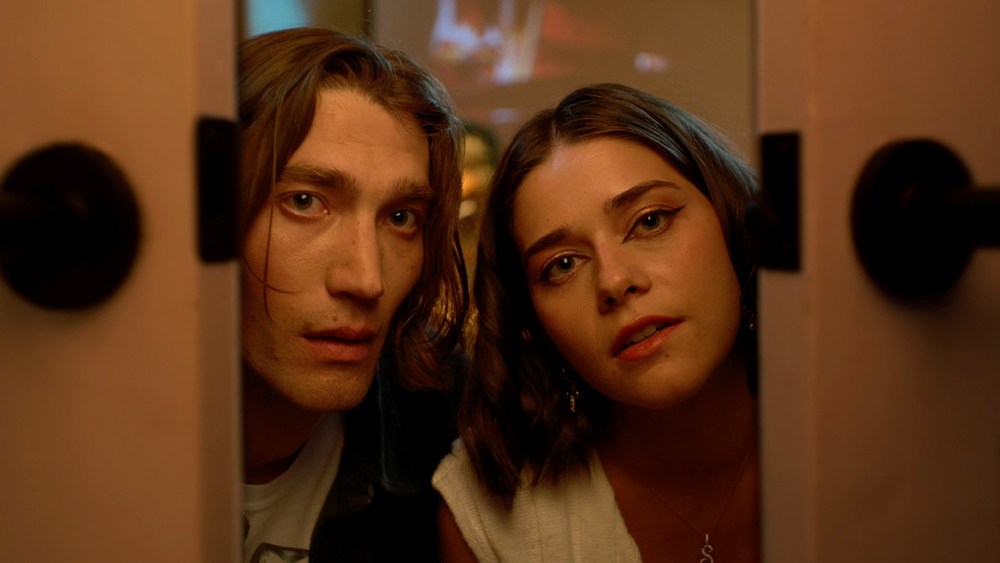
“One of the really exciting things for me, when I’m looking at this new generations of queer and trans filmmakers, is that the fingerprints of Gregg Araki are all over them,” Crooke says. “I think about a film we played, ‘Sparks,’ which is about a renegade group of indie filmmakers in small-town Nevada. There is a punk poetry to that film, an unapologetic spirit that feels so tied to what Araki has done his whole career. It’s exciting to have a pairing like that in the program.”

Gregg Araki presented his new film “I Want Your Sex” at OutfestNEXT.
As the festival searches for new means of funding, Racster is treating Outfest’s shuttering and the current political climate as a “good wake-up call” for where queer-led organizations need to look if they want to stick around.
“We were very reliant on corporations, especially entertainment corporations. And when we’re in the middle of mergers, suddenly, two studios that support you with two different checks become one studio and one check,” he says, while noting that studios like Netflix, Warner Bros., Sony, NBCUniversal and Paramount have “maintained” their support in spite of the volatile political climate.
Bailey says “once DEI comes back,” he wants Outfest to re-partner with different resource groups and bring exclusive screenings and panels to employees.
“Once we get more funding that we can allocate, I’d love to pursue that because that’s when you start to build partnerships with corporations that are interested in supporting the arts,” he continues.
While Outfest’s exact next steps remain to be seen, Racster and his board of directors are currently focused on building out the org’s educational opportunities for emerging filmmakers, including a producers lab and the return of Outfest Fusion, which spotlights films by queer filmmakers of color.
“You can corner me and ask hard questions if you want to. That’s the best way to figure it out,” Racster says. “For the future, I want us to play a really critical role in helping our filmmakers manage the transition that’s going on in the industry right now and build sustainable, long-term careers. That is some of the biggest service we can do, not just to our storytellers, but to the industry right now when so many people are struggling.”


Leave a Reply