

Inflation jumped for a third consecutive month as the Iran war continued to drive up prices in May, surpassing 4% for the first time in three years. The reading matched economists’ expectations.
Prices rose 4.2% in May compared to a year earlier, marking an increase from a year-over-year inflation rate of 3.8% in the prior month, U.S. Bureau of Labor Statistics data showed.
As recently as February, inflation clocked in just a few ticks above the Federal Reserve’s target level of 2%.
The Middle East conflict prompted the Iranian closure of the Strait of Hormuz, a maritime trading route that facilitates the transport of about one-fifth of global oil supply. The standoff triggered one of the largest oil shocks ever recorded.

U.S. consumer price index June 10, 2026
U.S. Bureau of Labor Statistics
Energy prices — a broad index that includes gasoline — soared 23% in May compared to a year earlier, data showed.
As a result, gasoline prices surged. The price of an average gallon of gas stood at $4.15 as of Wednesday, AAA data showed — an increase of $1.17 per gallon since the war began on Feb. 28. That amounts to a nearly 40% price jump in about three-and-a-half months.
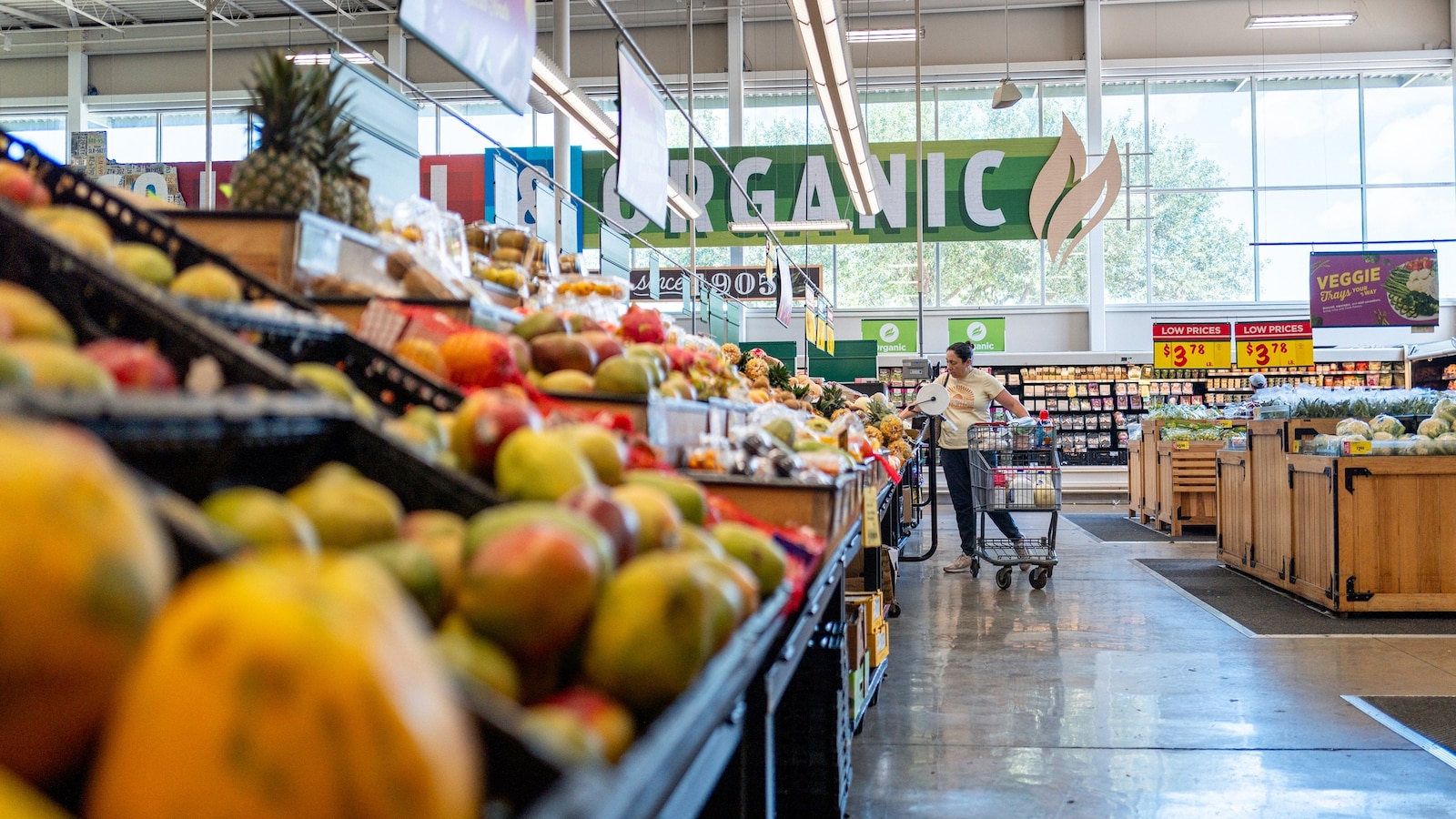
The oil shortage also drove up diesel prices, putting upward pressure on grocery prices. Diesel is the lifeblood of the food supply chain, fueling trucks and ships. Higher fuel costs for suppliers mean price hikes in grocery aisles as the increased costs are passed down the supply chain.

A customer shops for produce at an H-E-B grocery store on May 11, 2026 in Austin, Texas.
Brandon Bell/Getty Images
Prices for tomatoes soared 32% in May compared to a year earlier, government data showed. Seafood prices jumped 6% over that period, while beef prices climbed nearly 13%.
A persistent increase in consumer prices may put pressure on the Fed to raise interest rates as a means of dialing back inflation.
For now, futures markets overwhelmingly expect the Fed to hold interest rates steady when policy makers meet next week, according to the CME FedWatch Tool, a measure of investor sentiment.
The meeting will be the first since Kevin Warsh began a four-year term atop the central bank.
During his term as a Fed governor in the late 2000s and early 2010s, Warsh gained a reputation as an interest-rate “hawk,” meaning he generally preferred higher interest rates as a means of ensuring low and stable inflation.
Last year, however, Warsh voiced support for lower interest rates, rebuking the Fed’s concern about inflation risk posed by a flurry of new tariffs.
At his Senate confirmation hearing in April, Warsh emphasized the threat posed by elevated inflation.
“When inflation surges — as it has done in recent years — grievous harm is done to our citizens, especially to the least well-off,” Warsh said.



Leave a Reply