

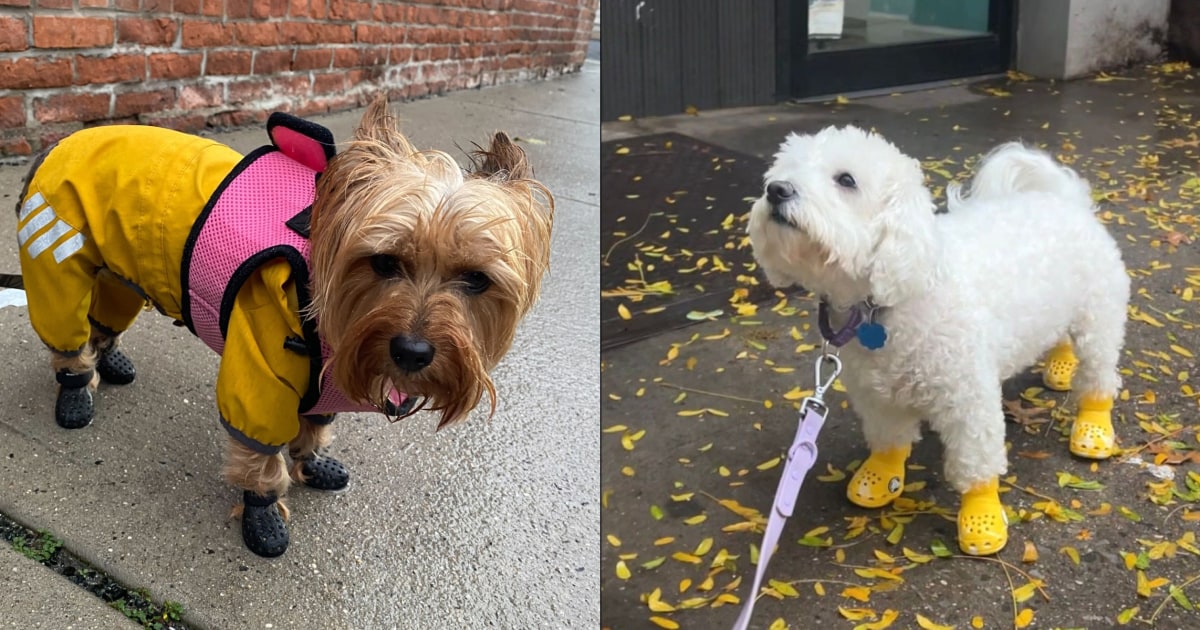
As a pet owner, here’s a good rule of thumb I hear constantly: If the ground is too hot for your bare feet, it’s probably too hot for your pet’s paws. Just like you would protect yourself on a hot summer day, it’s important to take necessary precautions to keep your dog safe on walks, park trips and beach outings (and yes, dogs can experience heatstroke, dehydration and sunburns just like humans do).
I spoke to board-certified veterinarians about how to protect your dog’s paws in the heat, plus how to treat and prevent burns on their paw pads. I also compiled products our NBC Select editors use for their own pups in the summertime, as well as recommendations from vets.
Want more from NBC Select? Sign up for our newsletter, The Selection, and shop smarter.
Best products for protecting your dog’s paws in the heat
Below, I rounded up expert- and editor-recommended products to keep your dog’s paws safe in the heat. However, all of the experts I spoke to recommend walking them early in the morning or late in the evening when the sun isn’t strong and to avoid pavement altogether (walking on grass or dirt is best), says Dr. Jordyn Zoul, veterinarian at Seaside Veterinary Hospital.
Best dog boots
“Protective dog booties are one of the most effective ways to prevent heat-related paw injuries, particularly if you’re walking on pavement during warmer months,” says Dr. Lindsey Kaplan, veterinarian at Overland Animal Hospital and Pet Resort. These rubber slip-on shoes for dogs are a favorite among our NBC Select editors.
NBC Select senior editor Shalwah Evans puts these shoes on her 7-pound, silky terrier Minni before walking on hot city pavement, and says that they’re sturdy, secure and easy to put on. “I went through about seven pairs of cheap shoes for my Minni before I finally got her some Wagwear boots. They were the first pair to truly fit her tiny paws comfortably enough for her to walk and run normally,” says Evans, who has a pair for the winter and another for the summer. “The perforated ones are even easy to put on when her hair is super long and shaggy. It gives me peace of mind that her paws are protected from the city streets when she’s wearing them.”
Each shoe has a Velcro top to secure them on your dog’s paws and they come in sizes ranging from XXXS to XXXL, so they fit dogs that weigh under five pounds and over 150 pounds.

Best paw balm

This balm comes recommended by veterinarian Dr. Stephanie Liff, medical director and owner of Pure Paws Veterinary Care, who says it’s a great alternative to boots and serves as a wax barrier to give a layer of protection to your dog’s paw pads. You can also use it to protect paw pads from sand, ice and snow.
Best breathable dog boots

I love Crocs, so when I saw Bark released ones for dogs, I had to get them for my 15-pound havanese and bichon mix, Bella, to match. It’s a bit of a struggle to put them on initially since the opening is very small (it took two people to stuff Bella’s paws in there), but they look cute and secure when they’re finally on. I love that they have little holes like a classic Croc, so they’re breathable during those really hot days. Bella usually hates any shoe, but she definitely warmed up to these quickly, which gives the impression that they’re comfortable.

Best dog pool

Dipping your dog’s paws in cool water (make sure it’s not ice-cold) can help them release heat, which helps them cool off. A mini pool can be great to have on hand for those moments: Fill it with cool water and let your dog stand or splash around in it. It’s foldable, so it’s easy to store away when you’re not using it, and comes with two caps: a standard cap that prevents water from leaking out and a cap to use if you’re connecting a hose to the pool.
How hot is too hot for your dog?
There isn’t one specific temperature that’s considered too hot because factors like humidity, direct sun, wind, the dog’s breed, age and overall health all play a role, says Dr. Gary Richter, board-certified veterinarian and founder of Ultimate Pet Nutrition.
The bigger concern, however, is what you’re walking on. “Pavement can become significantly hotter than the surrounding air. On an 85-degree day, asphalt can exceed 130 degrees Fahrenheit, which is hot enough to cause severe burns to a dog’s paw pads,” says Kaplan. Keep in mind sand can also get very hot.
A good rule of thumb is to place the back of your hand on the pavement or surface for 7 to 10 seconds — if it’s uncomfortable for you, it’s probably too hot for your dog’s paws, says Richter.
What does hot pavement do to a dog’s paws?
Hot pavement can cause painful burns to your dog’s paw pads, ranging from mild irritation to blistering and tissue damage in severe cases (which require weeks to heal). “Even before burns occur, walking on excessively hot surfaces can cause discomfort that may discourage a dog from exercising or lead to overheating,” says Richter. Constant heat exposure can also dry out their pads, making them more prone to cracking and injury.
What are the signs that your dog is too hot?
If the ground is too hot, your dog might suddenly stop walking, try to pull toward grassy areas, lift one or more paws repeatedly, limp or refuse to continue the walk, says Kaplan. Some dogs will also lick or chew at their feet once they get home. Most importantly, listen to your pet: If they seem reluctant to put their feet down or hesitant to walk, that may be a sign the ground is too hot, says Liff.
Signs of overheating include excessive panting, drooling, lethargy, weakness, bright red gums, vomiting or disorientation. “These symptoms can indicate heat exhaustion or heat stroke, both of which require immediate attention,” says Kaplan.
Frequently asked questions
If your dog is showing signs of hurt or burned paws, move them to a cool surface immediately, rinse their paws with cool water and avoid walking until their paws heal, says Richter. “Avoid applying butter, oils or human burn creams because these can delay proper treatment or be harmful if licked,” says Kaplan.
Burns can look less severe at first and get gradually worse over the course of 24 to 48 hours, according to Zoul. If your dog is reluctant to walk, limping or showing other symptoms listed above, a visit to the vet is needed to prevent infection and control pain, says Liff.
Yes, your pet needs sunscreen: All dogs are susceptible to sunburns and skin cancer, and their faces, especially their noses and ears, are particularly sensitive to the sun, experts say. Some dogs are more at risk than others (like hairless breeds and dogs with white or thin coats). However, avoid putting sunscreen directly on your dog’s paw pads because they can get too slippery, which means your pup can’t get enough traction and grip while walking.
More tips to keep your dog cool in the heat
Below, I outline vet-recommended tips to help protect your dog from heat exhaustion and heat stroke this summer:
- Limit outdoor activities to the earlier and later parts of the day when it is cooler and seek shady, breezy areas.
- During extreme heat, it’s much safer to replace some of that physical exercise with indoor mental enrichment, which can be just as tiring and rewarding, says Kaplan. Look for food puzzles and snuffle mats that you can use in a temperature-controlled area. I, along with our other editors, love the Woof Pupsicle, which keeps Bella both cool and entertained.
- Always have a water supply for your dog. Bring a portable water bowl or bottle, which are typically lightweight and easy to carry.
- Consider a cooling mat or cooling bed, which gives dogs a cold surface to rest on indoors or outdoors. When dogs lay on it, the gel inside activates, making it cool to the touch. You can also put most of them in the fridge or freezer to pre-cool them.
Meet our veterinarians
At NBC Select, we work with experts who have specialized knowledge and authority based on relevant training and/or experience. We also take steps to ensure all expert advice and recommendations are made independently and without undisclosed financial conflicts of interest.
- Dr. Jordyn Zoul is a veterinarian at Seaside Veterinary Hospital in St. Simons Island, Georgia.
- Dr. Lindsey Kaplan is a veterinarian at Overland Animal Hospital and Pet Resort in Denver, Colorado. She also serves as a veterinary expert for Woof.
- Dr. Gary Richter is a board-certified veterinarian and founder of Ultimate Pet Nutrition.
- Dr. Stephanie Liff is a veterinarian, medical director and owner of Pure Paws Veterinary Care in New York City.
Why trust NBC Select?
I’m an editor at NBC Select who has over six years of experience writing about pets and the best dog products to buy. For this article, I spoke with four veterinarians about how to keep your dog’s paws safe in the heat and the best products to prevent and treat burns on their paw pads.
Catch up on NBC Select’s in-depth coverage of tech and tools, wellness and more, and follow us on Facebook, Instagram, Twitter and TikTok to stay up to date.













Leave a Reply