

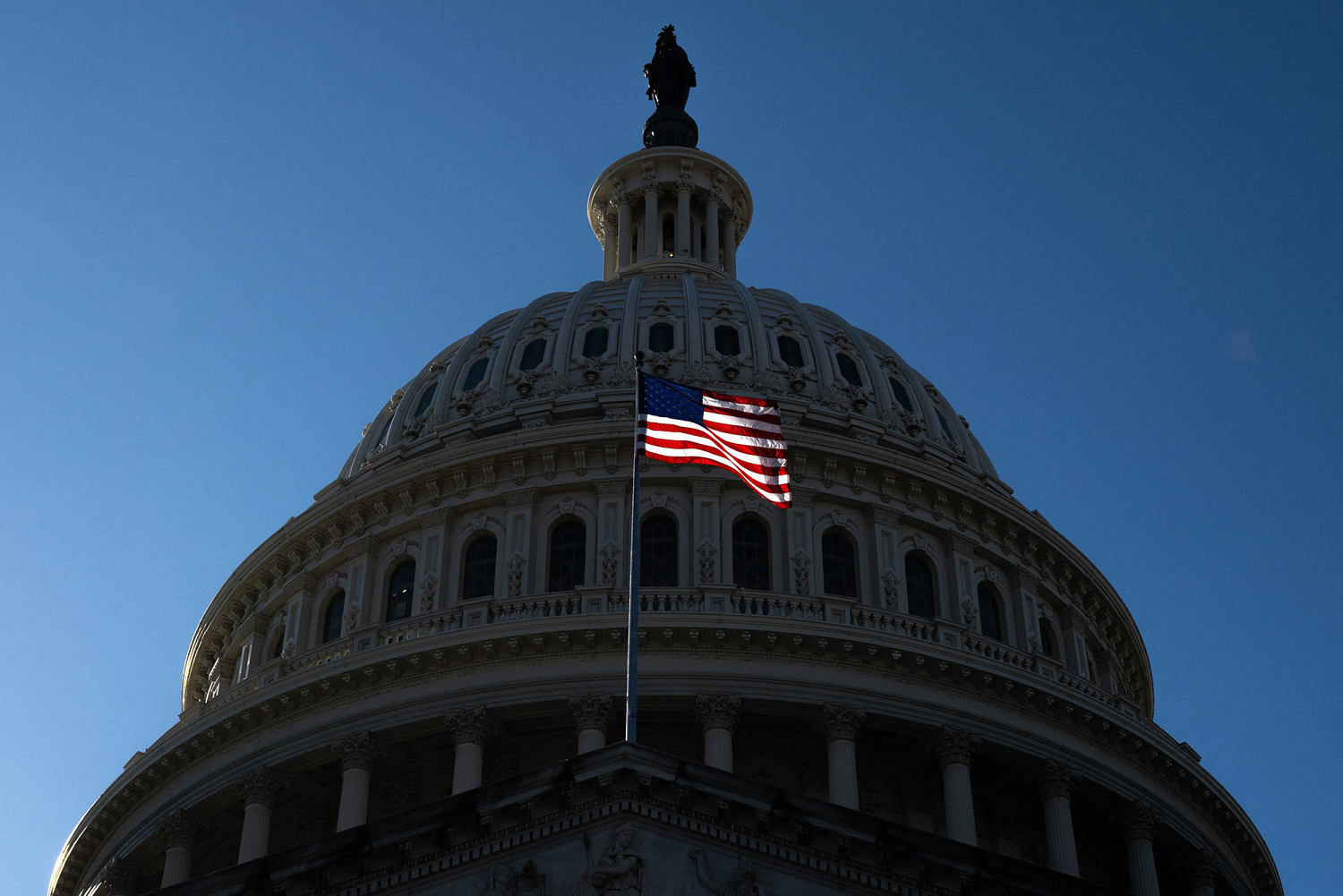
WASHINGTON — The House is scheduled to return Monday from a five-week summer recess with a top priority of avoiding a government shutdown before the midterm elections.
The House will only be in session for four days this week and will return again on Sept. 14, after Labor Day, when the Senate will also come back from its lengthy break. From there, the House has just three weeks left in session before Election Day on Nov. 3.
Here’s what could be on the agenda for House Republican leaders before the midterms, when their paper-thin majority will be on the line:
Fund the government and prevent a shutdown
This week, the House is expected to take up a Senate-passed bill to prevent a government shutdown, according to a Republican leadership aide. Money is currently expected to expire for federal departments and agencies on Oct. 1.
It’s the main item on the agenda, the only critical deadline requiring action before the midterm elections.
If it passes, the bill would go to President Donald Trump to become law and keep funds flowing through Dec. 11. That would buy time for a larger government funding deal, on which negotiations have stalled out. The result of the midterm elections will shape the talks, with the 2026 winners likely to feel empowered.
The legislation passed the Senate by a vote of 90-6, continuing funding on autopilot without major changes and thereby staying non-controversial. It includes a few add-ons that were negotiated by both parties: restricting Trump’s power to cut off federal grants to blue states that didn’t vote for him and preserving food assistance programs like SNAP and WIC, as well as disaster relief.
The bill is expected to be fast-tracked to the House floor on “suspension,” skipping committee hurdles and requiring a two-thirds majority to pass. It’s likely to pass by a big margin, unless Trump jumps in with last-minute demands as he has with some past funding deals.
Chuck Edwards censure vote
During the August recess, the bipartisan House Ethics Committee said that it was recommending that the full chamber vote to censure Rep. Chuck Edwards, R-N.C., after its months-long investigation found that he “engaged in persistent unprofessional and inappropriate conduct towards two young female staffers.”
The House could take that vote as soon as this week. If a censure resolution does come to the floor, it is expected to pass given that only a handful of Republicans would need to team with all 212 Democrats for a successful vote.
Shortly after the censure recommendation, Edwards said he was dropping his bid for re-election and would not appear on the ballot in November. But Edwards, who has disputed the Ethics panel’s findings, is aggressively fighting to defeat the censure vote. Last week, he reportedly sent a 22-page letter to colleagues defending his actions and arguing that nothing found by the ethics probe could be construed as “sexual misconduct.”
“An affectionate friendship is not a sexual proposition,” he wrote.
Censure is a formal rebuke of a member of Congress; after a successful vote, the member is typically required to stand in the well of the House chamber while the resolution is read aloud. But censure does not remove the lawmaker from office.
Also on the ethics front, the House will vote on two contempt of Congress resolutions recommended by the Ethics Committee related to the panel’s investigation of former Rep. Sheila Cherfilus-McCormick, D-Fla. The committee recommended finding both Michael Joseph, current mayor of North Miami Beach, and Hector Roos, a Florida political operative, in contempt for refusing to comply with subpoenas in that probe. Cherfilus-McCormick resigned in April after the Ethics Committee found her guilty of 25 ethics violations and as it prepared to consider expelling her from Congress.
Iran and Russia sanctions
One potential item on the upcoming House agenda is a bill passed by the Senate to slap new sanctions on Russia and Iran. The House has no plans to vote on it this week, but it remains a possibility in the foreseeable future.
The legislation, approved by the Senate on a vote of 86-11 in early August, is called the Lindsey O. Graham Sanctioning Russia and Iran Act of 2026, named after the late senator whose unexpected death in July fueled support for the cause he had long supported.
The bill aims to punish the largest buyers of Russian oil and gas and paves the way for sanctions against Russian leaders, family members and oligarchs. It also allows the U.S. to impose targeted tariffs on goods from countries that buy most Russian oil and gas, more specifically the five biggest importers.











Leave a Reply