

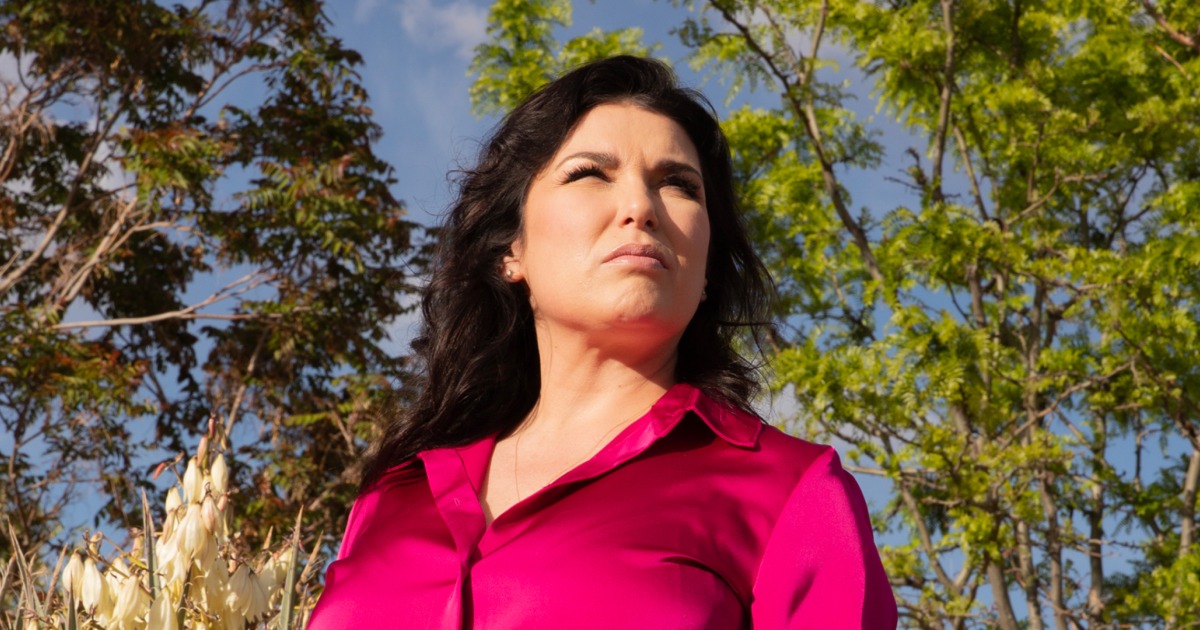
“Until we are heard, until survivors are heard and believed, then I don’t think there’s ever going to be any justice,” Benavidez, 52, said in a recent interview, her first since the Justice Department in January released millions of documents that brought renewed attention to Epstein’s activities at the ranch, and missed opportunities to investigate them.
For more on this story, watch “Hallie Jackson NOW” on NBC News NOW today at 5 p.m. ET.
The disclosures, including an unsubstantiated anonymous claim that two “foreign girls” died during sex and were secretly buried on the property, prompted state authorities to launch new investigations this year — a criminal case led by the New Mexico Department of Justice and a “truth commission” led by the state Legislature.
Benavidez says she would willingly tell investigators what she endured. Even though Epstein is long dead and his chief accomplice, Ghislaine Maxwell, is in prison, Benavidez says more people need to be held accountable.
“I don’t think it’s too late for the truth to come out about people that were involved and helped him and turned a blind eye to his crimes,” Benavidez said. She has not publicly shared names.

New Mexico Attorney General Raúl Torrez said he is committed to finishing an investigation that should have been done years ago. His office searched the ranch in March, the first time law enforcement had done so. And he promised to give survivors a safe place to share their experiences.
“We are going to do everything we can to get to the bottom of what happened there, follow every lead, no matter how uncomfortable it is or how long it takes, and most importantly, we need to center the voices of victims in this process,” Torrez told NBC News.
New Mexico has long been treated as an undercard in the Epstein saga, although allegations of abuse there date nearly as far back as allegations in Florida and New York.
He bought the ranch in 1993 and visited several times a year, often with girls or young women. In 2008, he pleaded guilty in Florida to paying underage girls for sex and cut a deal with prosecutors that spared him serious jail time and ended a more expansive federal investigation that included New Mexico. In 2019, federal authorities in New York arrested him on a new set of charges that did not mention New Mexico. The New Mexico Attorney General’s Office opened its own investigation of Epstein that year, but stopped at the request of the prosecutors in New York, ultimately sending them the case file.

Former New Mexico Attorney General Hector Balderas, who led the 2019 investigation, said he expected the prosecutors in New York to share evidence that could be used to charge Epstein with state crimes, but he heard nothing from them — not after Epstein was found dead in a jail cell in August 2019, nor after they secured a conviction of Maxwell in December 2021.
Like the sweetheart deal two decades ago in Florida, the missed opportunities in New Mexico represent “a black eye in the justice system,” Balderas said. “Not everybody’s case gets reviewed the same, and sometimes law enforcement and prosecutors don’t do a good job at sharing information and working together to get the conviction.”
Torrez said he has asked the Justice Department for unredacted copies of documents in the Epstein files that mention Zorro Ranch. The Justice Department said it welcomed the new investigation and was ready to provide help.
Benavidez, a New Mexico native, first came to the ranch in late 1999 when she was a 22-year-old newly licensed massage therapist. She said she was hired first to massage Maxwell, and later Epstein. She recalled the beauty of the landscape as she drove to the ranch, which felt intimidating and isolating. In an FBI interview, she described passing through security and driving a winding dirt road to a mansion where she descended into a basement-level massage room, passing pictures of topless women.

At first, Benavidez said, Epstein and Maxwell seemed like eccentric rich people with powerful connections who paid good money and could help her find more opportunities. Her impression darkened as Epstein’s massages turned aggressively sexual; Benavidez said he raped her. Ashamed and scared, she said nothing. When she tried to turn down requests to return, Epstein’s staff pushed her until she relented.

Benavidez said that for a while she thought she was the only one being abused at the ranch. “When I would go out there and I would see all these girls who I thought were Victoria’s Secret models, there was no way he was doing that to them,” she said.
This went on for two years. She stopped going to the ranch when Epstein asked her to sign a nondisclosure agreement, but the abuse haunted her, sending her adrift. For a long time, she blamed herself.
She kept the assaults a secret until Epstein’s 2019 arrest, when more victims began speaking publicly. When she came forward, she met many of the others, including five “survivor sisters” whom she leans on for support. “They helped me to carry the weight of this very heavy issue. Without them, I couldn’t do this,” Benavidez said.
Leave a Reply