

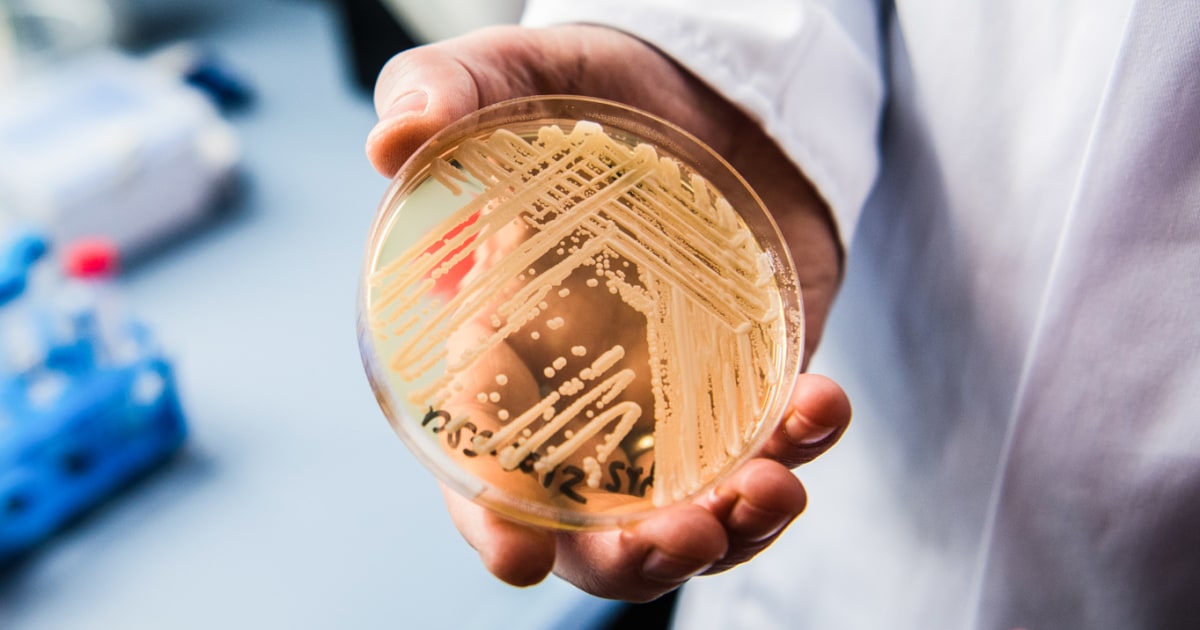
A potentially deadly type of fungus that is almost untreatable continues to pose severe threats to healthcare facilities across the U.S., a new government study found.
Limited time: Save 25% on NBC News subscription
Get exclusive reporting, live Q&As and ad-free reading.

Candida auris, or C. auris, is a yeast that can cause serious illness in people with weakened immune systems.
Since the fungus was first identified in the U.S. in 2016, more than half of states have reported cases. From 2022 to 2024, 13,507 C. auris cases were reported to the Centers for Disease Control and Prevention, with steady and significant increases each year. Most of the cases were in men over 45, in hospitals and in healthcare facilities, according to the report released Tuesday. The CDC collected the data, which state and jurisdictional health departments submitted voluntarily.
The CDC didn’t include deaths from C. auris. An earlier study found that about 30% of people infected with the fungus die.
C. auris can accumulate on the skin, which scientists call “colonization.” Getting rid of it isn’t easy.
“Sometimes the fungi sits on our skin and becomes a part of our ecosystem,” said Dr. Waleed Javaid, chief quality officer of West Virginia University Hospitals and professor of medicine in the infectious diseases division.
Healthy people typically are asymptomatic, but those with compromised immune systems or coping with other illnesses are at high risk of infection. The fungus can cause minor skin irritations or dangerous bloodstream infections.
It can live for a long time on the skin and spreads easily to surfaces or to people who have open wounds, Javaid said. It “might sit on a wound and cause infection, and that is the problem we want to resolve,” he said.
Once it is detected in a facility, rooms need to be sterilized with hospital-grade disinfectants, Javaid said.
Symptoms of a C. auris infection include fever and chills, similar to bacterial infections.
In the new report, the CDC said that the fungus is consistently resistant to the main antifungal drug, fluconazole, and that it is becoming increasingly difficult to treat with alternative medications.
“We still have one good drug against it,” said Dr. Arturo Casadevall, chair of molecular microbiology and immunology at the Johns Hopkins Bloomberg School of Public Health. “The concern is that this organism is becoming resistant to that, and we have very few antifungal agents.”
Fungi are biochemically close relatives of humans and animals, making it difficult to develop a drug that will kill them but not their human hosts.
“It is hard to find biochemical differences to target,” Casadevall said. “While bacteria are much more diverse than we are, so we have more targets, is why we have relatively few antifungal agents.”
Fungal infections are relatively rare in people, in part because fungi can’t tolerate the body’s hot temperature. However, Casadevall suggested climate change may be partly to blame for the rising cases of C. auris infection.
“Two things happen with the heat,” he said. “The organisms adapt, and humans are put under great stress.”











Leave a Reply