

Health officials in the Democratic Republic of Congo (DRC) have reported a record one-day increase in Ebola cases since the current outbreak was first detected one month ago.
The DRC Ministry of Health reported 72 new confirmed Ebola cases on June 13, bringing the total number of cases to 782. Additionally, 29 deaths were recorded, bringing to 181 the number of fatalities that have occurred in the last month.
The majority of cases are still concentrated in three provinces in the northeast part of the country: Ituri, North Kivu and South Kivu. Two new health zones, Nia-Nia in Ituri and Mabalako in North Kivu, reported cases for the first time, increasing the number of affected health zones to 31, according to the Ministry of Health.
Contact tracing remains a concern. Health officials said only 56.5% of identified contacts have been followed up on, far below the desired 90%-95% target needed to contain the outbreak, according to the World Health Organization (WHO).
DRC health officials say they’re still experiencing community hesitance as well as shortages of essential medicines and infection-control supplies.
Meanwhile, Uganda has reported 19 confirmed cases, in large part linked to cross-border transmission from the DRC, and two deaths, according to the World Health Organization.

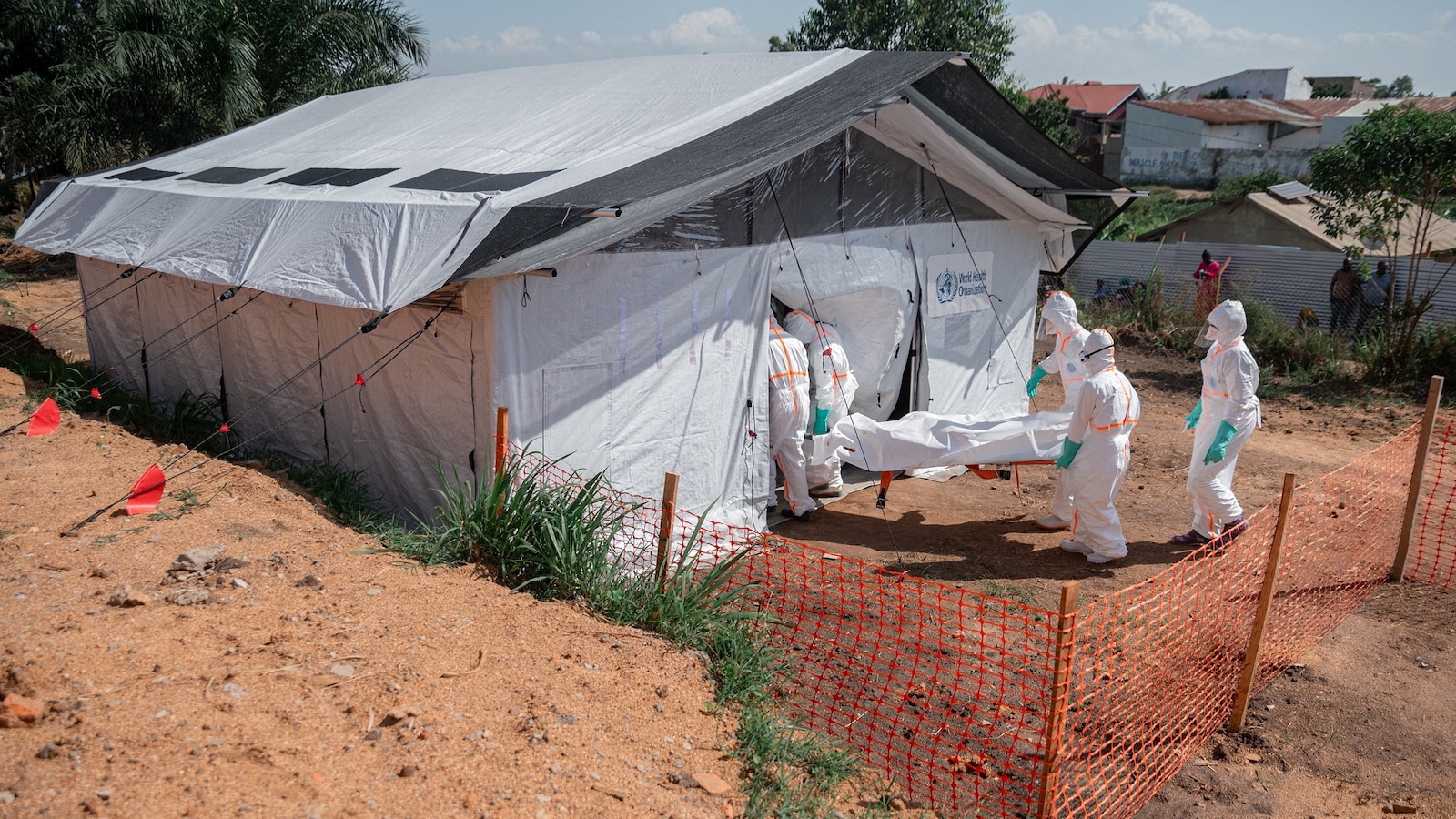
Members of specialized response teams enter the morgue of the Evangelical Medical Center of Nyankunde with the body of a person who died from Ebola virus disease in Bunia, Ituri Province, Democratic Republic of Congo, June 13, 2026.
Jospin Mwisha/AFP via Getty Images
Last week, United Nations agencies warned that children in the eastern DRC could become increasingly affected by the Ebola outbreak. The U.N. said it may be difficult to accurately track the number of children who may be affected by the outbreak due to inefficient surveillance.
Although most infections have been among adults, “as the outbreak evolves, we must be prepared for increasing household transmission which means we may see more children affected in the days ahead,” Dr. Douglas Noble, UNICEF global lead for public health emergencies and global incident manager for Ebola, said on Friday.
“These are already very vulnerable children, so the capacity for this community to absorb any additional stressors was already stretched to breaking point,” he said.
In past Ebola outbreaks in the DRC, children “made up a significant share of cases and an even greater share of deaths, with the youngest facing the highest fatality rates and many left orphaned or separated from caregivers,” Noble said.
Meanwhile, the U.S. State Department recently announced plans to provide $50 million to the Coalition for Epidemic Preparedness Innovations (CEPI), which describes itself as “a global partnership working to accelerate the development of vaccines and other biologic countermeasures against epidemic and pandemic threats,” to help develop vaccines and treatments against the Bundibugyo strain of Ebola that’s driving the current outbreak.
The State Department further said it has committed more than $270 million directly to the Ebola response, with U.S.-funded partners screening more than 6,300 people in Ituri, supporting 100 health facilities and carrying out 200 safe burials.









Leave a Reply