

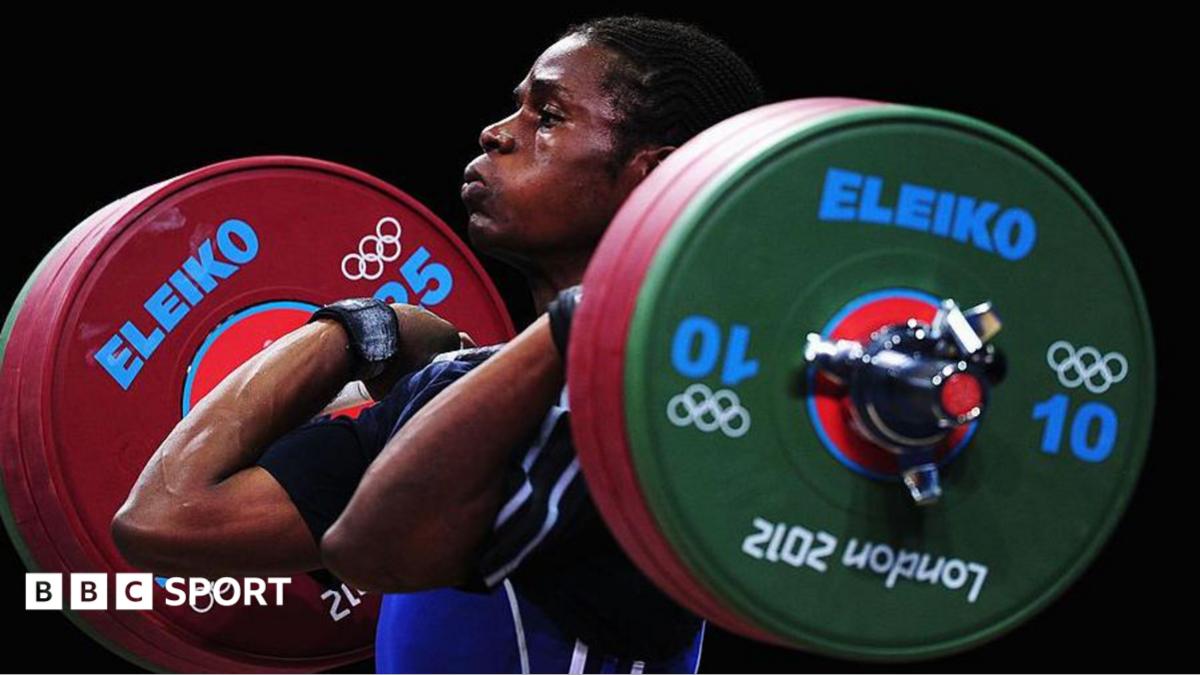
Ngake was born in Douala, the largest city in Cameroon, around 200 miles to the west of the nation’s capital Yaounde.
She is reluctant to reflect too much on that time, having distanced herself from thoughts of her homeland for more than a decade, but it is clear that childhood brought “challenges”, many, many challenges. It is also clear that through sport, specifically weightlifting, she found a talent which could elevate her.
Ngake dreamed of not only personal success, but profound change. She aimed to help influence a shift in perceptions around female sport by showcasing the power of strong women in Cameroon.
At the Delhi 2010 Commonwealth Games, the then 18-year-old gave a glimpse of that potential. She placed fourth, achieving the same total as India’s bronze medallist Laishram Devi but losing out on a podium place by virtue of weighing more than her rival.
Not that it was of immediate concern. Ngake left that contest on a stretcher, having passed out moments after a successful 121kg lift. It was a disappointing end to her Commonwealth debut, but there was still plenty of pride.
“Not just anybody can qualify for a Commonwealth Games,” she smiles. “It means you’re strong and, can I say, special?”
With resources limited, a situation not helped by the widely reported corruption scandals within several international federations in Cameroon, attending international competitions was extremely challenging.
As a result, she entered London 2012 with relatively low rank, which meant she was assigned to the B Final, with other athletes not considered to have realistic medal prospects.
However, she not only won the B Final, but lifted considerably more than many in the ‘elite’ division, securing an overall ranking of sixth. It was an achievement she considered to be “amazing” at the time, long before the results and placements were revised.
There was not time to celebrate that achievement, though. She needed to act quickly.
Exactly how the situation transpired is something, even 14 years on, Ngake is reluctant to discuss, but she is open about the impact of absconding.
“When I decided to stay, sometimes I would sleep on the bus, but when the bus stopped [for the night], I would sleep outside,” she recalls with a shrug. “When I wanted to have a shower, I would maybe find a place outside, in public, so to change myself was not too easy.”
That period lasted for around two months before she officially applied for asylum and was offered temporary accommodation while her case was reviewed.
Neither the Olympic Games nor any form of sport were in her mind. She was just focused on finding a way to make the UK her home.
Few around the weightlifter knew of her elite performance background and few would have even suspected it as the Olympian settled in to a more low-key existence.
Nearly five years passed before she was able to attain the correct paperwork to take on permanent paid employment. It meant starting at the bottom, but she was happy just to have the opportunity to build.
“At first, I was an office cleaner and yes, that was my full-time job for nine years,” the now 34-year-old says. “I was in Leeds, then I moved to Nottingham.”
She did not think about the sport she once loved for all that time.
But that changed four years ago.
With Durban stripped of the rights to host the 2022 Commonwealth Games after failing to meet key milestones or provide financial guarantees, Birmingham stepped in.
It meant some of Ngake’s former team-mates and coaches from Cameroon would return to the UK themselves and for the first time in a decade she allowed her mind to dwell on weightlifting.
“One of my coaches was still with the team, travelling over for Birmingham 2022 and after he came to stay with me and kept pushing me to start again,” she says.
“I’d stopped everything, but he encouraged me and when I did lift a bar again, yes, it felt so natural, it felt right and that was very exciting.”
The following year she won gold at the British International and within a further 12 months she not only returned to the international stage, but landed a major career-first, with silver in the snatch discipline at the 2024 World Championships for Great Britain.
As a naturalised athlete, with proven major event medal-winning potential, she was now eligible for UK Sport funding, which soon arrived, enabling Ngake to give up her job as a cleaner and focus on being a full-time athlete.
European honours have followed and she heads into a second Commonwealth Games, 16 years on from her debut in India, as the top seed in the women’s 86kg division.
Leave a Reply