

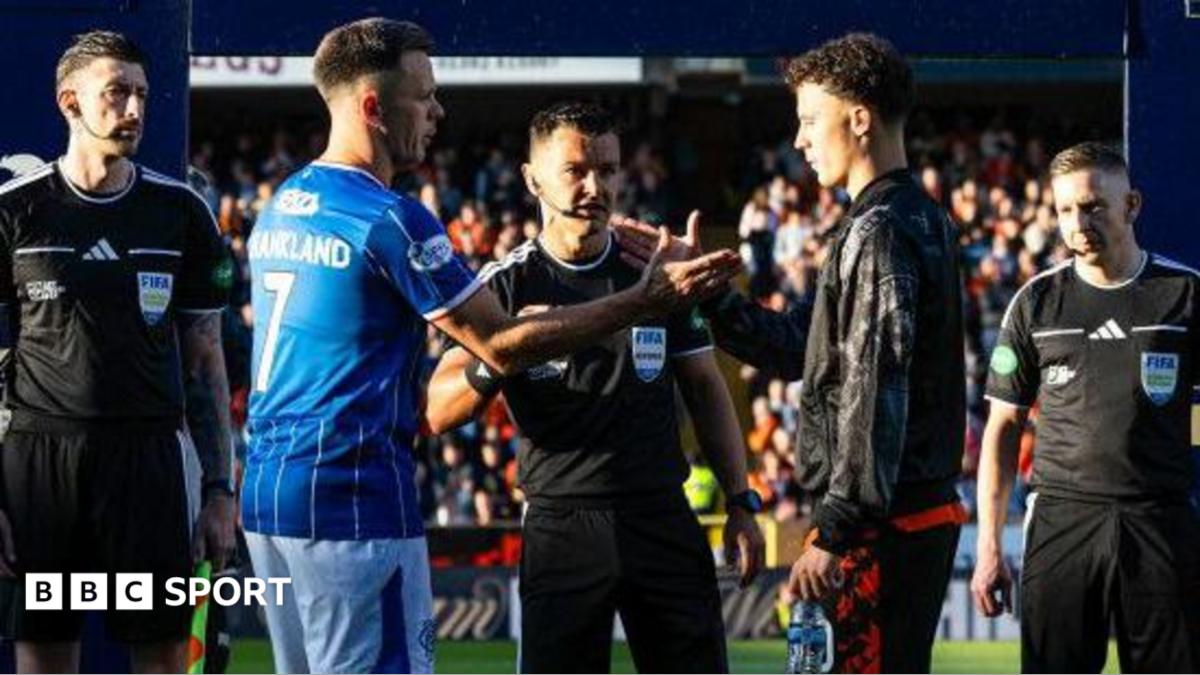
Robbie Ure made his debut for Rangers at the age of 18, a goal-scoring appearance in a League Cup tie against Queen of the South in August 2022.
The teenage striker played two more games that season – or more accurately, one minute apiece in two different Premiership games six months apart, against St Mirren in the November, against Hibs in the May.
For a young man keen to play, the meagre rations that Rangers served up weren’t enough. Even though Rangers were toiling on all fronts, his prospects of game-time were not high.
In Ure’s position, Rangers spent £6m on Danilo (with wages, cumulative cost to date of about £10m) and £3.5m on Sam Lammers (over £4m if you include salary). With no prospects at Ibrox, Ure left for Anderlecht in Belgium and then IK Sirius in Sweden.
At Sirius, Ure has matured and excelled. He’s now 22 and currently on a run of 15 goals in 15 games including 10 in his last six. News came through on Sunday that Sevilla are interested in signing him for close to £8m.
Having lost 2-1 at home to Hibs the same day, the collective Rangers’ mood won’t have been lifted by the story of the former academy kid they allowed to leave for nothing being courted in a multi-million pound deal involving one of Spain’s most storied clubs.
If the deal does go through it will be private grist to the mill of the Scottish FA as they prepare for their “critically important” forum with the owners and CEOs of Scotland’s senior clubs in St Andrews next month.
Billed as ‘Made In Scotland?’ the presentation will be led by SFA chief executive Ian Maxwell and his chief football officer, Craig Mulholland. It’s tantamount to a plea to clubs, mostly Premiership clubs, to look at their pathways and give young Scottish players more of a chance to show what they’ve got.
If they were minded, which in the interests of diplomacy they surely won’t be, Maxwell and Mulholland could cite the Ure case to back up their essential point. If only they’d trusted their youth they might have saved themselves one fortune and then made themselves another by developing him and selling him years later.
Things are more complicated than that, of course. Ure might not have shown the promise then that he’s showing now. There is an element of 20-20 hindsight about this, but it’s still a sore one for Rangers just as Celtic will have been sore after hardly playing a young Ben Doak, now Gannon-Doak, and subsequently losing him to English football. Another multi-million pound boy that got away.
We don’t need the statistics of the opening two weeks of the Premiership to highlight the obvious need for the summit, but they highlight the problem none the less.
Across the opening two rounds of the top flight season only 31% of the players who played a part in the action were Scottish. Only 5% were Scots aged 21 or under. Forty-six different nations were represented.
There are stark individual cases in all of this, the most remarkable being Dundee United using just one Scottish player – Dylan Tait – in their two games so far.
Ask chairmen, chief executives and managers if they want to have young Scots in their first team and they will all say that they do, that they’re passionate about rearing and playing their own. Then you’ll hear myriad reasons why so many of them don’t – some legitimate, others less so.
There are nuances, naturally. Dundee United will talk about the investment they’ve made in developing their own players and how their promising 16-year-old, Kai Hutchison, was lured away to Everton, one of dozens of young Scots who have gone south in the post-Brexit age.
Celtic will mention Dara Jikiemi (Liverpool) and Daniel Cummings (West Ham). Rangers will throw in Cameron Scott (Burnley) and Chris Eadie (Sheffield United). Hearts will offer up Boyd Fraser (Nottingham Forest) and Keir McMeekin (Man City). Hibs will cite Ben Vickery (Man City) and Josh Landers (West Ham).
Those names are only scratching the surface of the ones who have headed away. There appears to be multiple reasons for leaving. Bigger money is part of it, for sure, but it’s an overly convenient argument put forward by clubs. Avarice is one thing. Lack of opportunity is another.
These players, and their parents, aren’t seeing much of a pathway in front of them in Scotland. They’re not seeing first-team chances.
The biggest clubs in Scotland don’t have many recent poster boys to illustrate their commitment to giving academy players regular first-team football. Too many of them – not all – clog up the pathway by recruiting journeymen foreigners. What must a promising teenager make of the endless amount of players with, at best, dubious playing pedigrees arriving at their club? Stay and stagnate or leave and hope?
Maxwell and Mulholland have it all to do at St Andrews. They’ll have an audience, but will it be a captive one? In attempting to win over those clubs who are not giving youth a chance they’re going to have to appeal to the self-interest of these owners.
Never mind the national interest and the greater good of feeding more young players to the national team down the line. Everybody in that room’s first and last duty is to their own club. If that involves a ton of homegrown players, then great. Loads of clubs down the leagues are totally committed to giving their young players every chance.
If others think that recruiting from Mars is going to help them to prosper then that’s what they’re likely to do. Their obligation is to their own backyard. It has to be.



Leave a Reply