

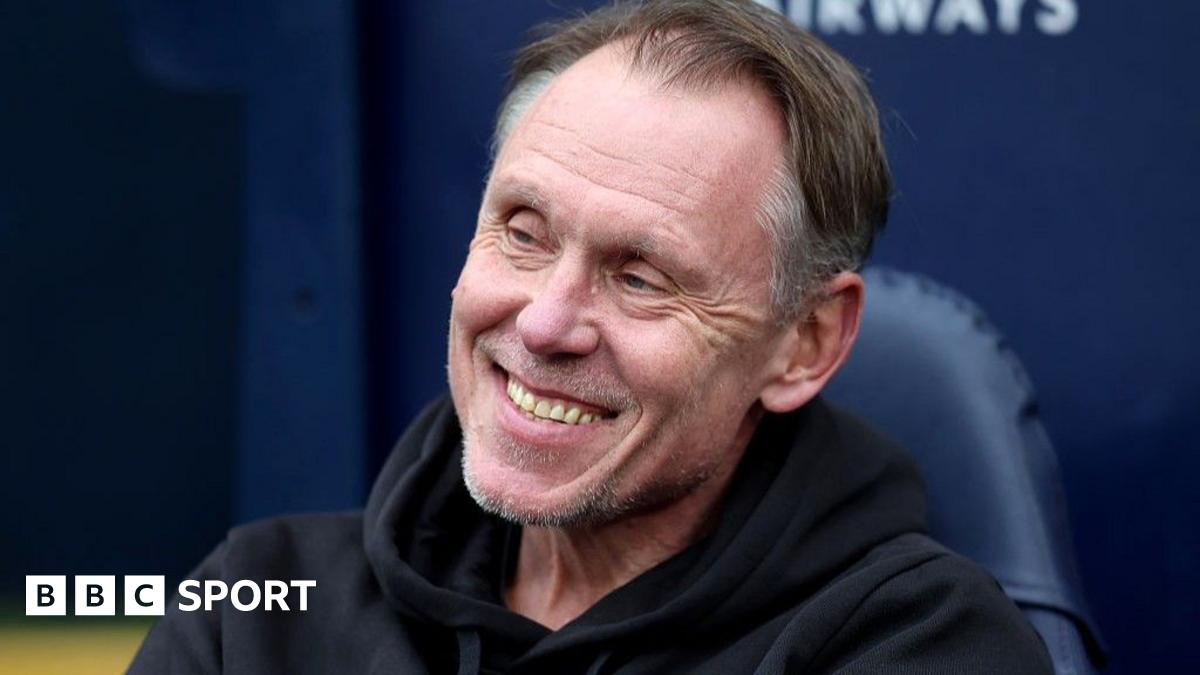
Manchester City vice-captain Kerstin Casparij has described Jeglertz as the “papa” of the group, emphasising his ability to make everyone feel part of the family.
The boss encourages players to speak up in meetings, contribute to tactical gameplans, and urges them to express themselves on the pitch.
“He’s someone I can go to about pretty much anything and he’s the same with everyone. It’s not just me because I’m the captain,” Greenwood says.
While at Linkoping, Skoog says Jeglertz would leave the house at 7am and get home at 6pm, working extra hours on training plans and video analysis.
Within two weeks, “players loved him” because of his commitment and took confidence from his detailed plans.
“His whole life is football – he is obsessed with it. He would speak on the phone with players and watch games. He is a perfectionist,” Skoog says.
“Maybe why he has been so successful as a coach and why the players love him, is because he gives 110% always.
“He talked a lot to the players and listened to them. If they said something good, he let them try it on the pitch. He was not dictating things.
“The players felt they could have input in the training sessions because he listened. It wasn’t like that before he came – players weren’t used to that.”
Much like his approach to life, Jeglertz’s football philosophy centres on people and getting the best out of everyone.
To him, players need to be decision-makers on the pitch. They need to be unpredictable, creative and flexible. But most of all, they need to be a team.
“There was always a strong team spirit. In Umea, the other teams hated us. It was us against them, always. He was good at making us feel strong together,” Skoog adds.
Jeglertz has always loved Dutch football and was a fan of Johan Cruyff. He reads books by other coaches and is constantly testing new methods.
He became more interested in physical fitness and adopted a 4-3-3 formation, which he has developed while at Manchester City.
“Andree was a modern trainer. He was very accurate with his planning of every training session,” Skoog reflects of their time in Umea in the mid-2000s.
“Every session was like they were playing the game. He was very serious. He had a great ability to push players – if they became lazy, he would push them.
“It was high quality training. He started off with video analysis and we would talk a lot about football in the evenings.”







Leave a Reply