

The winners of annual awards given out by ASCAP for the year’s most outstanding music writing and broadcasts include biographies of film composers John Williams and Bernard Herrmann, as well as a documentary about cult R&B artist Swamp Dogg, liner notes for an archival release from Frank Zappa, Rick Beato’s YouTube podcasts, and books about Broadway musicals and Black opera innovators.
These disparate writings are among the recipients of the 77th annual ASCAP Foundation Deems Taylor/Virgil Thomson Awards, voted on by a select committee of four ASCAP members to recognize the best in books, articles, liner notes and broadcast programs about all forms of music.
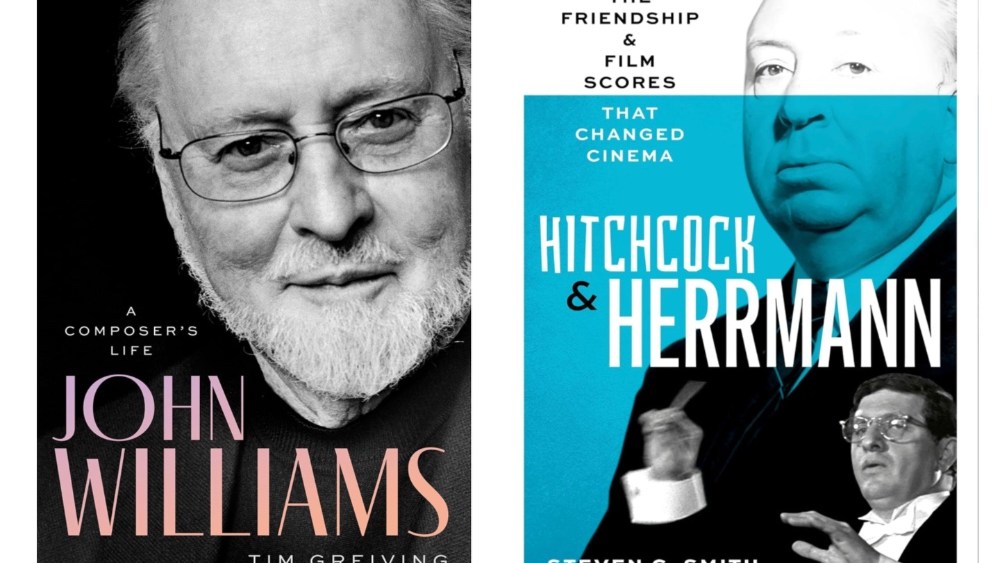
The film composer biographies being recognized were Tim Greiving‘s “John Williams: A Composer’s Life,” the first-ever biography about Hollywood’s most successful living composer, which got a Deems Taylor/Virgil Thomson Book Award in the field of concert music, and Steven C. Smith‘s “Hitchcock and Herrmann: The Friendship and Film Scores that Changed Cinema,” the author’s second book about Herrmann (with a twist that makes it dually the story of his greatest filmmaker collaborator), which was given a special recognition award in the same category. (Both books were also on Variety‘s list of the best music books of 2025.)
Another book award in the concert music field, this one outside the realm of film music, went to Lucy Caplan for “Dreaming in Ensemble: How Black Artists Transformed American Opera.” Awards for books in the pop music field were given to Gayle Wald for “This Is Rhythm: Ella Jenkins, Children’s Music, and the Long Civil Rights Movement” and James O’Leary for The Middlebrow Musical: Between Broadway and Opera in 1940s America.”
Among the articles that won recognition from the ASCAP judges were a piece by the New York Times’ Ben Sisario about efforts to rescue decaying master tapes, a story by Esteban Meneses about Mexican symphonic composers and an article by the New York Times’ Max Keller about cellists debating the right way to hold their instruments. A piece in the Atlantic by Gabriel Kahana won for outstanding music criticism.
The top broadcast award went to Gail Wein for her podcast series “Classical Gas,” with a special recognition honor for Beato for his YouTube series “Everything Music.”
A liner notes award was given to percussionist Ruth Komanoff Underwood for her personal essay contained in the boxed set for “Cheaper than Cheep,” a live 1974 concert film by Frank Zappa and the Mothers of Invention.
A broadcast/media award in the pop field went to directors Isaac Gale, Ryan Olson and David McMurry for their documentary “Swamp Dogg Gets His Pool Pained.”
The judges for this year’s honors were Robbie Fulks, Julie Flanders, Carman Moore and Betsy Schramm.
The full list of winners, as provided by ASCAP:
The Deems Taylor/Virgil Thomson Broadcast/Media Award in pop music recognizes directors Isaac Gale, Ryan Olson and David McMurry for their documentary film “Swamp Dogg Gets His Pool Painted,” released in 2025, a unique storytelling of the legendary cult R&B musician Jerry “Swamp Dogg” Williams’s and his housemates’ musical creative life in Los Angeles surrounding his pool.
The Deems Taylor/Virgil Thomson Broadcast/Media Award in concert music recognizes radio host and producer Gail Wein for “Classical Gas,” produced by Classical Voice North America, the 2025 podcast series of interviews with classical musicians available on multiple platforms.
A Special Recognition Award in the above category is given to Rick Beato for his 2025 YouTube series, “Everything Music,” exploring music, technology and issues facing music creators in today’s industry.
The ASCAP Foundation Paul Williams “Loved the Liner Notes” Award honors percussionist Ruth Komanoff Underwood for her personal essay for “Cheaper than Cheep,” the live box set from the 1974 concert film by Frank Zappa and The Mothers of Invention, on ZAPPA RECORDS/UMe.
The Deems Taylor/Virgil Thomson Book Awards in pop music are presented to: Gayle Wald for “This Is Rhythm: Ella Jenkins, Children’s Music, and the Long Civil Rights Movement,” the life story of “the first lady of children’s music,” published by University of Chicago Press.
James O’Leary for “The Middlebrow Musical: Between Broadway and Opera in 1940s America,” an exploration of how musicals such as Oklahoma!, Beggar’s Holiday, and Street Scene embraced weighty stories in ways not seen before 1943, published by Oxford University Press.
The Deems Taylor/Virgil Thomson Book Awards in concert music go to:
Lucy Caplan for “Dreaming in Ensemble: How Black Artists Transformed American Opera,” an account of Black innovation in American opera during the Harlem Renaissance, published by Harvard University Press.
Tim Greiving for “John Williams: A Composer’s Life,” the first biography of one of the most important film composers of all time, published by Oxford University Press.
Special Recognition Award in the above category is given to Steven C. Smith for “Hitchcock and Herrmann: The Friendship and Film Scores that Changed Cinema,” published by Oxford University Press.
The Deems Taylor/Virgil Thomson Award recipients for articles published in 2025 are as follows:
The Deems Taylor/Virgil Thomson Award for an article in the pop music field goes to Ben Sisario, “The ‘Race Against Time’ to Save Music Legends’ Decaying Tapes,” on the intricate efforts to restore analog tapes with original recordings from Bruce Springsteen, Bob Dylan and more, published by The New York Times.
The Deems Taylor/Virgil Thomson Award for an article in the concert music field goes to Esteban Meneses, “Revolución: Mexican Composers on the Rise,” a look at Mexican composers whose works are being performed, commissioned, and recorded by orchestras around the world, published by Symphony Magazine.
Special Recognition Award in the above category is given to Max Keller, “Does It Matter How A Cello Is Held? It’s a Centuries-Old Debate,“ published by The New York Times.
The Virgil Thomson Award for Outstanding Music Criticism is presented to Gabriel Kahane for his article, “A Love Letter to Music Listings,” published by The Atlantic.





Leave a Reply