

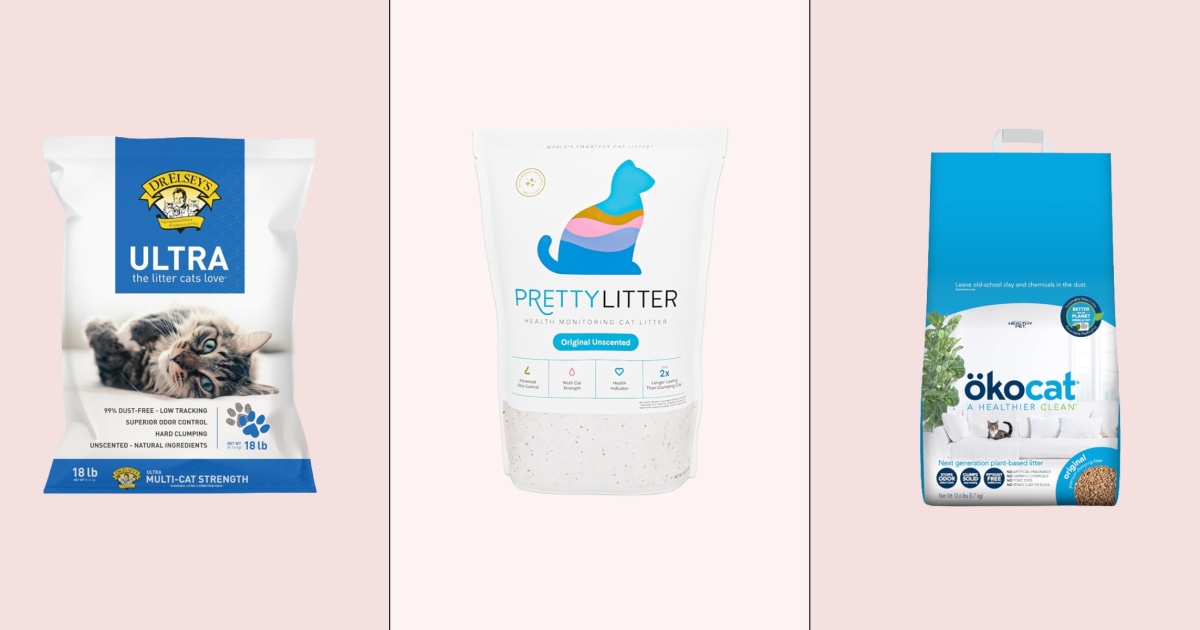
Picking out the best litter for your cat may seem simple at first — as long as they like it enough to use it, anything works… right? But once you start weighing different options, the factors you have to consider pile up: material, particle size, scent, clumping level, dust level and tracking are just a few, in addition to how many cats you have and the type of litter box they use.
Not to make the process sound even more challenging, but cats are picky — if they don’t like their litter, they may reject it, which, unfortunately, means going to the bathroom places they shouldn’t. Below, I talked to veterinarians about how to find a litter your cat loves, and I shared tried-and-true recommendations from pet parents like myself. Vets also explain how often to scoop, how to transition to something new, and how to distinguish between cats hating a litter and having a serious health issue.
Want more from NBC Selected? Sign up for our newsletter, The Selection, and shop smarter.
The best cat litters of 2026
I curated this list of the best cat litters based on my personal experience as a pet parent, recommendations from NBC Selected staff members and veterinarians’ guidance. I included information about how I chose my picks and how to shop for cat litter below.
Best litter overall

This litter came recommended to me by one of my cats’ fosters — she takes care of at least three kittens at a time year-round, so she’s well-versed in what works for multi-cat homes. I first bought it in 2023 and haven’t looked back — in fact, Amazon says I’ve ordered the largest box 28 times, and I constantly get it at Petco, too.
Beyond forming solid clumps that stay together when I scoop, this litter masks odors phenomenally well thanks to neutralizers like baking soda in its formula. There’s two litter boxes in my one-bedroom apartment, but guests always say they’d never know because there’s no scent whatsoever. Also, as its name implies, the litter slides right out of the box without leaving residue behind when I pour it into a trash bag. I never notice dust coming from the litter, and despite it being scented, my cats, both of whom have allergies, haven’t experienced irritation. The only downside is that it tracks, but that’s par for the course with clay litter.
Best clay litter

Best crystal litter

Best plant-based litter

Tuft & Paw’s Really Great Cat Litter, which is also a NBC Selected Pet Award Winner, is made from tofu, a.k.a. soybeans. It’s infused with charcoal, which helps neutralize odors, and it comes in larger, log-shaped pellets. I was skeptical about this litter at first because it’s unlike the clay formulas I’m used to, but it quickly impressed me. It truly clumps, making cleaning easier than I expected, but the best part of all is how low-tracking it is. The larger pieces don’t stick to my cats’ paws much, if at all, so it barely escapes the litter box, and I found myself vacuuming much less than usual. The brand says this litter is safe to flush down toilets, but experts recommend against doing so (see more about disposing of cat litter in the FAQ section below).
Best paper litter

I used this paper litter after my cats were spayed as kittens. Its soft, 100-percent recycled paper pellets look very similar to Tuft & Paw’s tofu ones, and they’re just as low-tracking. They’re also odor-neutralizing since they’re made with baking soda. The litter is absorbent, but it doesn’t clump, so cleaning can be difficult. As the paper absorbs urine, it gets heavy, so I found it easier to dump everything out and start with a fresh batch every few days.
Best wood litter

Before I tried Ôkocat’s wood litter, I used an option that came as chips and shavings, which didn’t clump and made clean-up difficult. My cats and I prefer this medium-sized granular texture — it clumps, is absorbent and is softer on my cats’ paws when they dig. The litter has a natural woody scent that masks odors, but that may deter some felines, according to the experts I talked to, so pay extra attention to your pet’s bathroom habits if you try this one. Ökocat also makes an unscented version of their wood litter, but it may not get rid of odors as well.
Best budget litter

Chewy’s Clumping Clay Cat Litter is one of the most cost-effective options Brown has found. She says that there isn’t anything particularly notable about it, but since it works well, has a generally low price point and comes in a big bag that lasts her a while, she continues buying it. The litter clumps and is made with deodorizing ingredients that mask odors.
How I picked the best cat litters
To pick the best cat litters, I evaluated each option based on the following factors, per veterinarians’ guidance.
- Material: Cat litter is commonly made from clay, silica crystal, paper, wood or plant-based ingredients like tofu. Material influences everything about a litter, like its texture, absorbency level, weight, clumping ability, scent, dust level and tracking level, plus whether it’s suitable for multi-cat homes and standard v.s. automatic litter boxes. There’s no one “best overall” material because cats (and their owners) have different preferences. I included litters made from various materials on my list to give you a comprehensive overview of what’s on the market.
- Clumping: Clumping litter is easier to thoroughly clean, which reduces how often you need to replace everything inside the box. I prioritized recommending clumping litters because of this, but some materials inherently don’t clump — I note which ones.
- Scent: Aim to buy unscented litter, says Dr. Enio Sanmarti, the medical director of VEG ER for Pets in Fort Lauderdale. Cats have a very sensitive sense of smell, and artificial fragrances can deter them from entering their box. Most litters I recommend are unscented, but there are a few exceptions — I explain why I still recommend them.
- Dust level: Low-dust litter is best for cats and their owners, says Sanmarti. The less fine powder a litter puts into the air, the less it dirties the area around the box, and the less likely it is to irritate your and your cat’s respiratory systems. Some materials are naturally low-dust, like silica crystal, paper and wood, and brands can also formulate litters to be low-dust, which they usually call out on their packaging. I only recommended naturally low-dust litters or litters that specifically say they’re low-dust.
- Tracking: Tracking happens when pieces of litter stick to your cat’s paws or fur, get carried out of the box and get onto your floors. Speaking from experience, it’s the bane of any cat owner’s existence and calls for constant vacuuming. Tracking is unavoidable to some degree, but litters that have larger, heavier particles track less than those with small, sand-like particles, although cats prefer the latter. I included information about tracking for each of the litters on my list.
How to shop for cat litter
While shopping for cat litter, experts recommend paying the most attention to the following factors.
What are the different types of cat litter?
No one type of cat litter is considered the “best overall.” Ultimately, it depends on your cat’s preferences, says Dr. Courtnee Morton, a veterinarian at Chewy. (Editor’s note: The inclusion of products sold by Chewy in this article was made independently of Morton.) Some felines will only use certain types, while others don’t discriminate.
In addition to the material itself, particle size, meaning how big or small each individual piece of litter is, matters. Some materials come in different forms, like larger pellets and tiny granules, while others are only available in one. Cats typically like small particles and a fine, sand-like texture, says Vega, but again, every pet is different.
Here’s what to know about some of the most popular types of cat litter.
- Clay litter is the most common type, and often, it’s the lowest-priced. It has a small particle size, and you can buy highly absorbent options that form clumps, making scooping easier and offering superior odor control, says Vega. The downsides are that clay litter is heavy, usually tracks outside the box and can be dusty.
- Silica crystal litter is more lightweight and less dusty than clay, says Morton, adding that it’s an ideal alternative for cats who are sensitive to dust. It’s highly absorbent, too — Morton says silica crystal can hold liquid up to 40 times its weight, so it keeps the litter box dry and successfully controls odors. The main cons are that it doesn’t clump, can track and the texture isn’t always appealing to cats, even though it has a small particle size, says Vega. Many cats gravitate more toward the softer, sand-like feel of clay.
- Paper-based litter is soft, lightweight, low-dust and low-tracking, plus you can buy it in various forms. That said, it typically comes as larger particles, which some cats don’t like, says Vega. Odor- and moisture-control, as well as clumping ability, is hit or miss.
- Wood-based litter is absorbant, low-dust and relatively low-tracking, and it comes in various forms. But the particle size is typically larger, and clumping ability and odor-control are iffy. Wood-based litter also feels and smells very different from other types of litter, which can be hard for cats to get used to, says Vega.
- Plant-based litter can be made from biodegradable materials of small to large particle sizes, like nutshells, tofu (soybeans), corn and wheat. They have natural odor-neutralizing properties, says Morton, and they’re absorbent and lightweight, but their ability to form clumps, control dust and prevent tracking varies. If your cat has food allergies or intolerances, be careful when using a plant-based litter and check its ingredients beforehand.
What is clumping cat litter?
Clumping cat litter absorbs urine and forms a tight, solid mass that’s easy to scoop out of the box once a day, reducing how often you need to replace everything inside. Since you’re constantly removing what’s dirty, clumping litter reduces odors, too.
Non-clumping cat litter, on the other hand, absorbs liquid without forming scoopable clumps, making it challenging to separate urine-soaked litter from clean litter. That means you’ll have to replace everything inside the box more often, especially since it doesn’t trap odors well, says Morton.
Overall, clumping litter is more convenient for cat owners in terms of upkeep, which is crucial — cats will avoid a litter box they deem dirty, so the cleaner it is, the more it encourages consistent use. Clumping litter also helps you monitor your cat’s bathroom habits since urine and feces are easier to see, letting you catch irregularities quickly, says Vega. That said, if your cat doesn’t like clumping litter, you’ll have to use a non-clumping option and completely replace what’s inside the box more often.
Is it better to use scented or unscented cat litter?
Generally, it’s better to use unscented cat litter, says Vega. Scented options have added fragrances that help mask odors so people aren’t bothered by them. But cats have a more sensitive sense of smell than people, so what we find pleasant or subtle might be repulsive to them, says Vega. And if cats don’t like the smell of their litter box, or experience irritation from synthetic fragrances, they may not use it.
To reduce odors as much as possible, some litters are made with neutralizing ingredients like activated charcoal and baking soda — prioritize that over added fragrances, vets told me. Cleaning the litter box at least once a day, replacing everything that’s inside as needed and making sure there’s enough litter in the box (at least 2 to 3 inches) is also key to odor-control. Morton added that humidity can reduce a litter’s absorbency and ability to effectively control odors, so if your litter box is exposed to high humidity, you may have to clean the litter more often and use a dehumidifier in that specific room.
What is low-dust cat litter?
A cat litter’s dust level refers to how much fine powder goes into the air when you pour and scoop it, and when your cat digs around in it, says Morton. Brands label their litter “low-dust” when they formulate it to release as little powder as possible, but it’s all relative — what “low-dust” means is different to each brand, so you’ll have to use a litter to tell how “dusty” it really is. That said, looking for a low-dust litter is important. It keeps the area around the box cleaner and reduces irritation for cats and people who have respiratory sensitivities like asthma or allergies, says Morton.
What cat litter is low-tracking?
Tracking happens when litter sticks to your cat’s paws and/or fur, causing them to carry it out of the box and onto your floors. Some litters track less than others, like those that have larger, heavier particles, says Vega. They can’t stick to cats’ paws and/or fur as easily, so there’s less of a chance that they leave the litter box.
No litter is completely track-free, but the lowest tracking litters are paper-, wood- and plant-based pellets, says Vega. However, many cats prefer litter with small particles and a fine, sand-like texture, so it’s important to use one that aligns with their preferences, not yours. To reduce tracking, you can mix a litter that has larger, heavier particles with one that has smaller particles if your cat doesn’t mind.
What’s the best litter for kittens?
The best litter for kittens is typically a non-clumping plant-, wood- or paper-based option. Young cats are more likely to lick particles off their bodies and eat unfamiliar materials, so choosing a “natural” litter can help reduce the risk of digestive issues if they swallow anything, says Morton.
What’s the best litter for senior cats?
The best litter for senior cats is whatever they’re most comfortable and familiar with, says Vega. Keeping their litter consistent helps you identify sudden changes in bathroom habits, which can be a sign of medical issues. If you change their litter, you might mistake your pet having a health problem for not liking their new litter.
Frequently asked questions
You should clean cat litter at least once a day, or, ideally, more frequently if you have multiple cats, says Sanmarti. Doing so helps prevent odors and reduce traces of contaminants like bacteria and parasites. Cats are also clean animals who will avoid litter boxes they consider dirty, and they instinctually want to bury their urine/feces in fresh litter, like they would in the wild with leaves or dirt to cover their scent from predators, says Sanmarti. Scooping regularly helps you notice changes in your pet’s bathroom habits, too, letting you quickly take them to the vet if needed.
You should completely replace the litter inside your cat’s box at least every two to three weeks if you use clumping litter, or at least once a week if you use non-clumping litter, says Morton. That said, you may have to adjust this schedule based on what type of material the litter is made from and how many cats use the box. Overall, read the directions on a litter’s packaging and use that as your baseline. When you replace the litter, Vega also recommends cleaning the box itself with a mild, unscented cleanser and rinsing it off with clean water.
The best way to dispose of cat litter is to scoop or dump it into a plastic bag, seal it tightly and put it in your garbage can. Then, wash your hands. Experts say you should not flush litter down the toilet, even if it says it’s flushable — it can clog pipes and damage septic systems, and in some areas, it’s illegal to flush pet waste. Also, don’t compost with cat litter or put it outside, like into gardens or yards.
There should be at least 2 to 3 inches of litter inside a litter box, says Vega. Cats naturally dig and cover their waste, so they need enough to do so. That said, too much litter may be uncomfortable for some cats, so monitor your cat’s preferences to find a happy medium.
If you use a clumping litter, make sure there’s at least two inches of space between the top of the box and the litter. That gives the litter on the top enough depth to clump properly while preventing waste from collecting on the bottom.
After your cat has surgery, especially after they’re spayed or neutered, your veterinarian may recommend temporarily changing their litter to a low-dust, non-clumping option like paper pellets, says Sanmarti. Dust and small particles from clay and crystal litter, for example, can get into an incision site and potentially cause irritation or infection, so in some cases, paper pellets are the better option to promote healing. Your vet will estimate how long you should use the paper pellets — it’s usually about two weeks, but depending on the surgery, it may be longer, says Sanmarti.
That said, not all surgeries require you to change a cat’s litter — in fact, Vega says you should only do so if your vet specifically recommends it. Cats are particular about their litter, and changing it can stress them out, which may lead to litter box avoidance. You want to prevent that if you can, especially when they’re already uncomfortable during recovery.
If your cat is exhibiting any of the following behaviors, they may not like their litter, according to the vets I talked to:
- Hesitation to enter the litter box
- Perching on the edge of the litter box
- Avoiding digging or covering waste
- Excessively shaking or licking their paws after using the litter box
- Quickly leaving the litter box
- Going to the bathroom outside of the litter box
One important note: While the above behaviors can mean your cat doesn’t like their litter (or their litter box), they may also be indicative of a medical issue, says Vega. Monitor them closely, and if they seem like they’re in pain, constantly going to the bathroom outside of the box, repeatedly entering the box, straining, vocalizing or producing an unusually small amount of urine, call your vet.
The best way to switch your cat’s litter is gradually, not all at once. Slowly mix the new litter into the old litter, and increase how much of the new litter you add over about two weeks until it’s the only one left in the box. Another option is to put a second litter box with the new litter beside the first litter box with the old litter, letting your cat choose which one they prefer. Regardless of which strategy you use, keep the litter extra clean during the transition, and don’t change the box itself or where it is in your home, says Morton.
Because cats are so particular about their litter’s texture and smell, they may not respond well to change. If they suddenly stop or hesitate using their litter box, or go to the bathroom outside of it, slow down the transition or stop it all together, says Morton. If you return to the old litter and these issues persist or get worse, consult your vet.
Meet our veterinary experts
At NBC Selected, we work with experts who have specialized knowledge and authority based on relevant training and/or experience. We also ensure that all expert advice and recommendations are made independently and with no undisclosed financial conflicts of interest.
- Dr. Tom Vega is the DVM ambassador at Roo, and the founder and chief medical officer of Concierge Companions Vet Med.
- Dr. Courtnee Morton is a veterinarian at Chewy. (Editor’s note: The inclusion of products sold by Chewy in this article was made independently of Morton.)
- Dr. Enio Sanmarti is the medical director of VEG ER for Pets in Fort Lauderdale.
Why trust NBC Selected?
I’m a reporter at NBC Selected who has covered pet products for over six years. I’ve written numerous articles about cats specifically, including those about cat food, cat treats, cat toys and cat travel carriers. To write this article I interviewed three veterinarians about different types of cat litter and what to focus on while shopping, as well as asked them some of the most common cat litter-related questions. I also have two cats myself, and I’ve volunteered with stray cats at local animal shelters for years.
Catch up on NBC Selected’s in-depth coverage of tech and tools, wellness and more, and follow us on Facebook, Instagram, X and TikTok to stay up to date.










Leave a Reply