

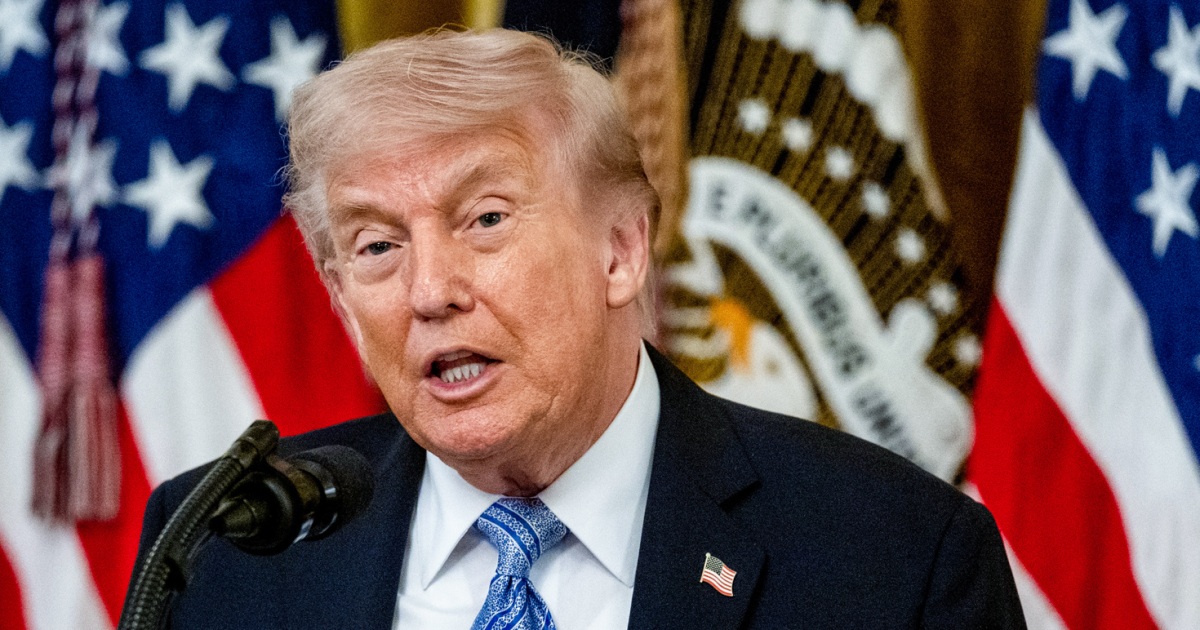
Seven Indiana Republican state senators are facing off Tuesday against primary challengers backed by President Donald Trump as he seeks to exact revenge over a failed redistricting plan.
Subscribe to read this story ad-free
Get unlimited access to ad-free articles and exclusive content.

Trump’s intervention in the typically quiet local primary races have brought a flood of money and national attention to the state. Roughly $12 million has been spent on advertising across the seven contests, according to the ad-tracking firm AdImpact, most of which has come from Trump-allied outside groups opposing the incumbents.
The Republican-led state Senate dealt Trump a rare rebuke when it voted down a redrawn congressional map he backed that was designed to result in two additional seats for the GOP. It was part of a broader mid-decade redistricting battle playing out across the country ahead of this fall’s midterm elections, when control of the narrowly divided U.S. House will be up for grabs.
But ultimately, the heavy-handed pressure campaign from Trump and his allies backfired. Now, they are revisiting similar lines of attack in their bid to unseat the seven lawmakers, turning the contests into another test of Trump’s grip on the Republican Party.
The most expensive of the primaries is for the seat represented by state Sen. Spencer Deery, who’s facing a challenge from Paula Copenhaver, an aide to Lt. Gov. Micah Beckwith. More than $3 million has been poured into ads in a district of approximately 135,000 people. Deery served as an aide to former Indiana Gov. Mitch Daniels when he was the president of Purdue University.

State Sen. Greg Goode is running in a three-way primary against two unrelated candidates with the same surname: Vigo County Council member Brenda Wilson, who has Trump’s endorsement, and Alexandra Wilson, a network engineer.
As NBC News reported last month, White House officials and Trump allies aggressively sought to push Alexandra Wilson out of the race, fearing she’d act as a spoiler in the race and help Goode survive.

State Sen. Travis Holdman, who’s been in office since 2008, serves in leadership as the third-most powerful Republican in the chamber. He is facing challenge from Blake Fiechter, a real estate agent who is backed by Trump. Fiechter briefly left the race in February, telling local media he was overwhelmed, but changed his mind after a White House visit in March.
State Sen. Greg Walker was set to retire last year after 20 years in the chamber, but reversed course amid the redistricting fight, where he notably broke down in tears speaking about his fear for the future if his party caved to Trump’s intimidation. State Rep. Michelle Davis, who was already planning to run for his seat, stayed in the race after his reversal and won Trump’s support. Walker’s campaign has spent just $73,000 on ads, while outside groups have funneled more than 1.3 million in ads in support of Davis.

State Sen. Jim Buck, 80, has served in the state Legislature since 1994, first in the state House before heading to the state Senate in 2008. He’s facing his first primary since joining the state Senate from Tipton County Commissioner Tracey Powell. Powell has Trump’s endorsement, while Buck has the backing of former Vice President and former Indiana Gov. Mike Pence.

Elsewhere, state Sen. Linda Rogers, who owns and manages a golf course and a home building company, is running against Dr. Brian Schmutzler, an anesthesiologist who said on his campaign website that he opposes “government health mandates” and tax hikes. He’s also said he was motivated to run by the redistricting fight.
And state Sen. Dan Dernulc, who represents a district in the northern part of the state near Chicago, has faced far less outside spending in his fight against two challengers, Trump-endorsed Trevor De Vries, an insurance broker, and financial analyst Nader Liddawi. While the six other races have each seen more than $1 million in ad spending, Dernulc’s primary has only hit $346,000.

Leave a Reply