

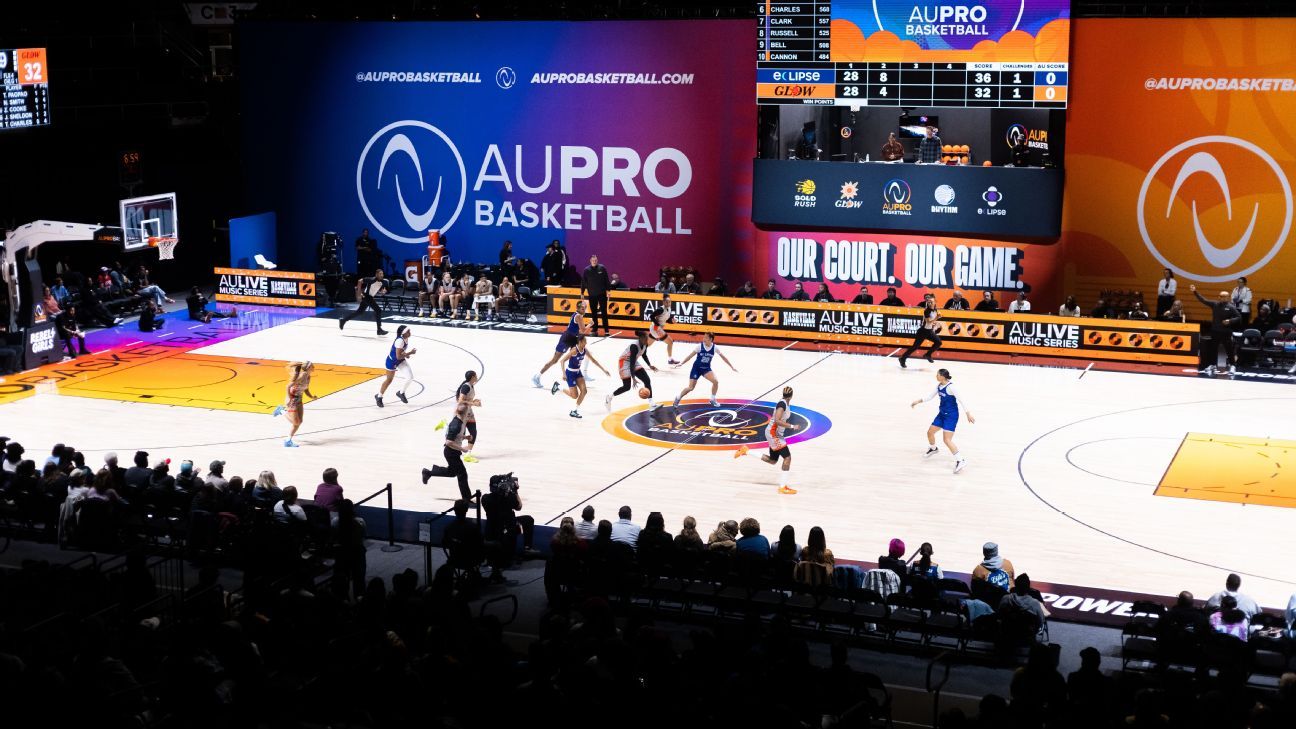
NASHVILLE, Tenn. — Players run up and down a basketball court in a converted concert hall preparing for their first full weekend of games with Athletes Unlimited. Nneka Ogwumike sits in a chair along the baseline as balls swish through the net above her.
With less than three months to go until the WNBA season is scheduled to start, CBA negotiations remain deadlocked on the issues of salary structure and revenue sharing. Ogwumike, the Women’s National Basketball Players Association president, has arrived in Nashville with union executive director Terri Jackson. They’re here to debrief the players, many of whom exist outside the WNBA spotlight, on developments in their quest for a “transformational” collective bargaining agreement.
The specter of a work stoppage hovers over it all. On Dec. 18, the union voted to authorize calling a strike “when necessary,” and some voices around the league wondered if the time was drawing near.
“I feel like it’s not imminent at this point,” executive committee treasurer Brianna Turner told ESPN. “It’s still early February, like we’re still going. So I feel like we’re still in a waiting game at the moment.”
The league did send a revised proposal Feb. 6 that reportedly included concessions on housing and facility standards but did not include a significant change in revenue sharing.
Amid the murky WNBA outlook, Athletes Unlimited tipped off its fifth season Feb. 4 at Nashville’s Municipal Auditorium. Unlike Unrivaled — the 3-on-3 league in Miami — Athletes Unlimited is not positioned as a league that showcases WNBA superstars. Of the 40 athletes playing in AU, 26 appeared on WNBA rosters in some capacity last season. Some of them are well-paid veterans, some are rookies, some picked up short-term hardship contracts and some play for the veteran minimum. Others are still dreaming of their WNBA debut.
This group of players arguably has the most at stake in the negotiations. The number of guaranteed contracts is on the table. So are parental leave policies. And housing.
ESPN spoke with a dozen AU players with WNBA ties, on the condition of anonymity, about their thoughts on the state of the WNBA and the CBA negotiations.
On a scale of 1-10, how confident are you that there will be a full WNBA season?
Players gave a wide range of responses to this question, but they landed on cautious optimism that the season could start on time May 8. The average score was a 6.1. One pessimistic outlier answered with a 2. The most common answer was a 5, which sums up the general shoulder-shrug vibe as negotiations have stalled.
“I think we’re gonna have a season. I don’t know if it’ll be the whole season.”
“I feel like we’re asking for a lot. I know we deserve it, but at the same time, it’s kind of like we’re kind of getting greedy. We’re doing a lot of asking. I feel like we need to do a lot of doing.”
“I’m going to lean more towards the positive side. So I’m going to say an 8 because I know the amazing people that we have to support us — the women in the [negotiating] chairs.”
“Full W season? I feel pretty confident. Um. … Full? I feel like a 9.”
How would a lost WNBA paycheck affect you?
Who knew that some of the world’s most elite basketball players were also first-class money managers? Most players said they’ll be all right, with or without the W stacks.
“I’m not making an insane amount for it to be a really big deal. Fortunately, I’ve been around these last few years and been able to make more off court. But I still want it. I’m fighting to have another year in the league. I would love to have a season where I’m able to make more money and really just feel even more comfortable in life and be able to do more for my family.”
“I’ve done a good job about saving up, just in case that scenario does happen. I’m super casual. So, yeah, I’m fortunate enough to be in a good position.”
“It would impact me immensely. It’s my job, so it would be a big deal.”
“I’m pretty set up off the court, so it wouldn’t. If it’s the W paycheck we make now, it wouldn’t bother me. If it’s a big W paycheck and an upgrade, you know, I could use it!”
“I have a lot of endorsements and NIL, so I wouldn’t say that would really impact me. But I would say the [inability] to play the sport that you love will affect a lot of players because some of us really, really love the sport of basketball, and being able to go out there and play — that’s what we’ve been doing our whole life.”
“I was very fortunate that my family has taught me good financial advice and saving and investing. I have money saved up. I’m OK, but I also know that not everyone is in my position.”
“Money is money. I would love my paycheck.”
On a scale of 1-10, how anxious are you feeling about negotiations?
Though players expressed uncertainty about the possibility of playing a full WNBA season, that didn’t translate to significant anxiety about the negotiations. One person put her anxiety level at a 10, but the majority of players said they aren’t worried, or at least they aren’t going to worry about what’s beyond their control. The average was 3.2.
“I think [the league and owners] just feel that we’re gonna just sign, and we’re not. We’re gonna just sit out if that’s the case. Like, we deserve it.”
“I ain’t worried about it. Like it’s either gonna happen or it’s not. I can’t worry about it. Not gonna stress myself over something I can’t control.”
“I have a good level of faith and understanding of what’s going on with those that are on our [executive committee]. They know what they’re talking about, and we’re on the same page.”
Do you feel represented in these negotiations as someone who is not among the top tier of WNBA earners?
For every max salary player, there’s somebody making the league minimum. Their CBA needs are not the same. And they know it.
“Yes, and no. I feel like [power] comes with the hype behind your name, or like the meaning behind your name. But at the same time, it’s kind of like, ‘Hey, think about us. I know you guys are top earners, but at the end of the day, you also need us.’ There could be no league.”
“Right now, yes, I do. Especially being [at Athletes Unlimited], having conversations with people on the executive committee, conversations I’ve had with Nneka. I feel like this representation is very different than the last CBA negotiations. We’re being louder. I feel like people had concerns in the last CBA, but kind of were stomped out by the one percenters, I call them. But I feel like this time around, we’re holding firm.”
“Yeah, I feel good about what people have been saying. Even though everybody on the EC can’t relate to all the other players, I think we have some representation in there. And I think other people understand where we went wrong last CBA, in not taking care of the middle-of-the-pack players. And so, you know, hopefully we don’t see it happening.”
“I think so. On the [Feb. 2] call, there were a few players who were kind of in my position. And I do feel like what they spoke to was very true for myself as well. So I think we are getting, yes, the superstars, but also the [veteran minimum] players, the role players. This league is 144, or more now, it’s not only about the top 20 players, right? The rest of the league has to matter. And I do feel like my voice was heard.”
On a scale of 1-10, how informed do you feel about the CBA negotiations?
The union leadership gets high grades in communication. Players answered consistently that they feel very informed about the ongoing negotiations, often answering with a 9 or 10. The lowest answer was a 5, and the average was 9.
“I feel very informed right now. I’m always open to sit down and learn and be educated about it.”
“I don’t know about the [league] side. I know [the players], we are very, 100% confident in what we stand on.”
“I feel like they need to help us out with just a little more. They need to, like, break it down, not dumb it down, but just make it concise and simple. The younger generation’s attention span is a little bad.”
After salary, what are your top issues?
Top to bottom, left to right, front to back, salary and revenue sharing rank highest. But players say housing and retirement benefits also are worth fighting for.
“Retirement benefits. At some point the ball’s gonna stop bouncing. So, similarly to other leagues that already exist, there’s an understanding of, you put your time and your effort into doing this long term, and at some point it’s gonna stop bouncing. So it’d be nice to be helped out with that.”
“Housing. Our season isn’t long enough. There’s not enough things in place in everybody’s market for it to make sense for people to live there year-round. Also, because of the lack of guaranteed contracts, we have a revolving door of players, like we saw with the Fever [in 2025]. I just don’t understand how they feel like it would make sense to take away housing when people are just all over the place, moving.”
“Housing. Those people who are on the lower end of the salary, they’re the ones who are most likely traded. So to me, it’s unfair.”
“Pension. A lot of people did stuff to put this league where it is. And so many people having to wait 10 years, or, like, have 10 years of service to get a pension is just insane. I could go on for days.”
Leave a Reply