

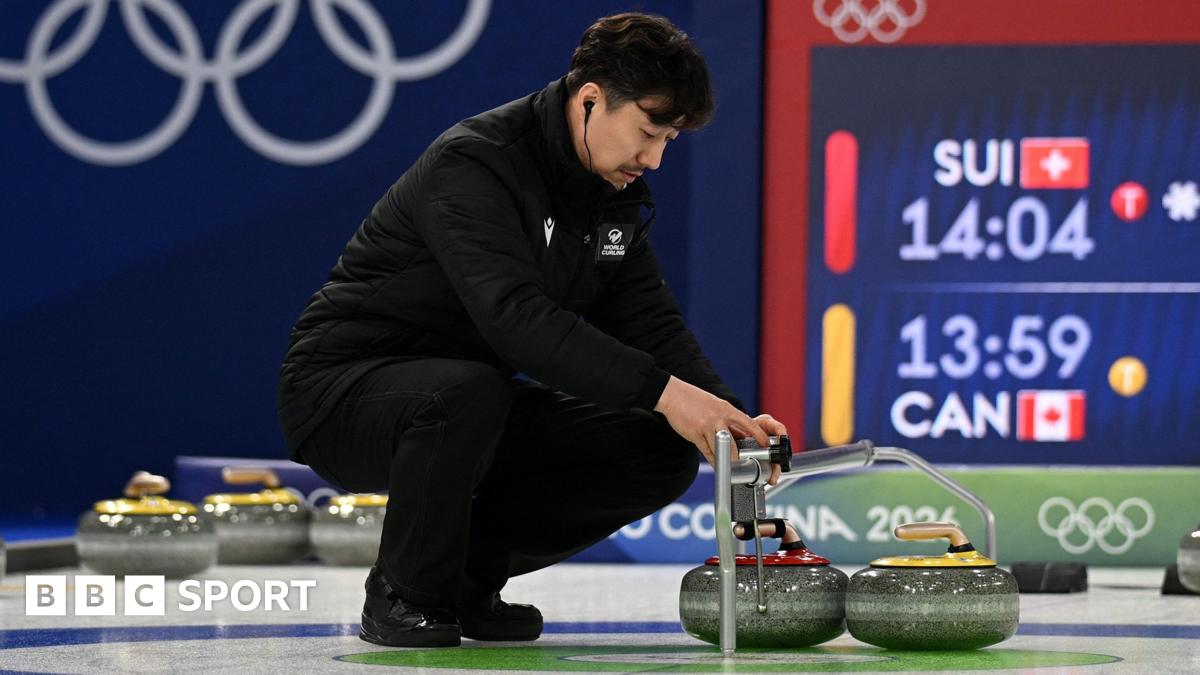
Then the story took another turn when the Canadians returned to the ice on Saturday. Controversy flared around Kennedy again, with Switzerland reporting him to the umpire for the same offence in their 9-5 win.
Again, no action was taken against the 44-year-old veteran of four Olympics.
At that stage, World Curling needed to act. They announced they would deploy extra officials for the remainder of the Games to check for double-touching.
Canadian women’s skip Rachel Holman was pinged for a double touch. Team GB’s Bobby Lammie fell victim too.
Both incidents were a case of a lingering finger falling on to the granite after the handle was released, rather than a deliberate touch, so no suggestion of devious intent. Furthermore, the monitoring of it seemed sporadic.
The teams were up in arms and complained. World Curling relented. The protocol was changed on Sunday. Teams could now request to have the stone delivery monitored if they had suspicions, and for a minimum of three ends.
In reality, that was also haphazardly executed.
So what does curling do about this? After all, this is a sport in which they determine which stone is nearest the target by using what is effectively a big compass.
One nod to progress is electric sensors to gauge if stones have been released before the hog line but could they drag themselves further into the modern era and use video technology?
Team GB lead Hammy McMillan thinks so.
“You bring in VAR or Hawk-Eye and each team gets a challenge or two, so you’ve got to be dead certain that somebody did that [violation],” the Scot said.
“I think that would be quite cool, it would maybe make curling a bit more modernised. I think video review could be the next thing, with teams getting challenges.”








Leave a Reply