


Michael Voepel

Multiple Authors
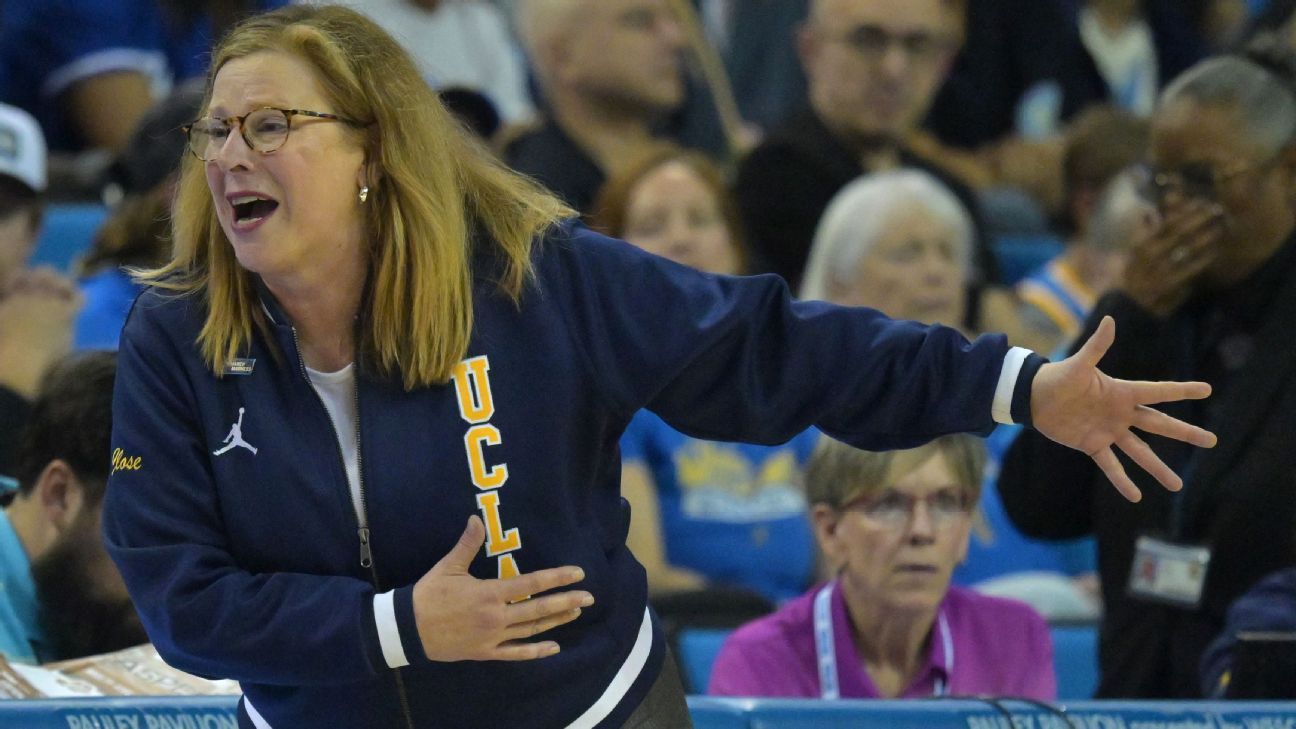
SACRAMENTO, Calif. — UCLA women’s basketball is amid its most successful period since the NCAA era began in 1982. But Bruins coach Cori Close said Thursday that collegiate sports success comes with an exhausting pace for coaches.
“I’ve never been as tired as I’ve been in the last two years, and it’s made me think how much longer I can do this,” said Close, whose No. 1 seed Bruins face No. 4 seed Minnesota in the Sacramento 2 Regional semifinals Friday (7:30 p.m. ET, ESPN). “And I’m just being transparent with you about that. There are so many things that are harder, and we keep losing incredible people on the men’s and the women’s side.
“If there’s one thing I would ask of our governing bodies and the NCAA and our administrations is please develop infrastructure and boundaries that create an opportunity to have sustained excellence and sustainable pace. Otherwise, we are going to continues to lose some of our best coaches, and I do not think our game can afford to do that.”
Close, 54, is in her 15th season at UCLA. In 1978, the Bruins won the AIAW national championship, but last year was the first time they made the NCAA women’s Final Four, falling in the national semifinals to UConn.
The Bruins have advanced to at least the regional semifinals four years in a row now. UCLA had a similar run in 2016-19, making the Sweet 16 three times and the Elite Eight once.
But with the transfer portal and athletes’ ability now to take advantage of Name, Image and Likeness opportunities, the landscape is entirely different now than it was in 2016-19.
Close is a past president of the Women’s Basketball Coaches Association and also was involved with the Kaplan report that was commissioned by the NCAA in 2021 after inequities between the men’s and women’s tournaments were publicly exposed in the COVID-19 “bubbles” in Indianapolis and San Antonio.
Close said she fully supports the changes in college sports but thinks more oversight is needed.
“Should everybody be able to transfer one time? Yeah … but after that, what adjustments can be made?” Close said. “I am a huge advocate for NIL; it should have happened 20 years ago. [However] we need boundaries, we need infrastructure, we need competitive equity, we need transparency. What is my role in helping that? I don’t know yet, but I want to be part of solutions.”
Meanwhile, coach Dawn Plitzuweit has Minnesota back in the Sweet 16 for the first time since 2005. She has been to this level of the tournament more recently, though, guiding then-No. 10 seed South Dakota to the 2022 Sweet 16. Plitzuweit was with South Dakota of the Summit League for six years, then spent one season at West Virginia before taking over at Minnesota in 2023.
“I think it’s a lot harder as a mid-major to do it now than it was four years ago,” Plitzuweit said of making it to the Sweet 16. “I also would say I also think it’s maybe harder now at the [Power 4] conferences to do it than it was four years ago, too. It’s very, very challenging. There are so many new things that you are navigating on a daily basis.”
Close said that goes for administrators as well as coaches.
“There are just so many more things you have to do,” she said. “You’ve got to raise enough money to have the NIL budget to attract the best players. You have to manage the outside distractions.
“It’s harder than ever to be an administrator and support your teams to excellence. There are so many things pulling on the resources.”









Leave a Reply