

Days into President Donald Trump’s war against Iran, much of the administration’s messaging has been confusing or contradictory.
Without a clear presentation to Congress or a formal address to the nation, the administration’s communication has been scattershot and intermittent, leaving Americans with the task of piecing it all together.
Here’s what the president and top officials have said about why urgent military action was necessary, how long this war will last and whether regime change is the goal.
Did Iran pose an ‘imminent threat’ to the US?
When announcing that the military operations had commenced, President Trump said on Saturday “our objective is to defend the American people by eliminating imminent threats from the Iranian regime, a vicious group of very hard, terrible people.”

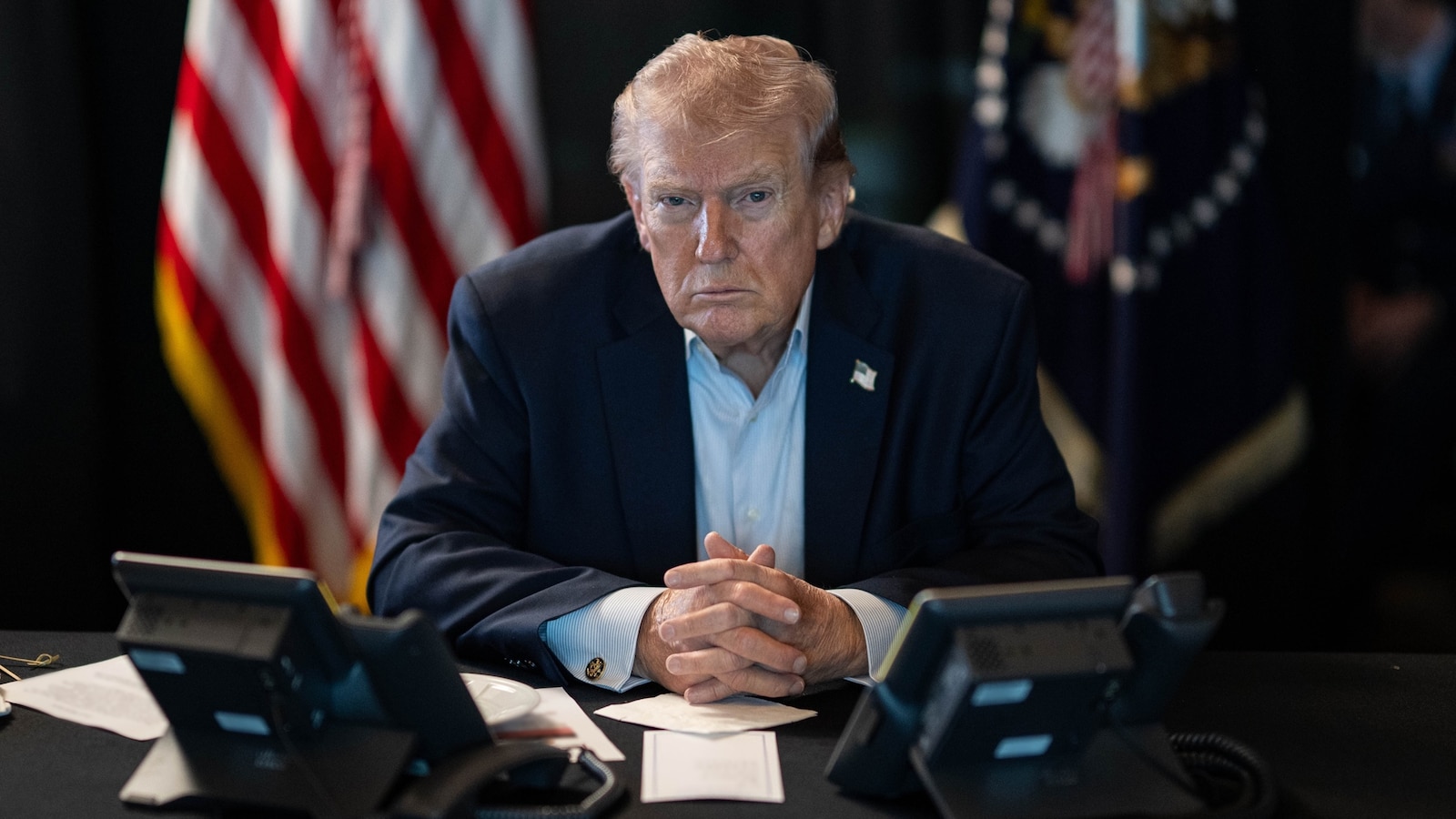
President Donald Trump monitors the strikes on Iran from Mar-A-Lago in Palm Beach, Fla., Feb. 28, 2026.
The White House
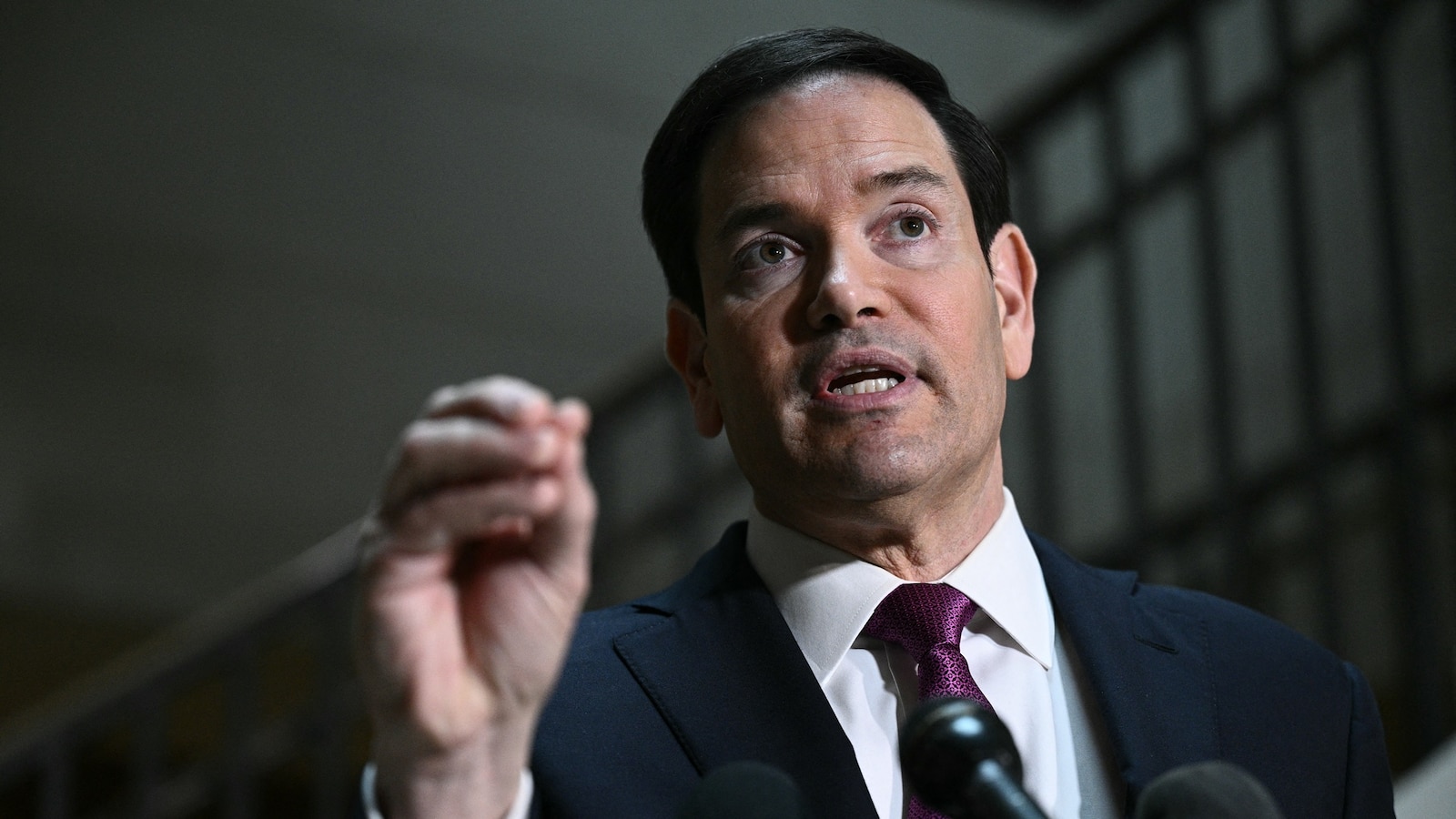
But he didn’t elaborate. Enter Secretary Marco Rubio Monday, explaining that the imminent threat was really fear of a retaliatory strike by Iran, knowing that Israel was poised to strike first and “with our without” the U.S., House Speaker Mike Johnson added.

Secretary of State Marco Rubio speaks to the media on the day of a briefing for Congressional leaders on the situation in Iran, on Capitol Hill in Washington, March 2, 2026.
Kylie Cooper/Reuters
“The imminent threat was that we knew that if Iran was attacked, and we believed they would be attacked, that they would immediately come after us. And we were not going to sit there and absorb a blow before we responded,” Rubio said.
“If we stood and waited for that attack to come first, before we hit them, we would suffer much higher casualties,” Rubio added. “We knew that there was going to be an Israeli action. We knew that that would precipitate an attack against American forces, and we knew that if we didn’t preemptively go after them before they launched those attacks, we would suffer higher casualties.”
But pressed by ABC’s Jay O’Brien, Rubio denied that Israel had forced the hand of the U.S.
And in another confusing moment, on Monday, Trump added Iran “would soon have had missiles capable of reaching our beautiful America.”
But American intelligence agencies believe Iran would not have had missiles capable of reaching the United States for another nine years.
Is regime change the goal?
Is regime change part of the objective in launching this military operation? The answer there has also been hazy.
On Saturday, in a taped video message, President Trump addressed the Iranian people directly, saying, “When we are finished, take over your government. It will be yours to take. This will be, probably, your only chance for generations. For many years, you have asked for America’s help, but you never got it… So let’s see how you respond.”
ABC News also reported that when the U.S. learned there would be a meeting of top leaders on Saturday with the Supreme leader, the timing of the attack was moved and that the first attacks targeted those leaders.
But, in an interview with the New York Times, Trump said that while he hopes Iranian forces “surrender to the people,” he would also be willing to work with remnants of the regime.
“What we did in Venezuela, I think, is the perfect, the perfect scenario,” the president said.
And in Monday’s Pentagon press briefing, Defense Secretary Pete Hegseth denied altogether this war is about regime change.
“This is not a so-called regime change war, but the regime sure did change, and the world is better off for it today,” Hegseth said.

Secretary of War Pete Hegseth attends a Medal of Honor Ceremony in the East Room of the White House on March 2, 2026 in Washington.
Win McNamee/Getty Images
How long will this last and what’s next?
There are also inconsistencies about what’s been said about how long the conflict may last.
“It’s always been a four-week process,” Trump said, according to the Daily Mail. “We figured it will be four weeks or so. It’s always been about a four-week process so — as strong as it is, it’s a big country, it’ll take four weeks — or less.”
But on Monday, Trump said, “Whatever the time is, it’s okay.”
“Whatever it takes … We projected four to five weeks, but we have capability to go far longer than that. We’ll do it,” Trump said.
In those same remarks, Trump claimed U.S. forces will “easily prevail.”
But he’s also not ruling out the use of ground forces or staying involved for as long as necessary.
Chairman of the Joint Chiefs, Gen. Dan Caine, told reporters at the Pentagon on Monday the objective “will be difficult to achieve, and in some cases, will be difficult and gritty work.”
“We expect to take additional losses, and as always, we will work to minimize losses,” Caine said. So far, six U.S. service members have died and more have been wounded.

Chairman of the Joint Chiefs of Staff General Dan Caine holds a briefing amid the U.S.-Israeli conflict with Iran, at the Pentagon in Washington, March 2, 2026.
Elizabeth Frantz/Reuters
What about Iran’s nuclear ambitions?
The president said in his remarks on Saturday that while Iran’s nuclear program was “obliterated,” it has been seeking to rebuild its nuclear program.
“We couldn’t take it anymore,” he said Saturday of Tehran’s rebuilding efforts.
In reality, as his own senior negotiators have said, Iran still had a program to fall back on and enriched uranium on hand.
“They’re probably a week away from having industrial grade bomb making material, and that’s really dangerous. So, can’t have that. This is something that they have to stick with until they prove to us that, you know, they can behave,” Steve Witkoff, White House special envoy to the Middle East, said a week ago.






Leave a Reply