

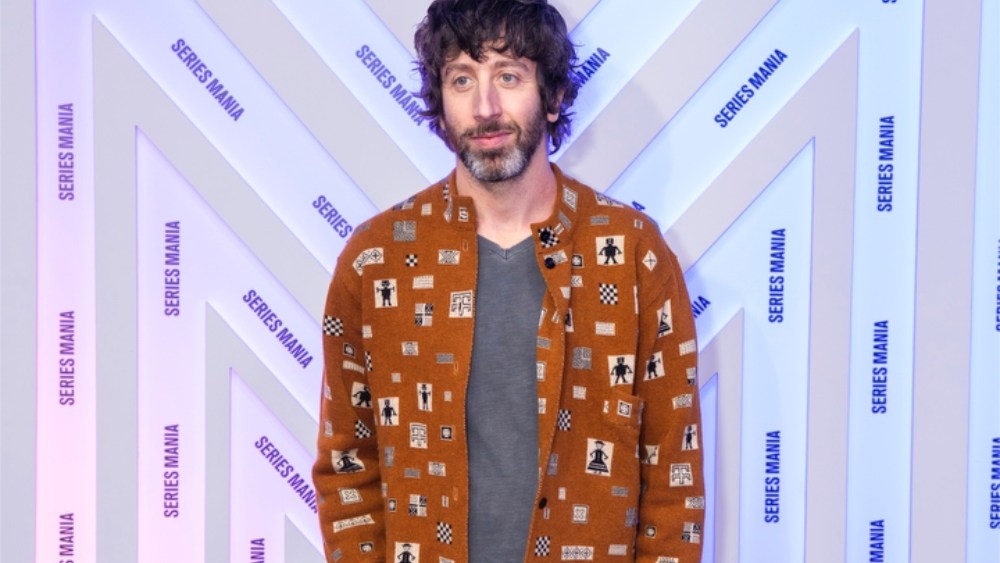
Simon Helberg almost missed out on “The Big Bang Theory.”
“I went: ‘Thank you, I don’t need to do another pilot. I played enough nerds and now I work with Aaron Sorkin’.’ Smart.”
At the time, he had a recurring role in “Studio 60 on the Sunset Strip.” “I didn’t really care. They already had another pilot the previous year, very dark and without our characters. This time, it was clear it went very well – they wanted me to test and I said no. Chuck Lorre called, so I asked Aaron Sorkin for permission. He wrote me an email that I still have: ‘You ungrateful piece of… Just kidding’.”
Helberg still remembers shooting the pilot, which felt different from anything else he had done before.
“James Burrows, the god of sitcoms, was directing. I kept hearing these laughs going on and on and on. The audience laughed for a minute and a half, and he had to calm everyone down. When I entered the show, there was applause. It was so strange: ‘Here he is, the guy from ‘Sabrina the Teenage Witch’!’ We were connecting with something people really wanted. It was hitting some nerve in the zeitgeist.”
Howard Wolowitz quickly became a fan favorite – also because of his questionable fashion choices.
“I remember thinking: ‘This is over the top.’ But he’s peacocking! If you are wearing fluorescent jeans, it just has to work for you. I pass on turtlenecks now, but I still hide my neck. It’s hideous over there,” joked Helberg, adjusting his scarf.
“He thought of himself as the center of attention, the leader of the pack, the funny one in the group and a relentless lothario. That was not exactly who I was, but he was fun to play because he was very confident.”
None of the dialogues were improvised.
“A lot of people are shocked when I tell them, even in Hollywood. They assumed these were our jokes. Not a word of it. These writers knew the characters inside and out.”
Over the course of a record 12 seasons, Wolowitz went from a sleazebag to a caring father.
“It’s such a rare thing to get 12 years to tell a story. This character started as a sleazy guy, so the writers wrote good sleazy jokes, then other writers decided to make it smarter and bring women in who added another dimension. It was the luxury of having almost 300 episodes.”
Still, saying goodbye to the show in 2019 felt right.
“It was like graduating high school. I had a great experience there, but I didn’t want to stay there! We felt like it was time. There wasn’t anything else to do with this world. We were good.”
Helberg, talking at French festival Series Mania to promote “The Audacity,” wanted to be a musician first.
“I even got into playing jazz, which wasn’t that cool for a guy like me – with braces. But I was probably one of the funnier people in jazz. I always enjoyed making people laugh.”
His musical past later helped him in “Florence Foster Jenkins” with Meryl Streep – “I really embellished my piano abilities. I told them I can play anything” – but ultimately, it was all about acting.
“I guess I wanted to see my name up [in lights], have people in front of me and wear a scarf. And get free water.”
Recalling his beginnings, he delighted the audience with a clip of web series “Derek and Simon: The Show,” which he co-created with Derek Waters and Bob Odenkirk. Later featuring the likes of Bill Hader and Zack Galifianakis, it was about twentysomething guys in L.A. “trying to find girls and being neurotic.”
“It was like ‘Girls,’ but with guys. And ‘Guys’ does not have the same ring to it. But Bob Odenkirk was our hero, he was at the vanguard of underground, rock’n’roll comedy, and he believed in us.”
While the legacy of “The Big Bang Theory” is undeniable – even one of the biggest venues at the Series Mania couldn’t accommodate all the fans who wanted to attend Helberg’s masterclass, waiting patiently in a never-ending line that’s bound to go down in the history of the fest – these days he’s interested in throwing himself into new worlds and “being scared.”
He means it – he lied about having French citizenship to get a role in Leos Carax’s musical “Annette,” which felt like “making a short film in collage: raw and risky”.
“I said: ‘I’m in the process [of getting French citizenship].’ Because who isn’t in a process? Right before I got the stamp, there was this final chat, and the lady [in the consulate] said something about ‘a little man and a black hat.’ I blurted: ‘Charlie Chaplin?’ My wife went: ‘He’s kidding.’ ‘Napoleon?’ I don’t know what this questions was even about, but boom, I have the passport now and I love it.”
In “The Audacity,” he plays one of Silicon Valley’s geniuses who might have peaked too early as a kid and now develops an AI therapy bot for lonely teenagers.
“Even though he has a lonely teenage daughter at home whom he completely neglects,” he said.
“These characters are pretty flawed, but they are trying to be virtuous to some extent. But we see how that gets interrupted by selfishness, and that’s what we can relate to. You see where they get corrupted. You always look for what makes a character good and what they are after. And people in Silicon Valley are after efficiency, which lacks humanity and can be horribly depressing. Martin neglects his daughter, sure, but maybe he will save future father-daughter relationships with his bot?”
As the masterclass drew to a close, Helberg also got to meet the man who has been dubbing him into French for years.
“I am so sorry you had to spend so many hours learning me! And off he goes, to do more dialogue from ‘The Audacity.’ We keep him in a small room over there.”






Leave a Reply