

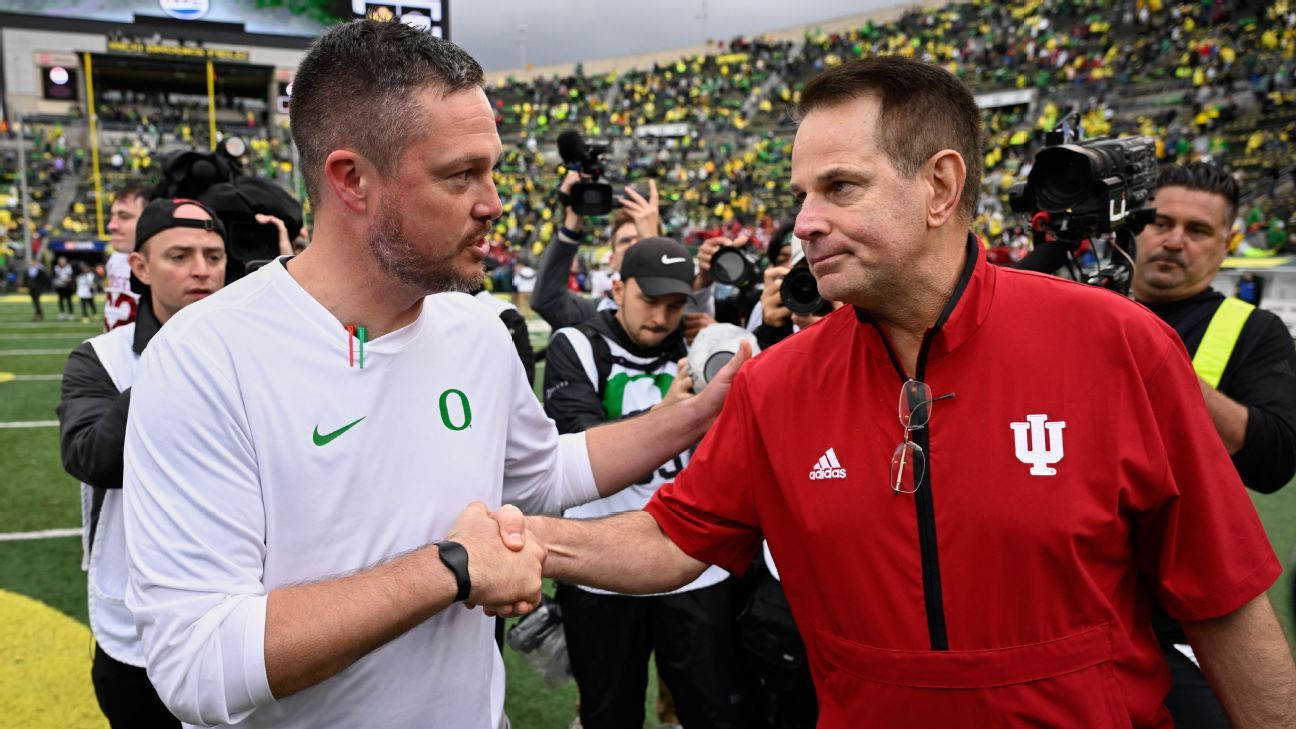
Indiana showed the football world that high school recruiting isn’t the only path to becoming a national champion.
The transfer portal has changed how programs build rosters. Some schools go all-in every offseason to overhaul their rosters through the portal, while others, such as national runner-up Miami, use the portal to add depth to a position or target major transfers who could take a team from great to top-ranked.
And now that signing day and the transfer portal period are over for the 2026 class, we can look at the best groups of newcomers. When it comes to modern roster development, it’s important to consider the combination of recruiting class and success in the portal.
This ranking is the top 25 groups of newcomers — recruits and transfers combined — based on who could see the most impactful immediate returns for 2026.


Top recruits: DT Lamar Brown, DT Deuce Geralds, DT Richard Anderson, WR Jabari Mack, CB Havon Finney, OT Brysten Martinez, WR Corey Barber, S Aiden Hall
While Lane Kiffin leaned heavily on the portal, LSU still signed high school prospects who can keep the roster young at premium spots while also infusing the roster with immediate contributors. Brown, the No. 1 overall player in the SC Next 300 could eventually make an impact on either side of the ball. An agile big man that is powerful and runs well, Brown looks poised to start out on defense and play a role somewhere in the trenches, even in Year 1. Also on defense, Geralds is a quick, penetrating interior player, while Anderson is a stout, 300‑plus pounder with good initial burst who can both anchor and disrupt with penetration. On the perimeter, Mack is a polished in‑state wideout and strong route-runner who projects as an outside target capable of working all three levels, while Barber brings more of a slot/space profile with run‑after‑catch value. Martinez is a long, 6‑foot-6 tackle who will likely be groomed as the successor at left tackle but is talented enough to work his way into the mix as the Tigers look to fill their right tackle position. In the secondary, Hall is a long, physical safety who can run, fill alleys and eventually grow into a back‑end centerpiece.
Transfers: OT Jordan Seaton, Edge Princewill Umanmielen, QB Sam Leavitt, S Ty Benefield, WR Eugene Wilson III
Kiffin landed several plug-and-play players with instant-impact potential. Seaton, a former five‑star, allowed just five sacks in 22 career starts at Colorado. He should lock down the left tackle job and stabilize the pass protection. Wilson is a wide receiver with SEC experience with 107 career receptions for 1,043 yards and 10 touchdowns. He brings the separation and run‑after‑catch ability Kiffin’s offense is built around. Leavitt was Kiffin’s first big portal win and arrives from Arizona State with 24 games played, 4,652 passing yards, 36 touchdowns and 11 interceptions. On defense, Umanmielen is a proven SEC pass rusher. In the secondary. Benefield from Boise State (41 games played, 233 tackles, 11 pass breakups, five INTs), should immediately inject a steady presence.

Top recruits: WR Chris Henry Jr., CB Jay Timmons, S Blaine Bradford, WR Jerquaden Guilford, CB Jordan Thomas, LB Cincere Johnson, DL Khary Wilder, ATH Legend Bey
Even on a loaded roster, several freshmen appear poised to play a role for in 2026. Henry seems like a dangerous initial pairing with Jeremiah Smith as a red zone and jump‑ball asset. He can be a vertical/rotational player in multireceiver sets early on and assume Smith’s role once he departs for the NFL. Timmons can provide support behind Jermaine Mathews Jr. and in a nickel role. He has the length and instincts to be the next boundary corner in the pipeline. Bradford can work his way into the mix in the secondary as well with the range and physicality to contribute quickly on special teams and in subpackages. There is no clear path to the field for Johnson at linebacker, but it will be tough to keep a prospect with his size, versatility and maturity off the field. Bey’s versatility will likely get him into the mix to get touches and he can become a player in the mold of former Buckeye Curtis Samuel.
Transfers: DT James Smith, Edge Qua Russaw, NB Earl Little Jr., S Terry Moore, CB Dominick Kelly
The Buckeyes used the portal to harden the middle and upgrade coverage. Smith is poised to be a starter at defensive tackle after arriving from Alabama with 48 tackles, 10 tackles for loss (TFLs) and 3.5 sacks, giving OSU an immediate interior force against the run and pass. Russaw can work in the rotation with Zion Grady who is another SEC‑tested edge rusher to third‑down packages. In the secondary, Little could grab ahold of the starting nickel job. He arrives with 24 games of experience between Alabama and Florida State with 93 tackles and two pass breakups. Moore also bolsters the secondary after transferring from Duke with 116 tackles, four interceptions and seven pass breakups, filling a big void left by Caleb Downs. Kelly transferred from Georgia and can solidify the corner rotation behind Devin Sanchez. This group upgrades Ohio State at tackle, edge, nickel, safety and corner — exactly where playoff defenses are built.

Top recruits: Edge LaDamion Guyton, CB S’Vioarean Martin, WR Chase Campbell, RB Ashton Rowden, OG Jerald Mays
Tech’s 2026 freshmen class mixes immediate‑use athletes and upside. Guyton projects into the outside linebacker rotation with the range and burst to thrive ultimately in a similar fashion to David Bailey. Don’t expect that in Year 1, but he can have success in a situational role as a violent and intense pass rusher. Martin gives the secondary a rangy, physical, movement‑first corner who can hold up in space. Campbell brings perimeter speed and body control to compete for slot/outside reps and Rowden projects as a complementary back with burst and receiving feel on early downs and specialty packages. Along the offensive line, Felix Ojo was a big-time addition but should be viewed as more of a developmental, long-term impact addition. Mays has interior flexibility to play center or guard with size and great feet in pass protection and could be the one to contribute quicker.
Transfers: QB Brendan Sorsby, DT Mateen Ibirogba, DE Trey White, DE Adam Trick, WR Malcolm Simmons, WR Kenny Johnson, TE Jett Carpenter, LB Austin Romaine
Texas Tech’s portal class has ready‑made, high‑impact players. Sorsby is a three‑year starter who completed 61.6% of his passes for 2,800 yards with 27 touchdowns to five interceptions in 2025 and added 580 rushing yards and nine touchdowns. He’s a powerful, instinctive pocket passer with RPO timing and the mobility to extend plays. With some key impact losses along their defensive front, Texas Tech addressed that via the portal with several strong adds. Ibirogba is a disruptive interior run defender who slips blocks, shoots gaps and closes in the backfield. He’s versatile enough to line up across the defensive line and provide inside push. White is an ultraproductive Group of 6 edge defender with twitch, a violent first step and an array of pass-rush moves. Trick complements him as a relentless speed rusher with good bend (12.5 TFL, 8.5 sacks in 2025) who can also make plays against the run. Simmons adds big play perimeter juice (18.3 yards per catch in 2025) and punt return value as a boundary/slot option.

Top recruits: RB Derrick Cooper, OLB Tyler Atkinson, WR Jermaine Bishop Jr. DE Richard Wesley
Texas signed multiple five-stars in 2026. At linebacker, Tyler Atkinson lacks physical upside but was a productive high school player in Georgia. He can be a versatile player that can rotate in at linebacker and should also be a factor on special teams right away. At receiver, Bishop adds rotational depth behind Ryan Wingo and Kaliq Lockett, profiling as the next vertical and catch‑and‑run threat in a room coach Steve Sarkisian has stocked with blue‑chip talent. Both are positioned to be part of the rotation as underclassmen and the next wave behind an established core. With quite a bit of turnover at running back, Cooper can step into a role right away. He brings an excellent blend of size, speed and power and also has excellent ball skills and can help pick up some of the multipurpose production lost with Tre Wisner leaving.
Transfers: WR Cam Coleman, DT Ian Geffrard, RB Hollywood Smothers, RB Raleek Brown, ILB Rasheem Biles
Texas’ portal haul is about upgrading with proven playmakers. Coleman was one of the biggest portal wins of this cycle and projects as a primary outside receiver after transferring from Auburn with 93 receptions, 1,306 yards and 13 touchdowns, giving Texas another true No. 1 target opposite Wingo. The new-look backfield will have Smothers and Brown share feature-back duties. They combined for 2,978 rushing yards, 113 receptions and 28 total touchdowns, and are fitting perfectly in Sarkisian’s space‑driven run/pass game. Up front on defense, Geffrard joins the defensive tackle rotation from Arkansas with 39 tackles and 5.5 TFLs, anchoring the interior against SEC run games, while Biles arrives from Pittsburgh as an every‑down inside linebacker with 183 career tackles, 31.5 TFLs and 10 sacks, boosting the second level and helping to replace Anthony Hill Jr.

Top recruits: DT Gabe Hill, DE Kevontay Hugan, CB Kasmir Hicks, TE‑H Parker Elmore, OG Benjamin Novak, LB Ja’Dyn Williams
Indiana brings back some veteran talent from its national title team and were proficient in the portal. So while the Hoosiers signed one of their strongest classes in years, only a few freshmen are positioned to earn early snaps in 2026. Hill could play early. He projects as a stout anchor who can hold up versus double teams, squeeze the pocket and spell older tackles without a big drop-off. Off the edge, Hugan brings length and burst at a spot still searching for long‑term difference‑makers and should work into the pass rush rotation on obvious passing downs. In the secondary, Hicks has the quickness and ball skills to compete for corner or nickel snaps, with immediate special teams upside. On offense, Elmore might have flown a bit under the radar having missed a significant amount of time over the course of his sophomore and junior seasons. He’s coming off a strong senior season and is a movable H‑back who can block, go in motion and serve as a short‑area safety valve. Novak is a physical interior lineman who can either push for a guard job or be a high‑end sixth man in the offensive line rotation.
Transfers: WR Nick Marsh, QB Josh Hoover, OG Joe Brunner, DE Tobi Osunsanmi, CB AJ Harris, RB Turbo Richard, DL Joshua Burnham, S Preston Zachman, TE Brock Schott
Indiana’s portal class is built to reshape the depth chart immediately. Hoover (31 starts, 9,629 career yards, 71 touchdowns) has one of the quickest releases in college football and fits Air Raid/RPO concepts and gives them an experienced player to try and replace Fernando Mendoza. Hoover must protect the ball better, as he threw 13 interceptions in 2025. Brunner is a plug‑and‑play guard with 24 starts and the balance and power to function in gap or zone schemes. At 6-3 with 100 career catches for 1,311 yards and nine touchdowns, Marsh profiles as a true X on the boundary. He combines deep tracking, contested‑catch ability and yards-after-catch toughness. Osunsanmi brings real edge juice (12.5 TFLs, 8.5 sacks) and should feature in third‑down packages. Harris (32 games, 89 tackles, 6 pass breakups) gives Indiana a long, physical press corner to upgrade the boundary rotation. Richard is a compact, explosive change‑of‑pace and pass‑catching back who adds a true third‑down and perimeter threat. Together, they help the Hoosiers reload at multiple key positions for 2026.

Top recruits: RB Damarius Yates, DE Landon Barnes, CB Dorian Barney, WR Jase Mathews, S Craig Tutt
Ole Miss’s 2026 high school class gives Pete Golding the length and physicality he values. Yates is a decisive, explosive runner who can be a change‑of‑pace and short‑yardage weapon early. He rushed for over 2,000 yards as a high school senior. Barnes brings edge length, hand work and the burst to push into situational pass‑rush reps. Barney is a fluid, instinctive cover corner who can contribute in the nickel and on special teams, while Mathews adds vertical speed and contested‑catch ability as a perimeter option. Tutt projects as a downhill, rangy presence who can help immediately in subpackages and kicking coverage units.
Transfers: OT Carius Curne, S Edwin Joseph, CB Jay Crawford, QB‑DT Deuce Knight, DT Michai Boireau, DE Blake Purchase
Golding supplemented youth with plug‑and‑play portal players at premium spots. Curne adds power and movement to the OL after starting as a freshman at LSU and can help open lanes early. Joseph is a rangy, instinctive safety who moved into a starting role at Florida State, finishing with 37 tackles, three interceptions and five pass breakups in 2025 and should stabilize the back end. Crawford is a press‑style boundary corner with strong hands and timing who upgrades one‑on‑one matchups. Boireau is a massive interior tackle (6‑4, 349) who stacks blocks and collapses the pocket. He recorded 20 tackles, 2 TFLs and two sacks last season and projects to help the run defense immediately. While Trinidad Chambliss returns at QB in 2026, the addition of Knight is still valuable as he gives them a player to bring along for when Chambliss leaves.

Top recruits: RB Ezavier Crowell, WR Cederian Morgan, Edge Xavier Griffin, S Jireh Edwards, CB Jorden Edmonds
Alabama’s freshmen class brings in several players that could play valuable roles in 2026. Crowell is a physical, downhill hammer who can spell the veterans in short-yardage situations and see his touches increase as the season progresses. On the perimeter, Morgan brings size and vertical ability to the passing game and is equipped to play a role behind the Tides’ more experienced starters. Defensively, Griffin will have an opportunity to learn from Yhonzae Pierre while bringing twitchy pass-rush potential off the edge. He should also see some snaps in a hybrid role. Alabama’s strength is arguably in its secondary so getting into the mix among that group will be no easy task, but we would be surprised if Edwards doesn’t find a variety of roles as a defender with his blend of size, range, agility and physicality.
Transfers: DL Devan Thompkins, DL Terrance Green, OT Ty Haywood, WR Noah Rogers, OG Nick Brooks, OL Jayvin James
The Tide hit the portal to fortify the trenches and add proven perimeter talent. Thompkins, a USC transfer, is the headliner. He brings length and athleticism to the interior, where he used active hands to disrupt while at USC, logging 56 career tackles, nine TFLs and 4.5 sacks. Green joins him as the projected starting nose tackle after transferring from Oregon. He’s an active run-stopper with an explosive first step who posted 22 career tackles, three TFLs and can anchor the middle and push the pocket. On offense, Rogers arrives from NC State and looks poised to join returning players Ryan Williams and Lotzeir Brooks as their primary receivers. He gives Alabama’s passing game a big-bodied boundary target and 68 career receptions, 919 yards and three touchdowns. The Tide’s success in 2026 could hinge on their portal work along the offensive line. Haywood transferred from Michigan and could battle for a starting tackle spot or provide critical depth and competition, while Brooks adds size and power to the interior line mix at guard after transferring from Texas, where he started three games and played 221 snaps. James was a late portal add from Mississippi State but could be a big one, as he’s a candidate to take over one of their tackle spots.

Top recruits: DE Rodney Dunham, CB Khary Adams, S Joey O’Brien, RB Javian Osborne
Only a handful of freshmen project to play in 2026, and these seem to have the best paths. Dunham is a long, physical edge with early down run chops and developing pass‑rush traits that should help him find his way into the defensive line rotation and provide needed quality depth. Adams projects into the corner/nickel mix as a long, competitive cover man who can press and mirror in space. O’Brien can crack the safety two‑deep and should contribute on special teams and subpackages with his range and ball‑hawking instincts. As they work to replace one of the best running backs in college football in Jeremiyah Love, Osborne projects into the backfield rotation as a compact, physical runner who fits short‑yardage and downhill work while offering some receiving ability out of the backfield.
Transfers: WR Quincy Porter, DT Francis Brewu, DT Tionne Gray, DE Keon Keeley, CB Jayden Sanders
Notre Dame added veteran help where it was needed. Porter is a boundary/vertical target with contested‑catch ability and should be part of the wide receiver rotation immediately. Brewu and Gray upgrade the interior rotation. Brewu is a stout, powerful tackler who stacks blocks and controls the point of attack. Gray is an active, penetrating interior presence who can collapse pockets. Keeley, a one-time Notre Dame commit during the 2023 cycle, has not met his former five-star status, but he still brings big, explosive edge traits to the end rotation with initial burst and power against the run. Sanders comes with proven cover instincts and the ability to handle the physical demands of ACC/Power 4 receivers. All five are expected to be in the 2026 rotation and give the Irish experienced, NFL‑caliber help up front and in the secondary.

Top recruits: RB KJ Edwards, WR Aaron Gregory, WR Madden Williams, Edge Bryce Perry‑Wright, CB Brandon Arrington
The key freshman to watch is Edwards who projects into the running back rotation as Le’Veon Moss moves on. Edwards, a smaller, explosive, change‑of‑pace back can complement Rueben Owens II with versatility and perimeter quickness. Gregory and Williams project into the receiver rotation. Gregory is more of an outside target with vertical juice, while Williams is a slot receiver with the speed and skills to create after the catch. Perry‑Wright can work his way into the defensive end rotation and brings length and twitch off the edge. He’s the kind of high‑ceiling freshman rusher who can be worked into third‑down packages while he fills out physically.
Transfers: WR Isaiah Horton, CB Rickey Gibson III, Edge Anto Saka, OT Wilkin Formby, OG Trovon Baugh, S Tawfiq Byard, OL Coen Echols, OL Tyree Adams
Mike Elko hit the portal to add proven SEC/Power 4 production at premium spots. Horton joins the receiver rotation as a 6‑4, 208‑pound boundary target from Alabama. He’s a big‑catch playmaker with excellent body control and ball skills who can win jump balls and work the deep middle. Gibson, a quick‑twitch cover corner from Tennessee, is a sticky man defender with instincts and physicality who can be a matchup player on the outside. Up front, Saka has relentless edge energy as an experienced pass rusher who wins more with effort and leverage than elite bend. The Aggies have to replace multiple starters along their offensive line and brought in several transfers to try and do that. Formby and Baugh will bring plug‑and‑play experience on the offensive line. On the back end, Byard steps into the safety rotation after leading Colorado in tackles. He’s a versatile safety with range, instincts and eight TFLs in 2025 — exactly the kind of do‑it‑all presence Elko likes in his scheme.

Top recruits: OT Immanuel Iheanacho, TE‑Y Kendre’ Harrison, RB Tradarian Ball, WR Jalen Lott, S Jett Washington
Oregon’s 2026 class is loaded with immediate-impact talent and upside. Immanuel Iheanacho is the consensus anchor up front and at 6-7, he has rare power and surprisingly fluid movement for a prospect his size. The Ducks’ strength and conditioning program should help him manage his weight. While Oregon doesn’t have an immediately glaring need along the offensive line, he can contribute in Year 1 at tackle or guard and step into a starting role if needed. The Ducks needed depth at tight end and Harrison projects as an on‑the‑line, Y/TE mismatch at 6‑6, 250 pounds. He has an exceptional catch radius and is a seam threat on play‑action and red zone looks. Ball adds explosive, shift‑the‑field ability in space and should work into the backfield/return rotation as a gadget and perimeter weapon. Lott gives the Ducks a polished, slippery perimeter target with suddenness and yards-after-catch upside in quick‑game and vertical packages. Each is on a fast track to rotational snaps in 2026.
Transfers: QB Dylan Raiola, S Koi Perich, TE‑H Andrew Olesh, DT D’Antre Robinson
Oregon supplemented youth with portal players who fit its scheme. Raiola completed 72.4% of his passes in 2025 and can operate the offense’s intermediate and deep windows and move the pocket when needed. Dante Moore’s return in 2026 blunted the impact of this addition, but for a team with national title aspirations, a quality backup quarterback still brings great value. Perich nicely addressed an immediate hole in their secondary and is a rangy, playmaking safety who can patrol the deep middle and has the athleticism to match modern slot threats (128 tackles, four PDs, six interceptions). Olesh projects as a plus H/TE in heavy packages. He’s a smooth mover with good hands who can stretch seams and sustain blocks in the run game. Robinson adds interior disruption to the defensive line rotation with power and gap‑shooting ability (5.5 TFLs, two sacks). The Ducks were not overly active in the transfer portal but made enough additions to remain in the national title hunt.

Top recruits: OT Jackson Cantwell, S J.J. Dunnigan, TE-Y Gavin Mueller
On a veteran, portal-heavy roster, a few freshmen still have a real path to snaps in 2026. Cantwell is a massive and powerful presence with the agility to handle ACC edge rushers. The five-star looks poised to take over for departing right tackle and former 2023 five-star Francis Mauigoa, who also started his freshman year. Dunnigan could crack the two-deep depth chart at free safety and should contribute on special teams and in sub packages early, with the range and frame to grow into a full-time back-end starter as older safeties move on. Mueller, a bit of football late bloomer, has shown impressive strides. He initially excelled as a blocker and has become a more well-rounded player who can work his way into the tight end rotation in more multiple-TE looks and can block and threaten the seams.
Transfers: QB Darian Mensah, DE Damon Wilson II, S Omar Thornton, WR Cooper Barkate, WR Vandrevius Jacobs
Miami once again leaned on the portal at premium spots. Mensah steps in as the projected starter at quarterback after an ACC title season at Duke, bringing proven production — 3,951 passing yards, 34 touchdowns and just six interceptions in 2025 — and the poise to operate Miami’s wide-open passing game. The Hurricanes also added some targets, including a familiar one in Barkate, who also comes over from Duke, and Jacobs, who could provide some downfield big-play potential. On defense, Wilson gives the Canes a true edge threat, arriving from Missouri with 15.5 tackles for loss and 12.5 sacks and the first-step explosiveness to finish off a much deeper front. Thornton could slide straight into the safety rotation after transferring from Boston College with 110 career tackles, one pass breakup and one interception. He offers a physical, experienced presence to play in the box or over the top and let the staff be aggressive.

Top recruits: RB Savion Hiter, WR Salesi Moa, WR Travis Johnson, DE Titan Davis, DE Carter Meadows, CB Jamarion Vincent
Michigan doesn’t need a huge freshman class to play right away, but this group has some additions tracking toward meaningful roles in 2026. Hiter projects into the running back rotation as a downhill, lead-back type who fits the Wolverines’ physical run game. Moa and Johnson both project into the receiver rotation. Moa, who jumped from Utah after initially signing with the Utes, offers versatility outside (and in the secondary, if needed). Johnson, who has a 6‑foot-4 frame, can win 50‑50 balls on vertical routes and in the red zone passing game. Davis and Meadows are expected to be part of the edge rotation as long, high‑motor defensive ends who can hold the point and rush the passer behind established starters. Davis might be a little more equipped to play sooner, but Meadows can find success in a situational role and brings tremendous upside. Vincent, a long, competitive DB who fits the staff’s preference for bigger, physical corners, should be in the nickel/corner mix.
Transfers: DE John Henry Daley, CB Smith Snowden, TE JJ Buchanan, WR Jaime Ffrench
Michigan went quality over quantity in the portal and hit on some impact players who project to be in the 2026 rotation. Daley is a plug‑and‑play edge rusher in the defensive end rotation. He’s a very productive and stout run defender who holds gap integrity, destroys blocks and wins with power and hustle more than pure bend. Snowden steps into the nickel/corner rotation as a proven ball hawk; he was a two‑year starter who led Utah in passes defended (17 over two seasons) and tallied four interceptions, and he can line up outside or over the slot. Buchanan projects as a top H-back in the passing rotation. He was one of Utah’s leading freshman receivers with great height, ball skills and jump ball ability up the seam, though he’s still developing as a blocker. All three have familiarity with new coach Kyle Whittingham after following him from Utah. Ffrench, a former SC Next 300 receiver who saw limited action at Texas, slots into the receiver rotation as a solid pass catcher with strong hands, body control and contested‑catch skills. Collectively, they upgrade Michigan at several spots as the Wolverines begin a new era.

Top recruits: OT Keenyi Pepe, DE Luke Wafle, WR Ethan Feaster, CB Elbert Hill, TE-H Mark Bowman, OLB Talanoa Ili, DT Jaimeon Winfield, DT Tomuhini Topui
USC is leaning more on its top-ranked high school class, though its group is boosted by some strong portal additions. The Trojans’ work along the defensive line was a key factor in landing the No. 1 high school class in 2026. Expect several freshmen to play roles right away. Wafle was a standout during the All-America games and finished the cycle as a college-ready five-star. Winfield and local product Topui (Mater Dei) are big-time additions in the heart of the trenches, an area where USC needed to get better. Topui is a 300-pounder with excellent quickness and the type of player USC has previously struggled to keep at home. A physical presence, Ili is in the middle linebacker rotation. Bowman is one of the top tight ends in the class, and he could see a significant role as a capable blocker who also can create mismatches in the passing game. Addressing some key losses at receiver, Feaster offers another dynamic young option in the passing game and someone to watch in that receiver room. USC might not need Pepe to step into a starting role, but he is a massive 6-foot-7, 320-pound presence with rare athleticism who could push for playing time.
Transfers: CB Jontez Williams, WR Terrell Anderson, OLB Zuriah Fisher, DT Alex VanSumeren, TE Tucker Ashcraft, LB Deven Bryant
USC peppered the roster with experienced, Power 4-ready talent. Williams was arguably the biggest addition. Healthy once again, he’ll likely start at corner and brings proven coverage skills, logging 67 tackles, 10 passes defended and five interceptions over 32 games at Iowa State. Anderson is a productive receiver with 53 career receptions, 787 yards and six touchdowns at NC State. With Makai Lemon off to the NFL, Anderson can cover some of the lost production and help stretch the field. On defense, Fisher is a disruptive edge defender from Penn State with 42 tackles, seven TFLs and 5.5 sacks who will bolster the pass rush. VanSumeren seems poised start at nose tackle, providing a stout, experienced presence from Michigan State with 79 tackles, 4.5 TFLs and three sacks in the middle of the defensive line. He should allow the talented freshmen — Winfield and Topui — to ease in and get their feet wet as the season progresses.

Top recruits: WR Tristen Keys, WR Tyreek King, QB‑DT Faizon Brandon, DE Jordan Carter, DB Joel Wyatt, OL Gabriel Osenda
At the time, landing a commitment from Brandon was a key quarterback addition in the wake of Nico Iamaleava’s departure to UCLA. That remains the case now that the Vols need to replace Joey Aguilar, who was denied another year of eligibility. Brandon blends arm strength with good accuracy and nice touch on his deep ball. Tennessee has more experienced options, but Brandon is someone to watch and could ultimately work his way into packages even if he doesn’t win the starting job. While the quarterback situation is unclear, the Vols’ 2026 class supplies some playmakers who can factor into the rotation quickly. Keys is a high‑end perimeter target with length and body control who projects into the outside receiver rotation and red zone packages. King is quick, runs good routes and has big-play speed. Carter Gooden, a savvy high school defensive lineman with active hands, and Carter, who provides an option with bend and burst, could both earn situational snaps as they physically develop.
Transfers: Edge Chaz Coleman, CB Kayin Lee, S T.J. Metcalf, LB Amare Campbell, DT Xavier Gilliam, S Dejuan Lane
Tennessee’s portal class injects proven playmakers. Coleman is an explosive pass rusher who can bend the edge, slip blocks and convert speed to power. He showed early production at Penn State, and he projects as a third‑down threat and rotational edge rusher with still longer-term upside (3 TFLs, one sack). Lee is a physical, Cover 2 boundary corner who reroutes at the line, closes quickly and sets the edge versus the run, which is ideal for press‑heavy matchups (17 pass breakups, three interceptions). With needs at safety, Metcalf is a tall, violent tackler with ball hawk instincts and range in zone. Lane is a player to watch coming over from Penn State and is familiar with new defensive coordinator Jim Knowles’ scheme from their time with the Nittany Lions. Campbell brings downhill tackling and gap‑fitting and pass‑rush chops after leading the Nittany Lions in tackles and projects as a high‑motor, every-down, off‑ball option. Gilliam is a disruptive interior defender with a quick first step, active hands and the ability to penetrate gaps and collapse the pocket.

Top recruits: DE Jake Kreul, RB Jonathan Hatton, WR Daniel Odom, WR Jayden Petit, DE/OLB Dane Bathurst
Oklahoma’s 2026 class got off to a slow start but picked up steam in late summer and ultimately added some dynamic playmakers and high-upside talent. Kreul, a five-star edge defender, brings an explosive first step, good bend and a relentless motor that should earn rotational snaps in 2026 and even further strengthen the Sooners D-line. Bathurst, a player with a good burst and active hands, seems like another addition who will be tough to keep off the field with his versatility as DE/OLB. Jacob Curry was an intriguing add, and as a player who tested well on the camp circuit, he could be a valuable special teams contributor out the gate. For a receiver unit that will have several new faces, Odom, a 6-foot-2 target with length and polished routes, projects into the rotation as a vertical threat. Petit is another freshman receiver who could work his way in the mix; a big target at roughly 6-foot-4, he was a very productive high school player who set Southwest Florida’s all-time career receiving mark. Looking to bolster the Sooners’ rushing attack, Hatton is someone to watch in the running back mix, as he is big and physical and offers an excellent blend of size (200 pounds) and speed (21 mph on film).
Transfers: WR Trell Harris, WR Parker Livingstone, OT E’Marion Harris, TE Hayden Hansen, TE Jack Van Dorselaer
Oklahoma hit the portal to bring in immediate starters and proven Power 4 depth. Trell Harris is a productive veteran from Virginia who can create underneath, take the top off coverage and win 50-50 balls with strong hands and physical yards after catch (113 career receptions, 1,604 yards, nine touchdowns), and he should start. Livingstone, coming from Texas, also helps rebuild that position as a speedy, 6-foot-4 target with great hands and route-running skills who stretches the field and tracks the deep ball exceptionally well (29 career receptions, 516 yards, 6 touchdowns). On the offensive line, E’Marion Harris is the projected starter at right tackle. He started 24 games at Arkansas, bringing an impressive 6-foot-7, 313-pound frame, long arms and the ability to mirror pass rushers with sound technique. Hansen (from Florida) and Van Dorselaer (Tennessee) add critical depth and competition to the tight end room as well as pass-catching upside and blocking versatility.
1:08
Palmer: College football transfer portal needs unilateral reform
Jesse Palmer rips the current state of college football and offers solutions for paying players and tweaking the transfer portal.

Top recruits: ATH Davion Brown, RB Messiah Mickens, QB Troy Huhn, OT Thomas Wilder, CB Amauri Polydor
Coach James Franklin wasted no time earning a top-25 recruiting class after arriving in Blacksburg and brought in a lot of familiar faces. Brown is a multiple‑tool athlete who projects as a gadget slot/return weapon and special teams playmaker. Mickens fits the backfield rotation as a compact, one‑cut runner with contact balance and third‑down receiving chops. Huhn is not likely to start at QB, but as a dual-threat QB, he can push the position and work into packages as a high‑ceiling option. With an O-line rebuild, Wilder gives Virginia Tech a tackle depth with the size and movement to grow into a Power 4 starter. Polydor brings length and physicality at corner with immediate special‑teams upside and a path into the nickel/boundary mix.
Transfers: QB Ethan Grunkemeyer, TE Luke Reynolds, WR Que’Sean Brown, DE Javion Hilson, OLB Daniel Jennings, OL Logan Howland
Virginia Tech’s portal class is built for instant, scheme‑fit upgrades. Grunkemeyer is a rhythm/timing passer who finished strong at Penn State. He threw for 1,348 yards and notched nine total touchdowns in 2025, and his arm strength, pocket instincts and competitiveness should immediately stabilize the Hokies’ quarterback room. Reynolds is a prototypical H/TE mismatch (35 catches, 368 yards at Penn State) who finds seams against zone defenses, wins jump balls and blocks enough to be trusted inline on play‑action and heavy personnel packages. Brown is a twitchy slot and return weapon who turns short throws into explosive gains with soft hands and elite body control (105 career catches, 1,291 yards, seven touchdowns). On defense, Hilson adds rotational edge power after transferring from Missouri, and Jennings brings versatile off‑ball linebacker play in coverage and the box.

Top recruits: TE‑H Kaiden Prothro, CB Justice Fitzpatrick, OT Ekene Ogboko, S Zechariah Fort
Kirby Smart’s 2026 class adds size and matchup weapons that can play early. Prothro is a long, athletic hybrid WR/TE and can be a seam and red zone target with the length to win jump balls. Whether he’s utilized more in a role like Brock Bowers or a George Pickens, Prothro has a rare blend of physical tools and can bring immediate playmaking potential regardless of position. Fitzpatrick is a rangy boundary corner with the size/speed profile. Ogboko’s length at tackle, coupled with his mobility, makes him the most likely freshman to crack the rotation. Fort is a physical, rangy safety who can help in run support and the deep middle.
Transfers: DE Amaris Williams, S Khalil Barnes, WR Isiah Canion
Georgia used the portal to add immediate, complementary players. Williams brings explosive power and early bend to the rotation and should be a situational rush threat. Barnes is one of several notable defensive backs arriving via the portal to help replace productive depth lost after the season. He’s a big‑frame safety/box defender with range who adds depth and versatility to the group. Canion, jumping over from Georgia Tech, is a big, physical receiver with great hands and route running skills. He averaged 14.5 yards per catch in 2025 and could be a breakout addition within their passing attack.

Top recruits: WR Brady Marchese, LB Jaquez Wilkes,
Transfers will play a key role in shaping Auburn’s transition to the Alex Golesh era, but the Tigers still managed to collect a good foundation of young talent who could push for playing time in 2026. Marchese leads a group of young receivers who could find a role. He has big-play speed, strong hands and playmaking ability at all three levels. With Cam Coleman moving on and Auburn’s overall needs at receiver, Marchese is most likely to get the first chance to crack that mix. Along the front seven, Wilkes is in the mix at linebacker and brings rare production and versatility out of high school, where he was a 2,000‑yard rusher and 100‑tackle defender as a senior. Wilkes has the range, instincts and toughness to grow into an every‑down SEC linebacker.
Transfers: QB Byrum Brown, RB Bryson Washington, CB Andre Jordan, DE Da’Shawn Womack, WR Keshaun Singleton, WR Jeremiah Koger, OT Stanton Ramil, OL Cole Best
The Tigers dealt with a great deal of roster turnover and were quite active in the portal following a coaching change. Golesh unsurprisingly secured some familiar talent from South Florida, his previous job, including arguably the most vital addition, Byrum Brown, who is a proven dual‑threat quarterback after a 2025 season with 3,158 passing yards, 1,008 rushing yards and 42 total touchdowns. He’s a dynamic, unorthodox, yet highly productive playmaker with a strong arm, poise, and the ability to extend and finish plays with his legs. Brown has already shown he is an ideal fit for Golesh’s up-tempo attack. Singleton should help replenish Auburn’s lost production at receiver. He’s a big, reliable target with a wide catch radius. The 6-foot-3 Koger also has plenty of length and flashed as a freshman with South Florida. He should help in 2026 but also long-term potential. Washington comes from outside the USF pipeline and the Baylor transfer could headline Auburn’s running back rotation. He’s a strong, downhill runner who runs behind his pads, bounces off first contact and also brings pass‑catching skills out of the backfield, where he has 339 career carries for 1,861 yards along with 41 catches. Jordan is a Power 4 corner who can plug directly into the cornerback rotation, bringing size, athleticism and experience in coverage and special teams (28 games, 57 tackles, 15 pass breakups).

Top recruits: WR Jabari Brady, DT Tajh Overton, DE DeMarcus Johnson (JUCO)
Missouri’s transfer additions across the offensive line should address its initial need at the position. Still, big men lead the Tigers’ high school haul, and there will be opportunity for SC Next 300 offensive linemen Johnnie Johnes and Brandon Anderson. Both are talented enough to work their way into the mix, even if they’re more likely big-picture additions. At receiver, Brady is a 6-foot-2 vertical target with a massive catch radius who can work outside and in the slot, providing a contested‑catch option with yards-after-catch potential. Overton brings raw power and initial quickness to the defensive front and could carve out rotational snaps for a position short on experience overall. The biggest impact add likely comes via the junior college route in Johnson, the No. 2 overall prospect in the JC50.
Transfers: QB Austin Simmons, LB Robert Woodyard Jr., OL Josh Atkins, WR Horatio Fields, WR Cayden Lee, OG Zack Owens, DL Donta Simpson, OL Luke Work, K Bruno Reus, WR Caleb Goodie
After one season with Beau Pribula at the helm, the Tigers are starting over at quarterback. Simmons seems poised to step into the starting role in 2026. He arrives with some SEC experience and is a big‑armed passer who won the 2025 job at Ole Miss to start the season. Simmons can drive the field vertically and stabilize the quarterback room while developing timing with new targets. One of those new targets will be a familiar face in Lee, who can provide instant chemistry in the slot/perimeter as a shifty, elusive pass‑catcher who knows Simmons’ game from their time at Ole Miss and has 106 career catches for 1,623 yards.
With Josiah Trotter leaving for the NFL, Woodyard is a key addition. He’s a plug-and-play type with Power 4 starting experience, where he made 11 starts and played 560 snaps at Auburn. Missouri added several offensive linemen who could play key roles including Owens, who is well-traveled and bolsters interior guard depth with power and 11 games of starting experience. The defensive line lost quite a bit of experience inside but Simpson, a 2025 three-star, jumps over from Miami having shown some potential as a freshman. Simpson should play a role in Mizzou’s rotation this season and, as a sophomore, could be a long-term addition.

Top recruits: S Matt Sieg, CB Vincent Smith, OT Kevin Brown, RB Amari Latimer, WR Landon Drumm, WR Kedrick Triplett (JUCO), Keon Hutchins (JUCO)
With a full year to work, Rich Rodriguez signed a huge class that is more in line with his vision for rebuilding the roster. West Virginia left no stone unturned, dipping into the high school and junior college ranks as well as the transfer portal. Its freshman class looks to have several quick contributors. SC Next 300 signees Sieg and Brown were huge finds and fans shouldn’t have to wait long to see them. Both former Penn State commits, Brown is the son of a former Mountaineers offensive lineman and is a big, flexible player who could be a plug-and-play option at one of the tackle spots. Sieg is a rangy, instinctive back‑end defender but could find his way on the field in a variety of ways in all three phases. Smith, a big corner at nearly 6-foot-2, 200 pounds, brings physicality and enough quickness to compete for boundary/nickel snaps as he refines his coverage technique. Amari Latimer is a well‑built back with size and speed who can push for carries over time. Landon Drumm projects as an outside receiver with length and ball skills who can work onto the field.
Transfer: RB Cam Cook, QB Michael Hawkins Jr., OL Carsten Casady, DB Jacob Bradford, DE Tobi Haastrup, WR TaRon Francis, DE Ezekiel Durham-Campbell, LB Tyler Stolsky
Cook arrives as a true feature‑back candidate. He has played in 34 career games with 19 starts, amassing 2,177 rushing yards and 25 touchdowns on 430 carries at TCU and Jacksonville State. He’s a shifty, elusive runner with burst through the hole and deceptive power to break first contact, and he rarely leaves yards on the field. Cook should give a young running backs room a proven, productive anchor for 2026. Finding consistency at quarterback will be a key, and while returner Scotty Fox will have a say, Hawkins comes over from Oklahoma with game experience and could be the one to seize that QB1 role. The offensive line needed an overhaul and several players, including Casady, could help overhaul the line. Many more transfers will play a role and while there are many new faces, we feel the Mountaineers improved their roster for 2026.

Top recruits: DE Elijah Reeder, OT Mason Bandhauer, DE Jackson Ford
The Nittany Lions’ 2026 class disintegrated during the coaching change, so it will be impressive if Matt Campbell finds any immediate production from his rebuilt class. Penn State did land two talented defensive players who could work their way into the mix as the season unfolds. Reeder was a late hidden gem pickup by Iowa State who Campbell brought over to Penn State. He has burst, bend and an aggressive motor that could find him in a situational pass rush role as he further develops physically. Ford wore several hats in high school including tight end and covering kicks. As a prospect with good size and versatility on a roster with a lot of turnover, he could easily find a role. Bandhauer can add depth as interior option because he can get push in the run game, but time to further develop would serve him well.
Transfers: QB Rocco Becht, S Marcus Neal Jr., TE Benjamin Brahmer, LB Caleb Bacon, S Jeremiah Cooper, OL Brock Riker, RB Carson Hansen, RB James Peoples, WR Chase Sowell
The Nittany Lions added proven production, especially from Iowa State, bringing along several former Cyclones contributors who helped elevate Iowa State into a winning program and should provide immediate impact in 2026. Becht is the headliner at quarterback. He’s a high‑volume, multi‑year starter with 9,274 passing yards and 64 touchdowns over three seasons. He’s a quick processor who beats zone defenses with timing and touch, and his running ability (19 rushing touchdowns) is underrated. Tight ends will play a key role in this offense, and Brahmer is a big addition as a seam-stretching TE/H who can win jump balls (37 catches, 446 yards), block effectively and even serve as a wildcat option. Riker adds veteran interior line presence. Defensively, Neal is a physical safety/box‑hybrid (77 tackles, 11 TFLs) and a healthy Cooper can step in as a starter and adds ball‑hawking range. In the short term, Bacon is a plug‑and‑play off‑ball linebacker with strong run‑fit instincts and a high motor. Bacon’s a great example of Campbell’s ability to identify under-the-radar talent after he walked on at Iowa State.

Top recruits: CB Chauncey Kennon, LB Izayia Williams, WR Devin Carter, WR Brandon Bennett, WR Jasen Lopez, TE Xavier Tiller
Florida State’s 2026 class is built around a handful of blue-chip players who can realistically help get the program back to its 2023 standard with Mike Norvell heading into the season on the hot seat. On defense, Kennon is a major in‑state win. He’s a long, rangy corner who can run, press and eventually erase one side of the field when he works into the rotation. Linebacker Williams adds true sideline‑to‑sideline speed and range to the second level, fitting modern off‑ball demands. At receiver, Carter (son of former FSU RB Dexter Carter) and Bennett provide explosive short‑area quickness and big‑play ability on the perimeter. Lopez, who is also a talented basketball player, could end up being the breakout addition among the talented receiver haul. Jaden O’Neal, a pocket passer with a smooth delivery, is more likely a long-term option but a QB to watch as a freshman.
Transfers: OT Xavier Chaplin, RB Tre Wisner, LB Chris Jones, QB Ashton Daniels, TE Desirrio Riles, DE Rylan Kennedy, LB Mikai Gbayor, S Ma’Khi Jones
As in the previous two cycles, the Seminoles have been active in the portal as they work to right the ship in Tallahassee and get back into playoff contention. A key position will be QB. Daniels, who jumps over from Auburn, started three games late in the 2025 season and showed good returns in a dual-threat role. Wisner, a running back and productive receiver at Texas (66 receptions, 457 receiving yards), is a factor out of the backfield. On the ground, he runs with good pad level and patience. He will also break tackles with balance and effort and arrives with 1,661 rushing yards and 8 touchdowns in 24 games over the past two seasons. Chaplin is a massive left tackle and two‑year starter who brings size, strength and real upside. His 6‑6, 330‑pound frame and initial quickness let him cover up and seal defenders in the run game and push speed rushers past the pocket as a pass protector. His technique continues to refine (37 career starts, 2,270 snaps, 11 sacks allowed). Several portal additions should also get plugged in on defense, including, Jones a downhill tackling machine from Southern Miss (179 total tackles, 4.5 sacks) who should step into the middle linebacker job in Tallahassee.

Top recruits: WR Denairius Gray, WR Kenny Darby, CB Andre Clarke
Kentucky’s passing game already needed more explosiveness, and it lost its three most productive receivers from 2025, so there’s plenty of opportunity for Gray and Darby to make early contributions. A four-star, Gray consistently performed well during the high school evaluation process and played for a top program (Chaminade-Madonna) in South Florida. He’s a 6‑foot-1 athlete with suddenness, strong hands and he runs good routes. Gray’s ability to create separation and win contested catches should help get him in the mix. Darby is not be a pure burner but is a smooth mover who can also develop into a sharp route runner with good hands. Clarke, a former Michigan signee, was a big addition at corner. His excellent length and quickness will be tough to keep on the sideline. Clarke will likely contribute defensively and, at the very least, on special teams.
Transfers: OT Lance Heard, QB Kenny Minchey, C Coleton Price, OT Tegra Tshabola, LB Elijah Barnes, RB C.J. Baxter, WR Nic Anderson
A Tennessee transfer, Heard is a massive 6-foot-6, 330-pound plug-and-play addition with SEC experience (25 career starts) who brings mauling power, length and the feet to mirror speed rushers. Minchey is likely Kentucky’s quarterback answer in 2026. He blends a strong arm and mobility to extend plays, makes off‑platform throws and can run when the pocket breaks down. Price is a seasoned center (30 career starts) who can steady the interior with his recognition of stunts and combo blocks. Tshabola also comes over to help reshape the offensive line. Baxter brings a compact, physical running style and receiving ability out of the backfield. While they signed some freshmen to keep an eye on, Anderson should provide more immediate help for Kentucky’s passing game. He supplies slot/vertical juice and immediate chemistry in the passing game with 50 career catches for 904 yards and 12 touchdowns over four seasons at Oklahoma and LSU, including a 10-touchdown season in 2023. Defensively, Barnes adds linebacker depth with immediate rotational value.

Top recruits: OT Darius Gray, OT Zyon Guiles, DE Julian Walker, DE Keenan Britt, DB/LB J’Zavien Currence, WR Sequel Patterson
South Carolina’s 2026 class quietly adds real SEC traits up front and on the perimeter. Gray and Guiles give the Gamecocks two long, physical tackles to develop. Gray has the feet to grow into a true offensive tackle, while the 6‑foot-5, 295‑pound Guiles is a mauler who fits at either tackle or guard. While some time to develop would be ideal, with the Gamecocks’ push to improve along its offensive line, either could end up playing a role as freshman. Gray has elite length and body quickness for his size. On the edge, Walker and Britt bring complementary pass rush tools. Walker was a riser in the final rankings coming off a strong All-American outing and brings length and three‑down upside. Currence is a versatile DB/LB hybrid with the size and range to play in the secondary or slide into the second level in modern sub‑packages. Patterson is a sharp route runner who can separate and produce from the slot.
Transfers: OT Jacarrius Peak, DL Tomiwa Durojaiye, S/NB Quay’sheed Scott OL Emmanuel Poku, DL Kelby Collins
South Carolina was active in the portal with additions and subtractions. Strengthening the offensive line is key and Peak has plug‑and‑play ability at tackle after starting down the stretch in 2023, all of 2024 at right tackle and then earning first‑team All‑ACC honors at left tackle in 2025. In total, he has started 32 games, played 2,202 snaps and allowed just seven sacks, though an offseason knee injury casts some shadow on his ability to pick things up and quickly work his way into the mix. That makes the addition of Poku, an East Carolina transfer, even more valuable. He could step into a role at guard or possibly tackle. On defense, the well-traveled Durojaiye, who had four previous stops, is a stout, long interior lineman. Despite the movement, he was a nice addition coming off a strong year at Illinois, with the pad level, hands and length to hold his gap and enough power to push the pocket (42 tackles, 11.5 TFLs, 6.5 sacks). Scott adds starting SEC experience and physicality on the back end, projecting into the safety/nickel rotation as a reliable tackler and coverage player who can help right away (23 games, 45 tackles, two pass breakups, one interception).

Top recruits: RB Kaydin Jones, LB Taurean Davis
Oklahoma State’s 2026 high school haul is small but with targeted impact. Two newcomers clearly project to help early. Jones, a running back flip back from Kansas and Oklahoma power Jenks High School’s all‑time leading rusher, is the headliner. He brings a productive, workhorse profile with vision, toughness between the tackles and enough burst to turn creases into chunk gains. He’s a strong candidate to grow into the primary backup behind the transfer backs. On defense, JUCO standout Davis arrives as a top‑10 junior college prospect at linebacker. He’s a physical, downhill presence who can scrape and fill, yet stills run well enough to stay on the field in modern sub‑packages.
Transfers: QB Drew Mestemaker, RB Caleb Hawkins, WR Wyatt Young, WR Chris Barnes, TE Donovan Green, WR Justin Bowick, DL Jerry Lawson, DE Keviyan Huddleston
It’s a restart for a Cowboys program that fell hard after many seasons of consistent success. While the bar is set low (one win in 2025), a rebound with an active transfer class should help pave the way for more success in 2026. New coach Eric Morris brings experience in this area as he rebuilt the North Texas roster and is hitting the ground running to emulate that success in Stillwater. The roster is built around a prolific core of players he already trusts from his time with the Mean Green. A key add is Mestemaker, who led the FBS in passing yards and passing TDs as a redshirt freshman in 2025. He’s a high‑volume distributor with poise, full‑field progression ability and outstanding touch downfield (4841 career yards, 36 TDs). Hawkins, who is originally from Oklahoma, led the FBS in rushing TDs as a true freshman. A shifty but powerful back who hugs his blocks and explodes through creases. He rushed for over 1,400 yards last season. In the slot and outside, Young (18.1 yards per catch in 2025) and Barnes, who comes over from Wake Forest, give OSU explosive, multi‑position weapons. Young is a smooth, tackle‑breaking vertical threat, and Barnes is a 4.45‑type all‑purpose playmaker who can turn the quick game and returns into long touchdowns. Even more names then listed here will play a role in trying to elevate the Cowboys in 2026.
Leave a Reply