


Dan Wetzel

Multiple Authors
AUGUSTA, Ga. — Just three years ago, the battle between the PGA Tour and LIV Golf threatened to consume all of men’s professional golf.
The upstart, Saudi Arabian-backed LIV was a disrupter designed to become the dominant tour in the sport. It made bold pronouncements while poaching players from the establishment, the United States-based PGA Tour.
The back-and-forth was tense, with debates about everything from morals and ethics to world golf ranking points to whether the entire sport might suffer from a splintering.
It even spilled into the 2023 Masters, which is generally ensconced, or tries to be, from such frays. Nearly every golfer was asked about LIV, about possible defections and about what it all meant. Mud was getting slung on these perfectly drained and immaculately cared for grounds.
Numerous LIV players wore their team uniforms (as team play is part of that tour) in competition as a show of unity and promotion, although many brought alternatives in case Augusta National banned them.
LIV players spoke openly about the significance if one of their 18 entrants won the green jacket — “It would be nice to validate the amount of talent that is over there on LIV,” Phil Mickelson, of LIV, said.
There was talk of every player turning out for a party behind the 18th if one of them proved victorious — “Could you imagine what a scene that would be?” then LIV CEO Greg Norman said.
Augusta National did imagine it and, along with other comments, apparently wasn’t too impressed. The tournament declined to invite Norman, although the leaders of the PGA and DP World Tour were invited.
“The primary issue … is that I want the focus this week to be on the Masters competition,” Augusta National chairman Fred Ridley said. A year later Norman bought his own ticket on the secondary market.
The LIV party never broke out because Jon Rahm, then of the PGA Tour, won. Eight months later, Rahm signed with LIV for a reported $300-plus million.
It’s why, at the time, no one could say for sure what was going to happen. The PGA Tour was the seemingly immovable object, but LIV had the innumerable cash.
“I don’t know where the world is going to be next year or two years,” Ridley said.
Well, it’s been three years, and while the LIV-PGA fight isn’t necessarily “won,” it certainly seems settled.
The PGA Tour is again on the front foot, having subdued LIV’s momentum. Its golf is better. Its competition is better. Its television ratings are better. And the best golfers who once fled are starting to return.
LIV, meanwhile, has established itself as a global tour, capable of putting on successful events, especially in places where the PGA Tour doesn’t go. It ran 14 events in 10 different countries on five continents. It is no longer posing much of a threat to the PGA Tour’s existence though.
This is a strife that has turned into a whimper.
This year, there are just 10 LIV players in the Masters field, in part because of a series of reverse defections back to the PGA. That includes major names such as Patrick Reed and Brooks Koepka. Reed cited the traditional 72-hole format, historic venues, fan interest and general sense of heightened competition.
“I really just kind of was sitting back and realizing that I wanted to get back not only … on the PGA Tour but get back to the traditional way of golf and playing,” Reed said Monday at the Masters. “I wanted that back; I wanted that adrenaline back.”
The PGA Tour, once terrified of losing all its name stars, is now so confident in its position that its “Returning Member Program” requires both a hefty fine to return and forfeiture of access to certain potential winnings. In Koepka’s case it was a $5 million donation to charity.
“It’s meant to hurt, it does hurt,” Koepka told the AP last year. “But I understand. It’s not supposed to be an easy path.”
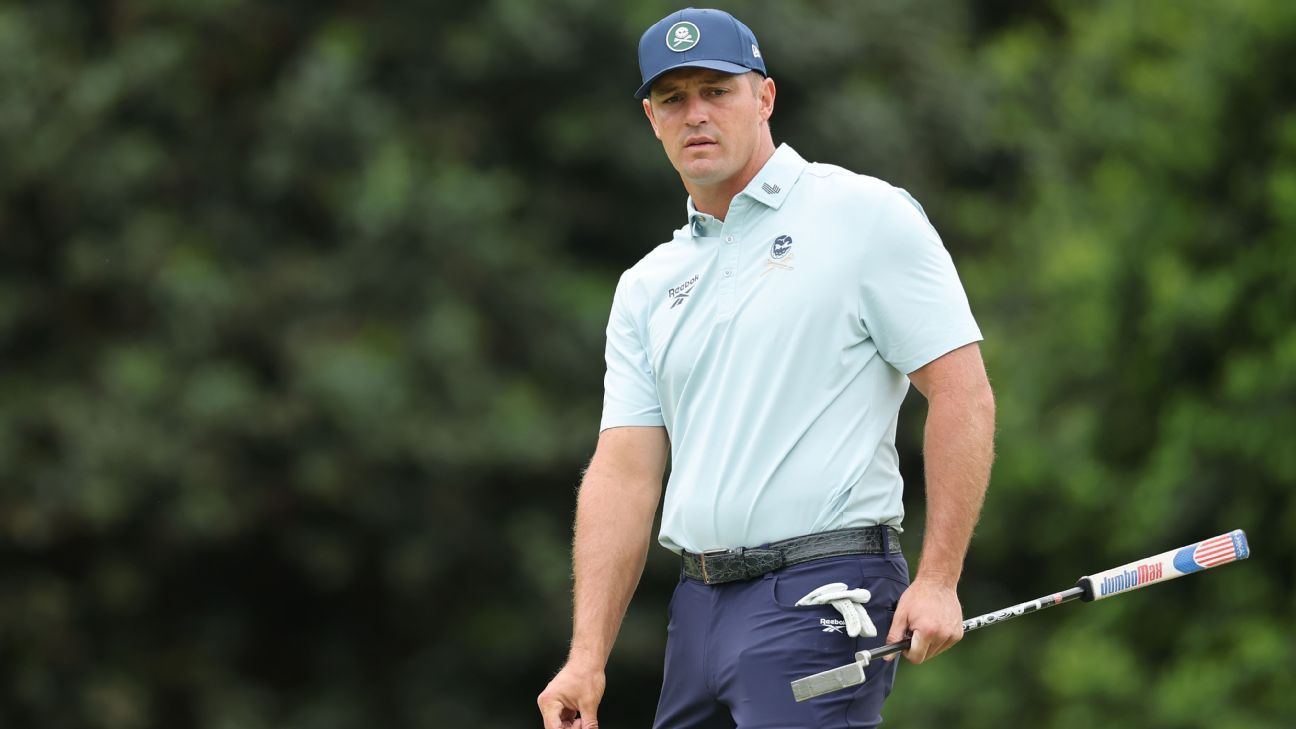
Speculation is no longer on who is leaving the PGA Tour, but who might return — all eyes on Bryson DeChambeau, whose LIV contract ends at years end, and eventually Rahm and others.
LIV will continue as long as the Saudis want to back it. The tour says revenue doubled in fiscal 2025 and continues to bring in new sponsors and global media deals. Its events often draw large and enthusiastic crowds. It might still sign or retain big names.
Gone though are the heady 2023 proclamations — say Cam Smith predicting that “as the LIV Tour grows and the fields get deeper and stronger and all that stuff unfolds, it’s just going to be better and better. I can’t wait to see it unfold personally.”
Instead the public has largely dismissed LIV’s 54-hole format and ignored the team aspect of the game. Both felt gimmicky. The shotgun start has inspired no one.
It can still run a fun, fan-friendly event to attend in person — there is nothing wrong with more golf. American television audiences have never formed though.
Some of that is just the sheer historic might of the PGA, with generations of habits, traditions and host courses. The loss of big-name talent hurt, but there was just so much establishment weight, perhaps toppling it was impossible. The PGA Tour also enacted numerous player-first initiatives.
Even Norman, who left LIV in 2025, is mostly circumspect, telling the Australian Golf Digest last year, “Like anything, you look back at losing a golf tournament and ask yourself, ‘Why did you lose that golf tournament?”‘
He said he still isn’t invited back to the Masters though, while currently LIV CEO Scott O’Neil was.
It might serve as the final reminder of a brief, but wildly uncertain time for the sport, where golf’s potential battle came all the way to the pristine gates of Augusta National.
As is golf’s way, calm prevailed.

Leave a Reply