

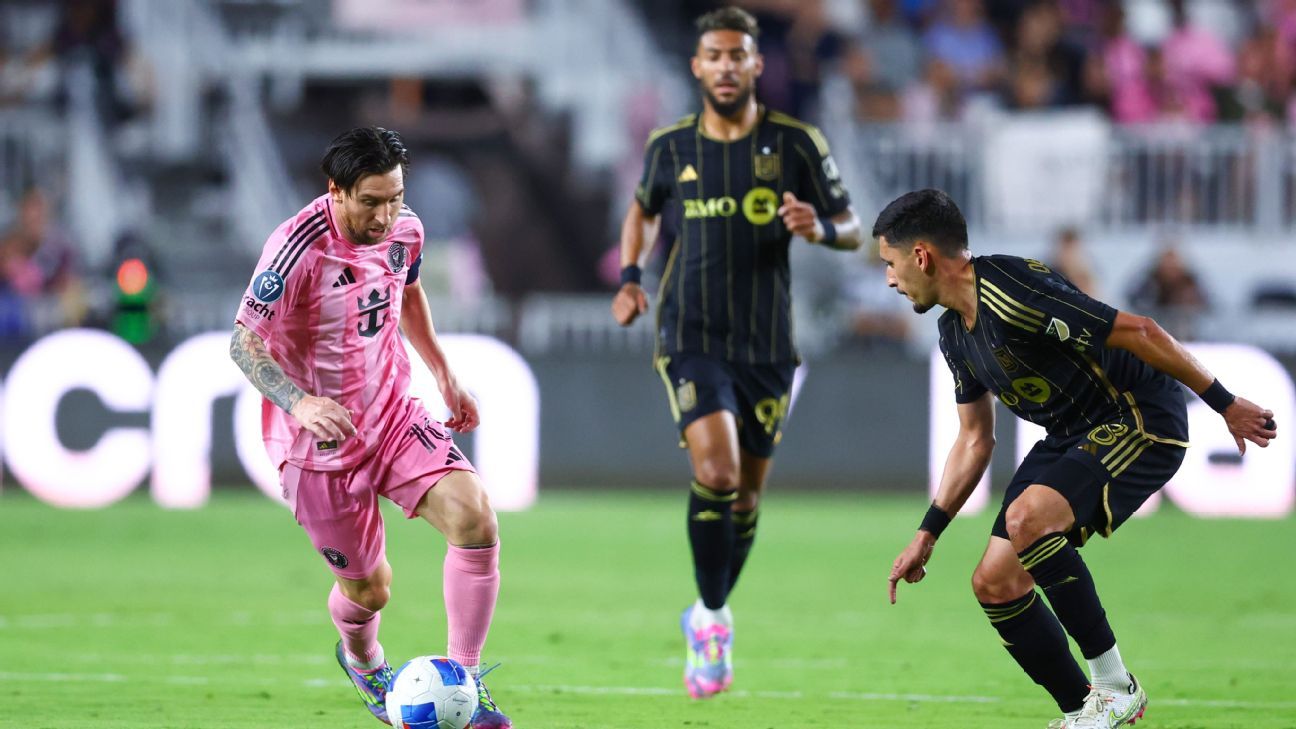
Quietly, and without many noticing, MLS dropped its Rivalry Week for the 2026 season. Unlike the usual compact run of derbies that tend to run through May each year, MLS has spread out its high-profile regular-season matches for the upcoming 2026 season, which kicks off this month when Inter Miami visit LAFC.
“We want to build occasions. We want fans to be able to make plans. We believe consistency of schedule is really important to helping fans engage further with their favorite club or our league,” MLS executive vice president Camilo Durana told ESPN.
“We’ve built tremendous rivalries. There are new storylines emerging every single time we play, every single time there’s a new player coming into the league, or a player that is transferred to another team. And I think the point is, MLS drama, the tension, the rivalries — they don’t just happen one week a year. They happen all the time.”
– MLS jersey Power Rankings: Who’s the best dressed in 2026?
– Minnesota’s James deal is a low-risk marriage of convenience
– How MLS’ USMNTers endure offseason to stay sharp for World Cup
As part of a wider push for 2026 to elevate more storylines, players and events on a consistent basis week after week, it made sense to also disperse the rivalries.
“By creating those appointment occasions, we saw an opportunity to create more habits among fans, and we got major sponsors to share that vision with us. Part of what we have to do as a league is help build opportunities and occasions and visibility for our matches and our product,” Durana said.
Beginning this season, MLS will present a weekly Saturday Showdown that highlights a marquee matchup. Kicking off with LAFC vs Inter Miami on Feb. 21, the idea is to provide a spotlight on eye-catching games with enhanced production across Apple and MLS services. The platform will mark MLS’ second weekly showcase alongside Sunday Night Soccer.
Coupled with more rivalry matches spread out throughout 2026, it’s clear that the league is aiming to gain the attention of fans on a more regular basis.
“We have incredible stories and we believe we have the ability, through our channels, through those of our clubs and those of our partners, to help people understand why they are important, give them an opportunity to watch with the consistency of our schedule and build more fandom over time. It happens every single week, not just on a single weekend,” Durana said.
All that said, the league is still promoting a handful of rivalries between July 16-17 when MLS returns to play after the league’s World Cup break that begins May 25. Although it’s not a full-fledged Rivalry Week — several clashes, like the Hudson River Derby (New York City FC and New York Red Bulls), Hell is Real (Columbus Crew and FC Cincinnati), Texas Derby (FC Dallas and Houston Dynamo), and the Rocky Mountain Cup (Real Salt Lake and Colorado Rapids) are missing — the league is hoping to utilize the timing of the return to engage with a wider soccer audience.
Scheduled after the World Cup semifinals and ahead of the tournament’s final, “a selection of marquee rivalry matches” will be in place during mid-July as a way to present the league to more soccer fans.
“Our estimates right now is about 100 million people will emerge from the World Cup with an interest in our sport,” Durana said. “Our job is to make sure that they understand that Major League Soccer is the North American version of the world’s game. It’s right here in their backyard.”
“While the transition to these weekly occasions wasn’t necessarily driven by the World Cup, it plays into that strategy of putting ourselves front and center.”
Will it pay off? While those in charge of the league should feel content with last year’s signs of audience growth and engagement — 3.6 million viewers watched last year’s final — MLS is still regularly listed as the third-most watched soccer league in the U.S. behind the Premier League and Liga MX.
The league has room to expand its reach, and with a new plan in place for 2026, we’ll soon see just how much more progress is made during a World Cup year — especially one in which the tournament will be hosted by the United States, Mexico and Canada.




Leave a Reply