

Examining the Civil War gives us true insight into the United States’ past and present. Created by Leslie Greif, Darrell Fetty and John Sayles — and executive produced by Kevin Costner and Morgan Freeman — Prime Video’s latest historical drama, “The Gray House,” is a harrowing and high-octane depiction of several unlikely heroines who turned the tide of the war in favor of the Union. Inspired by true events, the show chronicles the bloody and vicious war through the eyes of two Southern socialites, a formerly enslaved woman and a daring sex worker. Though sprawling and highly detailed, “The Gray House” becomes so clunky and overrun with extraneous characters and narratives that the women at its center nearly get lost in the chaos.
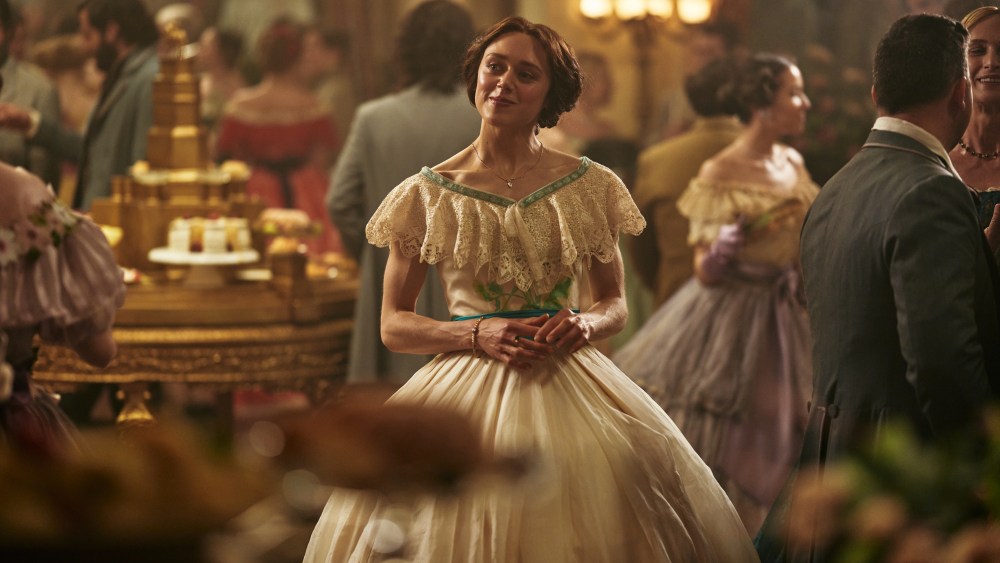
“The Gray House” opens in Richmond, Virginia, on the fourth of July in 1860, nine months before the Civil War officially begins. Still, there is a great deal of tension in the city as Southern states are beginning to secede. Yet, at the Van Lew’s sprawling estate, it’s business as usual. Regal and elegant, Eliza Van Lew (Mary-Louise Parker) is hosting a lavish Independence Day party and trying to stop some of the most esteemed politicians, especially Virginia Governor Henry Wise (Mark Perry), from talking shop at her soiree. Meanwhile, her drunken son John Van Lew (Ewan Miller) is in a continued fight with his flirtatious, attention-seeking wife, Laurette (Catherine Hannay). However, the real belle of this ball is Elizabeth Van Lew (Daisy Head), Eliza’s unmarried daughter. Elizabeth’s beauty has enchanted men across the South, including the debonair New Orleanian, Hamton Arsenault (Colin Morgan), who has come to the party bearing gifts.
The Van Lews would fit perfectly in a frame from “Gone With the Wind,” but appearances are deceiving. Working closely with their free Black staff, including the unassuming Uncle Isham (Ben Vereen) and Mary Jane (Amethyst Davis), who has just returned in secret from Liberia, the Van Lews’ plantation is a safe house on the Underground Railroad. Though the work they are doing is already deadly and dangerous, Mary Jane and the Van Lews decide to dial it up a notch when the war breaks out and newly appointed Confederate President Jefferson Davis (Sam Trammell) arrives in Richmond to establish his residence and the Confederate headquarters. The women, alongside baker Thomas McNiven (Christopher McDonald), decide to expand their network, forming a spy organization that gathers information directly from the Jefferson estate, The Gray House, delivering it to the Union Army.
Across the eight-episode limited series, there is a lot that “The Gray House” gets right. Parker, Head and Davis are particularly effective at illustrating the dangers of their abolition work. And yet, especially after Elizabeth recruits sex worker Clara Parish (Hannah James) into the fold, the consequences for everyone involved differ depending on their status in society. While the Van Lews are able to hide behind whiteness and wealth. Mary Jane and Clara, who readily put their bodies and lives at risk, have no recourse if they are exposed. To infiltrate the Davis’ home, the Van Lews give Mary Jane to Mrs. Davis (Laura Morgan) as a lady’s maid. Though she has been freed since Mr. Van Lew’s death, Mary Jane willingly places herself back in captivity for the sake of the greater good. Clara isn’t quite as vulnerable as Mary Jane, but she is also a woman in the world with only her wits and her body to barter with.
Though these women’s contributions to safeguarding American democracy and the abolition of slavery are vividly depicted, “The Gray House” overwhelms itself with unnecessary characters and added storylines, as well as melodramatic acting. Espionage requires discretion. However, the exaggerated looks, loud whispers and waving of freedom papers and passes in the faces of staunch Confederates and degenerate racists are preposterous even for a fictional adaptation. Moreover, the depictions of the heinous lawman Stokely Reeves (Paul Anderson) and slave catcher Bully Lumpkin (Robert Knepper) play out more like caricatures from the past instead of real-life men whose ideals and sentiments about race and America still echo in the minds of many of our present-day leaders and everyday people.
Accurate depictions of the antebellum South remain essential, specifically in a society that seeks to deny history. “The Gray House” accurately portrays the vicious cruelty, violence and brutality of the era and the people who risked everything to change it. Yet the show gets lost within itself. The point of the series is to highlight these heroes, particularly the women who risked everything so that America may have a different, more equal future. Unfortunately, in trying to accommodate everyone’s perspective, including soldiers on the battlefield and even the assassin John Wilkes Booth (Charles Craddock), the narrative becomes uneven and exasperating.
All eight episodes of “The Gray House” premiere Feb. 26 on Prime Video.







Leave a Reply