

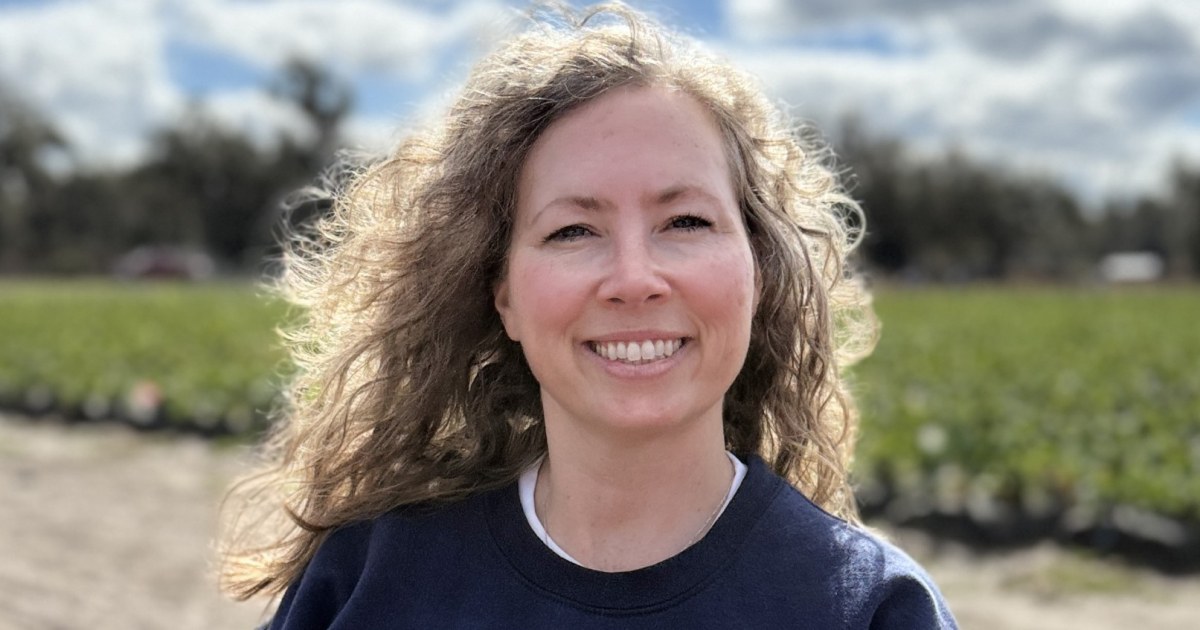
Some days for Rachel Jordan start at 5 a.m. and don’t end until midnight — sometimes for multiple days in a row.
“I’m just exhausted, honestly,” she said in an interview.
Jordan, 43, is one of the millions of Americans who work two jobs to get by as they try to pay down debts they incurred early in life. With about $75,000 in outstanding student loan debt, Jordan often works 70 hours a week to pay it down.
Although she’s not required to make payments since her loans are in forbearance, Jordan said she usually aims to pay a minimum of $1,600 a month while working toward a larger monthly payment goal of $2,000.
Living in Tampa, Florida, Jordan shares a one-bedroom apartment with her French bulldog and generally tries to keep her living expenses low to focus on her loans. Her early job consists of servicing commercial real estate loans. Once that shift is done, she’ll get a short break to take care of her dog before heading to Target, where she works in the kids clothing section.
It’s a routine she started last year, when she realized that her debt was unsustainable. And in order to hold herself accountable to her goals, Jordan frequently posts videos to YouTube and TikTok documenting her debt-free journey.
“I felt like if I didn’t do this, if I didn’t do this now, it was only going to keep just being that thing that followed me through life,” she said.
Business of debt
During the pandemic, Jordan said she had racked up about six figures of debt between her student loans, a car and credit card debt.
“I was spending some on my groceries, gas, things to get me by each week, but also was spending it on trips to Target for clothing or stupid stuff that I didn’t need to buy,” she said. “I used credit cards and spending to give me that dopamine hit and help me through that time.”

And she isn’t alone in her debt: Total U.S. household debt — from housing costs, credit cards, car loans, student loans and more — jumped up to $18.8 trillion at the end of last year. The rising cost of living has pushed many consumers to look into alternative payment sources, like buy now, pay later, to pay for everyday goods.
In an effort to get out of her own debt, Jordan began making payments and officially became free of credit card debt last year. She said that remains the case to this day.
“It’s hard for me to think beyond too much because I just feel like if I put too much pressure on myself for more than I already am, it’s like I literally crumble,” she said.
Shaking off this aspect of her debt changed the way Jordan viewed her finances. Now, she said she treats her credit card like a debit card, paying it off every week, and only spends what she budgets for.
Having never been taught about finances growing up, Jordan said “it’s all been learning as I go.”
“When I first was on TikTok is when I first — in my almost 40 years of life — heard about a Roth IRA,” she said. “There’s been a lot of learning from seeing what other people are doing, but also learning as I go and make my own mistakes and read up on my own.”
To keep herself going, Jordan set a short-term goal to pay off $25,000 of her student debt by October of this year. Looking toward the future, she has her eye on saving her first $100,000 between her retirement and a high-yield savings account. So far, Jordan has been able to put aside more than $13,000 combined in her savings and retirement.
Accounting and accountability
Posting videos online detailing her journey has given Jordan a slight monetary bump every few months, but more so it has become an important space for her to process her experience with debt.
“[It] really has propelled me forward, has kept me sane and given me an outlet,” she said. “And I don’t think I would be as strict with myself if I didn’t have that commitment to the plan.”
While social media has helped Jordan keep tabs on her progress, it has also helped her find community with other people struggling with debt.
“So many people have left the comments on a YouTube video, where I have more of a larger audience, saying ‘You’ve motivated me’ or ‘I never knew this’ or ‘You’re the reason why I started paying all my student loans,’” she said.
“When I was in Covid times, I was in so much debt,” she continued. “I felt like I was isolated. Even though obviously I’m not the only one in the world in this situation, it felt like I was. But putting the video down online and realizing that I’m not has been so motivating just to stay on the journey and to keep going.”
“I used to get dopamine hits from going to Target, and now I get dopamine hits from every time I make a payment,” Jordan said.
Loans in limbo
Jordan’s student loan debt comes from two undergraduate accounting degrees, one from the University of Phoenix and another from Western Carolina University.
In 2022, Jordan decided to apply for student loan forgiveness for her first accounting degree. After applying, she said she received notice acknowledging the receipt of her application, but hasn’t heard anything since then: “No news, no updates, literally nothing.”
She said her loans are in forbearance as she waits for a decision, but struggles with the unknown future status of her debt.
“It’s been difficult because I don’t know what’s going to happen,” she said. “[The] times that I have reached out to the Department of Ed, it has been like, ‘Oh, your application is still in process.’”
And that still seems to be the case: Jordan said every time she checks the status of her application through her account, it says it’s still under review.
Living in a “limbo situation” has made it difficult for Jordan to make a decision on how to ultimately deal with her looming student debt. She said she’s constantly flip-flopping between whether she should pay the minimum and wait for forgiveness or just pay off her remaining debt.
But the fear that another administration could come in and “change the rules” motivates her to want to be debt-free instead, she said.
However, even if she were able to pay off the rest of her loans, Jordan said she feels like she would “still need to work this hard just because I feel so behind in my retirement efforts.”
Jordan told NBC News that she tries not to think about her current financial situation because she feels so behind: “If I just think about the overall, then it’s just a little bit too much.”
“I’m doing all that I can and dedicating every dollar that I can to saving and to my debt,” she said. “There’s truly nothing more that I could do.”









Leave a Reply