

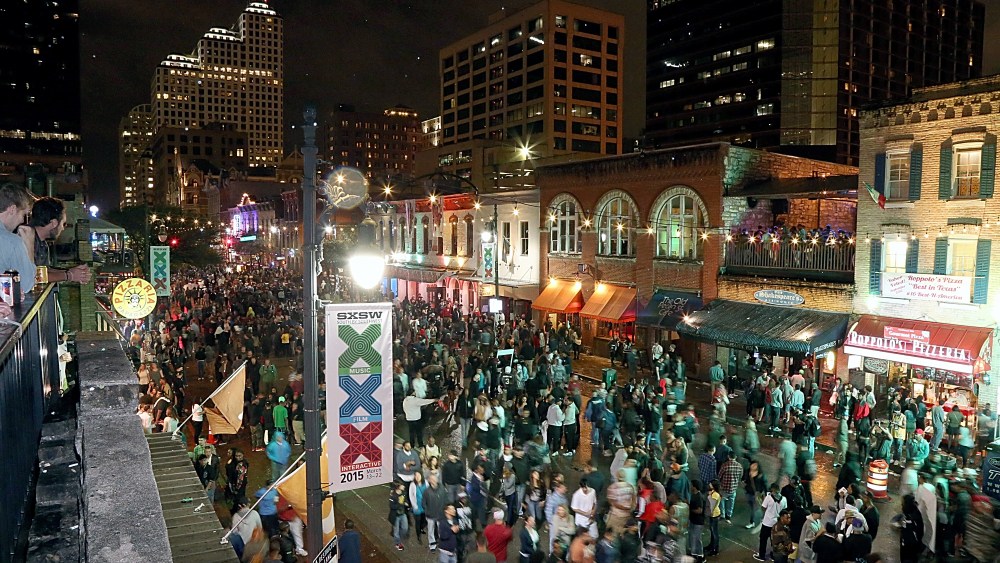
It’s not your grandfather’s South by Southwest Music Festival. But with any luck, granddad would still find something to latch onto in this, the fest’s 40th anniversary year, even as the music component of the hydra-headed film/tech/tunes gathering adapts to meet new times and new needs, as it always has. Attendees who haven’t been in a few years will find certain aspects of SXSW Music similar or different. But even passholders who came as recently as last year can expect to feel a big difference in 2026 — from genre shifts in the nightly programming to the fact that the HQ for daytime events has moved from the recently demolished convention center to a hotel that is adjacent to much of the nightlife.
Variety sat down for an in-depth look at what’s changed and what hasn’t with the music component’s two top honchos, Brian Hobbs and Dev Sherlock. Hobbs is VP of Music at SXSW, and Sherlock is Director of the SXSW Music Festival, both equally passionate about bring artists together with everyone from global bookers to brands to film/TV sync people… and, in the process, putting on a hell of a show for executives and garden-variety fans alike. Here’s a curtain-raiser on SXSW Music 2026, which runs from March 12-16 — with all of the different sub-festivals running concurrently, for the first time in the Austin gathering’s four-decade history.
South by Southwest’s music festival and conference have been through a lot of changes over the last 40 years. But what are some of the changes regular attendees would notice just from, say, last year?
Brian Hobbs: The biggest one is no convention center for the next few years. It’sit’s a big old hole in the ground in downtown right now, and we’re excited to see it get rebuilt and what they do with the new version of it. But in the meantime, music has its own space for our conference. We’re gonna be at the Downright hotel, right in the middle of the Red River Cultural District by Stubbs and Mohawk and the Waterloo Amphitheater, where Billboard activates, with over a dozen music venues right there on Red River. Our conference programming, our radio day stage, our global night stage, our music clubhouse, the artist lounge, the mentor sessions – all of this is gonna be under one roof just for music now. You don’t wanna say anything bad about the convention center, but it’s a convention center — it’s a little stuffy. It doesn’t have too much of a personality and a vibe to it, and the Downright Hotel really does. It doesn’t feel like your typical hotel.
Dev Sherlock: We’re the least disappointed [of the music, film and interactive festivals] about having to move out of the convention center. I think that’s the polite version.
How many years is it supposed to be till the new convention center gets built out, by the way?
Hobbs: They say three. I’m no construction expert, but I haven’t seen anything in downtown Austin finish in three years.
What does it mean to you to have the music festival coincide completely with the other conferences for the first time?
Hobbs: We’re excited that we’ve got one extra night of showcases to program. So going from 10 days to seven days [for the overall length of all of SXSW], it actually expands music for us. With interactive or innovation — the tech part of South By — also overlapping with music for the first time, we’re hopeful that a lot of those attendees are gonna come out and experience the music portion of South By that they haven’t been able to attend in the past. Historically they’ve been here Thursday to Monday, and then music starts on Monday, so they’ve missed all of of the music, and that’s what this festival was founded on.
Sherlock: It’s gonna be more interesting because music is tech now and tech is music. And the film sync people are so critical to the music industry at this point, and we’ve got a load of sync supervisors that always come out. It’s gonna be everything everywhere, all at once, in those seven days, which is gonna make things a lot more interesting for business and networking and collaboration.
Geographically, how separate are the different conferences, since the headquarters are spread out, outside of the convention center footprint that used to hold everything together?
Sherlock: From a music perspective, I think you can very much just immerse in the music clubhouse and the music HQ that we have, but music really permeates everything about the event. We have road closures over by the Tech and Innovation Clubhouse and by the Film Clubhouse, and every house has music in it, so you’re not really going to entirely escape the music aspect of it. It might be easier to escape maybe a little bit of the film aspect if you want to just be in the music clubhouse. But there’s music everywhere, so that’s the part you can’t escape. We even have artists playing in the lobbies of the hotels.

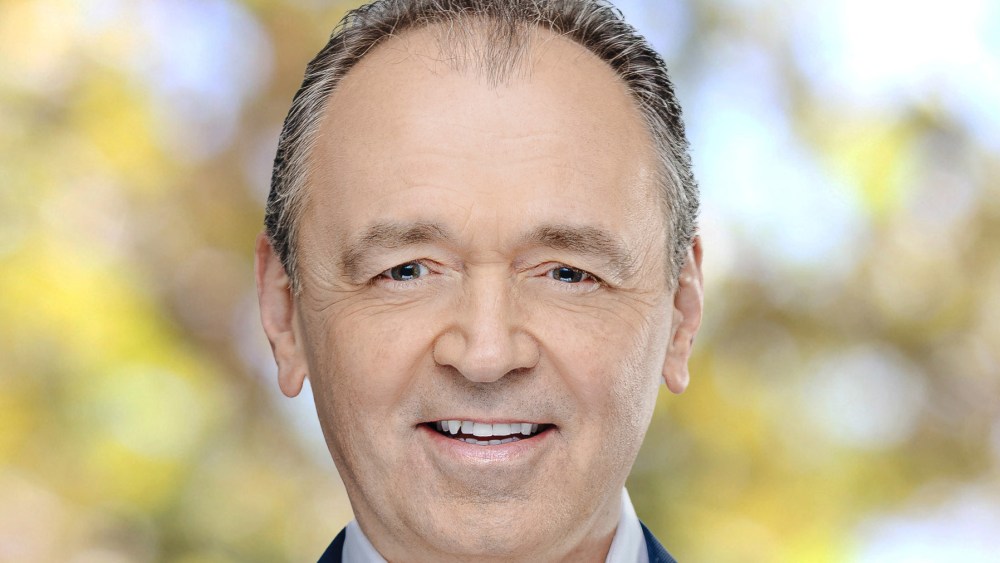
Brian Hobbs, Vice President of Music at SXSW
Tico Mendoza
Let’s talk about the reduced number of acts performing, compared to pre-pandemic highs, when the lineup was more overwhelming to ponder. How many artists are playing this year?
Hobbs: We’ll land at about a thousand total. Our absolute peak was 2015, which was my third year; we finished at about 2100 bands that year. There were some nights where we had 110 venues running at the same time. The Saturday night of the 2015 festival, I was personally responsible for 26 shows in one night, and that’s not possible for one human being to have their eyes on 26 shows at one time. I think we all kind of realized after that year that this is not something we should or can keep up. We toyed with cutting it down a little bit, and then it became a lot easier post-pandemic, because in 2022, when we did our first in-person festival after the 2020 cancellation, there were still a lot of people that weren’t willing to travel, and a lot of companies who weren’t willing to invest in experiential, in-person events. So out of necessity almost, we played with, “Hey, what if we landed around a thousand artists this year?” I think we ended up somewhere around 1200 in 2022, and the last three years we’ve landed around a thousand. It feels right. We’re doing 50 to 55 venues a night. If I’m an artist, I would rather be one of a thousand than one of 2100. It’s just way too much to cut through. Especially with the international artists who are traveling from all over the world to get here, we’re able to give them multiple plays so they’re feeling the value out of coming here.
And the showcases are cutting off at midnight, instead of in the wee hours, right?
Hobbs: It’s been increasingly difficult every year to keep people out until 2 a.m. for a lot of showcases. We’ve been seeing headliners go on stage at 1 a.m. and half of the crowd is gone. But 10 years ago, that wasn’t the case. Every headliner was like, “I play at 1 a.m.! I’m the headliner and there’s no wiggle room on it.” Now we’re being told the opposite by a lot of people. It’s like, “I don’t want to be the band that goes on at 1 a.m.” So we talked with artists, labels, agencies, our venues, and everybody felt like, “Hey, why force it till 2 a.m. if we don’t have to?” So we changed some timing on some shows to just be more conducive to how crowds are acting in 2025, 2026.
Sherlock: To echo what Brian said, the pandemic really allowed us to rethink and reset a bit, and we really listened to the industry. They came back and said, “This year was the most easily navigable year. I met with everyone I wanted to meet with. I saw the artists I wanted to see.” The artists came back and said that they got the people in the room they wanted to get in the room. That really helped us settle on that sweet spot of about a thousand, listening to the industry and seeing what they wanted. We did face criticism of, “Oh, it’s shrinking.” But who wasn’t upset was the industry, and that’s really our core client; that’s who we need to serve. This year as well with, with all the other changes that happened both internally and externally, it was a bit of a rip-it-up-and-start-again moment that allowed us to really rethink all the old rules and all the old approaches. We’ll see how it comes off.
Dev Sherlock, Director of Music Festival Programming for SXSW
Tico Mendoza
Can you explain the backline changes in showcases?
Hobbs: We’ve been hearing for years, and experiencing it when we’re advancing the showcases, that shows don’t have backline provided for the artists. It was a slog to get those shows advanced, and on-site, if someone’s bass amp broke and now they’ve gotta try to borrow one from another band that’s on the show, it caused a lot of unnecessary chaos. So we were looking at some budget lines. And we’ve been providing drink tickets, for as long as I can remember — two drink tickets per band member for each show — and then the venues come back and invoice us for those drinks afterwards and we pay the venues back. We were looking at the amount of money that we’re spending on these drink tickets and thinking, how could this be used better? Especially if you just look at the facts, people are drinking so much less in 2026 than they were 10, 15 years ago. A lot of these tickets aren’t even being used at this point. So we said, let’s take this budget line and turn it into backline rental for all of the artists, so they don’t have to lug around amps and all kinds of other equipment to every show. They just need to show up with their instruments and hop up on stage and do their thing. They don’t have to worry about rental, pickup, drop off, all the logistics and the money that goes into renting that gear. So we’re gonna try to provide that for as many showcases as possible this year. The response to it from the artist side has been overwhelmingly positive. Because that was something that they dreaded every year: How am I gonna move around from show to show with all this gear?
Sherlock: To be fair, there are only a few that didn’t have backline. But for us to foolproof that was a big move. And I think another thing that is just gonna help everything run more smooth. But we might have to start handing out CBD drink tickets instead, because that’s where all the kids are headed.
So nobody’s that concerned about missing their beers?
Sherlock: We’ll see. I don’t know. Don’t make that the headline: “No beers for artists at South By, anymore”!
Let’s talk about, genre-wise, what sort of shifts you guys see happening, from even more global music to a heightened return for country. Where do you see the shifts happening?
Sherlock: I think the most obvious one is Latin music. Our programmer Evelyn (Gomez Rivera), who deserves a name check, has really smashed it in terms of reaching out to the Latin community. We’re all, especially this year, perhaps a little bit reluctant about travel, but all the Latin major labels — Warner, Universal, Interscope — have come on board. A lot of larger Latin platforms have come on board, and we’ve got some of the largest Latin names in the world this year with Fuerza Regida and Junior H.
Hobbs: Those are two right there that we’ve been trying to get for years. And I think them seeing other artists at the top of the Latin music genre, especially the regional Mexican side, which has just exploded so much… when they see Peso Pluma played South By, and Grupo Frontera played South By, I think it really legitimizes it for that genre. And so now instead of having one of the top artists in the genre this year, we’ve got two of the absolute chart toppers of Latin music coming this year.
Sherlock: And what is interesting about that too is it’s not like back in the day when we had Lady Gaga and Snoop Dogg playing that everyone knew. These are the biggest artists in their genre, but they’re not that massive yet to the rest of the world. And we have a global industry coming here; we have festival bookers in Australia and Hong Kong and Denmark coming, looking for what’s next. So this is still about discovery for them, even though for us they’re the largest Latin artists in the world or the largest regional Mexican artists. So I still think we are staying true to the core mission on that part.
In terms of other stuff, you mentioned country’s coming back around and I think that’s very much a product of consumption. You know, country radio always controlled country music, and I think that was the last consumer to still be really beholden to radio that has shifted their discovery to other platforms now. So we’re excited about the direction country’s going in. And then, obviously K-pop and J-pop are still huge and South Asian music now too… It’s already crossed over in the U.K. in a big way and we’re seeing it in various areas of diaspora even here; like, Toronto has its own really massive South Asian music scene, and there are pockets around America that’s embraced South Asian music. And the last thing about all of this that I find personally really interesting is the language aspect. Language is no longer a barrier. In fact, it’s almost embraced. when kids are out there trying to learn Gaelic and Irish so that they can understand Kneecap’s lyrics, and obviously Latin and English mixing into songs.
Is there still a place at the festival for American roots music? It’s not like the ‘90s when the festival would kick off with the Austin Music Awards and it was assumed that a big part of the programming would be country-rock or blues or what hadn’t yet come to be known as Americana.
Hobbs: Oh, for sure. Just like Dev mentioned Evelyn from our team, we have another team member, Berkeley, who has really kind reinvigorated our Americana booking and has just been absolutely crushing it the past few years. We’ve got these historic venues like Continental Club and Saxon Pub and Antone’s … I think if you ask Steve at Continental Club how the last two years have been compared to the previous 15 or 20 at Continental Club during South by Southwest, he would say the attendance is up and the average age of the attendee is down. Apart from Berkeley, I think Americana music in itself is doing that. It’s just had a wild resurgence with a younger audience. And I think a lot of that goes to the curiosity of music fans that has been cool to see. I feel like, at one point, about a decade ago, it f felt like it was just same thing, different year with a lot of the Americana booking. And it does not feel like that anymore. It feels like it’s one of the most exciting things we got going on over here.
Sherlock: And it isn’t just about of getting a bunch of younger country acts. You know, Berkeley is an old soul in a young woman’s body. So she’s not only sort of brought up all this young stuff, but she stayed true to the old-school aspect of it. She has a real appreciation for the real roots of the stuff. We’ve got younger bands and the older bands, everyone just doing cool stuff. Did anyone bring up this band, the Animeros? They’re a local band that, in the last six months, all of a sudden everyone’s really interested. An agent at High Road Touring just picked them up and literally every other presenter is asking to put them on their showcase this year. So I think that could be one to watch.
Any panels on the agenda you’d especially want to point out?
Hobbs: Our department, the music festival department, is working more hands-on with the music conference than ever before this year. That’s another big change. One panel that I’m really excited about is, the producer platform BeatStars is doing a panel about ethical versus unethical AI in music creation. I’m real stuck in my ways sometimes when it comes to music creation, and I haven’t necessarily opened up my heart to AI music creation yet. So I want to personally try to make it to that to see what they present as ethical versus unethical. From talking with the BeatStars founder, he has a lot of the same feelings that I do, but it’s a necessity at this point for him to think about for his platform, and he’s like, “If we’re using AI on my platform, I want it to be used in the right way.” So I am personally very excited to see what that right way is, because I don’t want to be the guy who refuses to change, but also if I don’t feel like it’s right, I’m not going to to change. I really want to see what they put together with this platform or with this panel.
Sherlock: We’ve got the Spotify for Artists workshops, the Apple Music for Artists workshops, all that sort of thing. I think the artists are a bit smarter these days than they used to be. And it used to be you could just come and get drunk and play your music and that was enough to be an artist. But I think these days you need to be a bit more professional, and you can certainly take advantage of a lot of learning opportunities while you’re here — and then go out and start drinking.
There are documentary film premieres with Noah Kahan, Lainey Wilson, Los Lobos. Charley Crockett and Jack Johnson, and most of those acts are performing too.
Hobbs: I can’t remember working this closely with the film department on music films ever, and all the artists and their teams have been incredible about saying, “Hey, we’re already in town for our film, let’s do a music show too,” and that’s exactly what we want to see.
There probably won’t be a lot of energy expended on “What can we do to celebrate the 40th anniversary?” You’ve got a big festival to put on, so maybe it’s business as usual more than it is engaging in retrospection. But what do you think it means personally that this thing is still going 40 years later?
Sherlock: The very first job I had out of college, I was a research editor at Musician Magazine, and my boss at the time would come down here and speak on a panel, and then we’d have a booth in the expo and he would need someone to stand behind that freaking booth all day. This would’ve been in the ‘90s. And it was just mind-blowing, because even though I was stuck in the expo all day, at night you’d go out and meet everyone in the industry who you’d only ever spoken with on the phone, because this was pre-email. You’d see Wayne Coyne in a parking garage doing some weird experiment. You’d have Jimmy Webb getting behind the piano one night at the Driscoll just randomly and doing “Wichita Lineman” and all that sort of stuff. And I was just like, holy shit. How do I like keep coming to this year after year? So I did come for many, many years, as a journalist and in other roles, and then there’s a long period where I didn’t come and then I started coming back again. To now be working here and actually have some input in shaping what the next generation of South By is gonna be at 40 years is really full circle and exciting.
Hobbs: I wasn’t coming for work, but I was coming as a fan starting in 2004, and then I just knew I had to figure out a way to get involved in the music industry, and by 2009, I had a music blog that I had created, so I started coming as a aspiring member of the music industry. This was when hip-hop started taking over at South by Southwest. So you’d go stand on 6th Street and you’d see Wiz Khalifa and Currency and all of the guys who were leading kind of the blog era of hip-hop, just hanging out together. J Cole and Kendrick Lamar were just standing in front of a venue on 6th Street talking to each other, and now those two guys couldn’t stand in public without a mob of thousands swarming ’em. It felt so accessible, that no matter where you were in your music career at that time, this was the one time of the year you’re in the room with these people and not feel like you’re watching it from the outside looking in. I think that’s a lot of the magic of South by Southwest. To be involved in shaping the future of the music festival at South By is an incredible feeling, especially to look back on the feeling that I remember having standing there on 6th Street, watching all of these artists that I was such a fan of interacting with each other.





Leave a Reply