

On June 11, the 2026 FIFA World Cup will kick off in the United States, Mexico and Canada. However, from the fan perspective, one of the biggest concerns is the cost of attending matches. Ticket prices have received the greatest attention, but that’s just one piece of the puzzle: People are worried about the affordability of everything from hotels and transportation to concessions and even merchandise.
It raises the question: How much might it cost to follow a team through the World Cup from start to finish? We tried to answer it through the eyes of a hypothetical U.S. men’s national team fan living in Los Angeles — potentially the best city for a person to attend every USMNT match, as the co-hosts have at least two matches there during the group stage.
The numbers are illustrative rather than exact — this is merely one of many potential paths through the tournament for the U.S., and all prices listed are volatile. But taking a snapshot of the low end of what this trip of a lifetime might cost, even in the best-case scenario, makes it easier to understand just how financially accessible (or inaccessible) the World Cup could be.
Spoiler alert: It’s not a small number…
BEFORE THE WORLD CUP
The journey begins…
One look at your office says it best. Christian Pulisic, Clint Dempsey and Claudio Reyna kits cover your walls. A half-full Dos a Cero mug sits on your desk. And dominating the room is a framed 28 x 28 print of Landon Donovan drinking out of a water fountain, signed by the entire 2002 World Cup team.
You’ve been dreaming about following the U.S. men through a home World Cup since you were a kid. Your parents attended in 1994, the last men’s tournament held in the U.S., and still talk about seeing the U.S. shock the world and defeat Colombia 2-1 at the Rose Bowl — in those iconic denim kits, no less.
Even though you live in Los Angeles, the idea of actually doing so felt impossible … until the results of FIFA’s random selection draw arrived in your inbox in January. Tickets for every USMNT group stage game, including two “local” games at SoFi Stadium, home of the NFL’s Rams and Chargers!
You can’t believe your luck. Then you start to do the math, and your enthusiasm begins to dim.
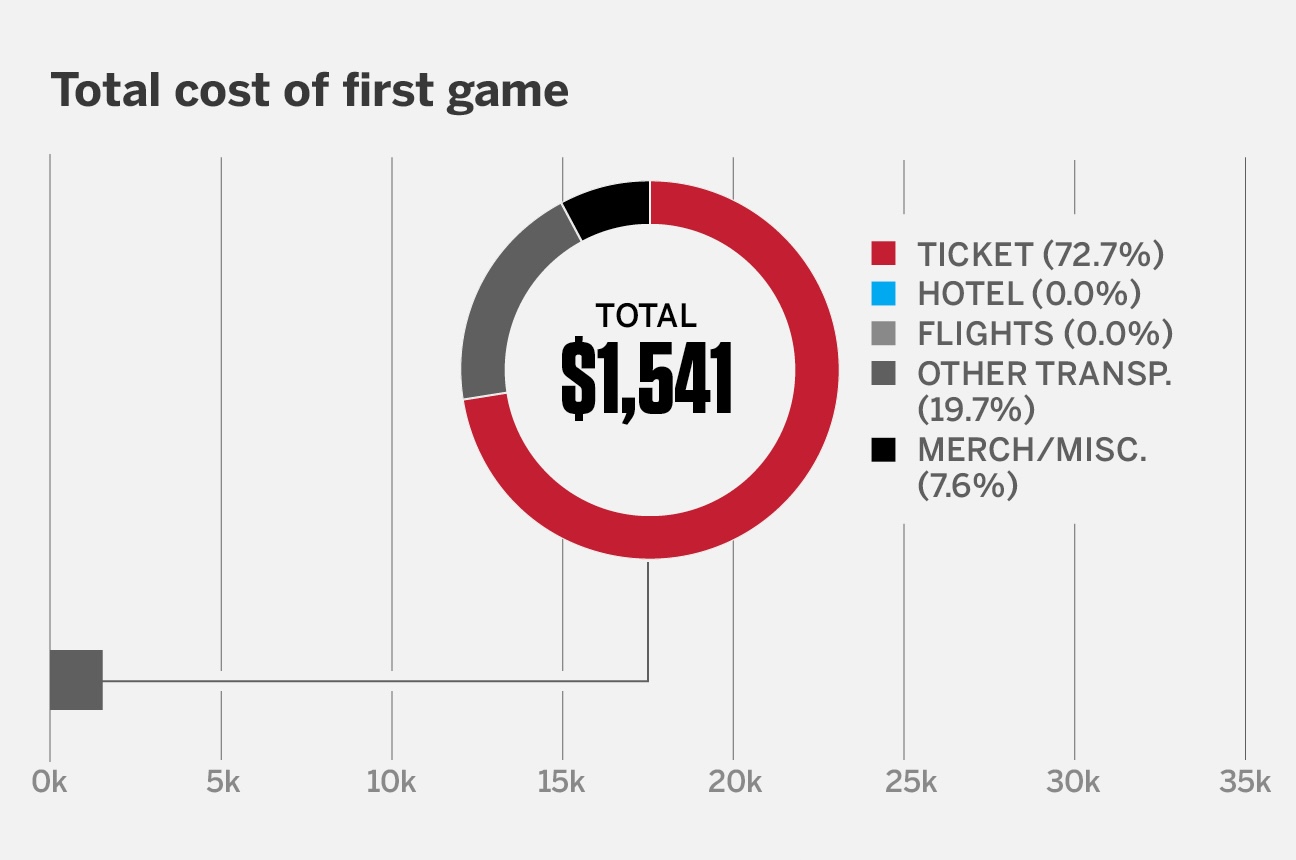
You knew how much the tickets were when you entered the draw — the most expensive tickets you requested were the USMNT’s opening match vs. Paraguay at $1,120 — but altogether, it’s still a hefty sum.
Whatever. It’s the World Cup, and you’re going no matter what.
REALITY: Ticket sales and pricing have been a mess
Ticket prices are the most prominent example of increasing costs, therefore receiving the greatest scrutiny. Costs for sporting events nationwide have increased at a staggering rate over the past two decades: a 164% rise since January 2000, according to the U.S. Bureau of Labor Statistics. However, inflation hasn’t kept pace, increasing 95% over that span.
FIFA has sold World Cup tickets over multiple phases, starting in September. But relatively few people have had access to these face-value tickets, as fans needed to submit requests for the right to purchase them. A random draw then determined which fans could buy tickets. In the latest sales phase alone, FIFA says it received 500 million ticket requests. Around 6 million tickets were available for the entire tournament, suggesting poor odds for a request being successful.
Tickets are divided into four categories, with Category 1 tickets being the highest-priced seats and Category 4 the most affordable. (Category 3 tickets, the most widely available at a feasible price point, were used for this project.) In September, the governing body said it would sell tickets ranging from $60 for the group stage to $6,730 for the final. But the latest release of tickets in December revealed prices that were higher than expected and no $60 tickets, prompting widespread backlash from fans.
FIFA responded by slashing prices for teams’ most loyal supporters, allowing national federations to distribute $60 tickets to some of those fans. Still, those tickets represent an exceedingly small portion of the overall pie, and many fans are not yet satisfied. On Tuesday, a European supporters’ group announced it had lodged a formal complaint with the European Commission against FIFA over ticket prices.
It’s also worth noting that this is a far cry from prices at past World Cups. At the last World Cup held in the U.S., for example, Category 1 group stage tickets for the USMNT could be bought for $50 ($112 in today’s dollars). The face value of the cheapest equivalent ticket for the USMNT in 2026 was $700.
THE GROUP STAGE
The opening match
The months until the USMNT’s opening match on June 12 fly by. Wearing your newly purchased kit, you drive the 10 miles from your house to SoFi Stadium. It takes five tries to squeeze your car into a spot at the jam-packed official FIFA parking lot. The parking pass set you back $300, and you still have to walk more than a mile from your car to the front gate. But it’s a drop in the bucket, you figure, and a small price to pay for some peace of mind.
The atmosphere is electric. Outside the stadium, kids are playing pickup soccer and the irresistible scent of grilled burgers and chicken fills the air.
As for the match itself, Paraguay presents formidable opposition, but the U.S. is still the favorite. And when striker Folarin Balogun collects a through ball and neatly deposits it into the bottom corner to seal the match, you leap to your feet. Chants of “USA! USA!” ring throughout the stadium.
Final score: 3-1. It’s the World Cup, all right.
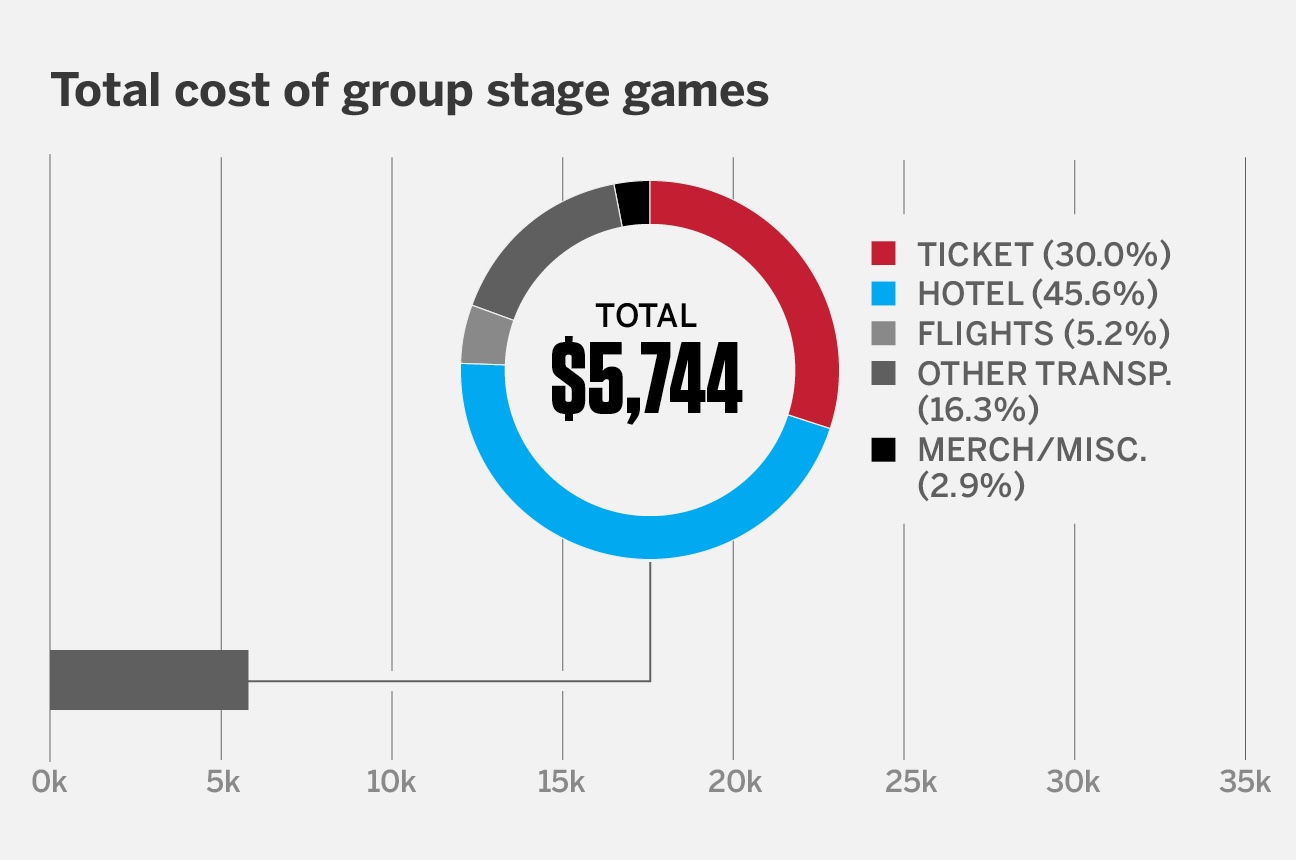
The United States’ second game is in Seattle, so you catch a flight the day before the match and rent a car at the airport. You wish you had time to explore the area, but hotel prices near Lumen Stadium shot through the roof months ahead of the World Cup, and you can’t afford to dawdle. At least the tickets were cheaper: just $265 through the draw.
You’re feeling confident pregame — the U.S. defeated Australia in a friendly back in October — and you can tell the team is too, hitting the Socceroos fast and hard in transition. Center back Chris Richards is the standout at the back, snuffing out even the slightest hint of a threat. When the whistle blows for full time on the United States’ 2-0 win, the crowd bellows as one. With six points from two matches, the USMNT has all but sealed first place in the group and a spot in the knockout rounds.
On the flight back home to L.A., fellow passengers break out one of the team’s signature songs, and you heartily belt the lyrics along:
We love ya, we love ya, we love ya
And where you go we’ll follow, we’ll follow, we’ll follow
Cause we support the U.S., the U.S., the U.S.
And that’s the way we like it, we like it, we love it
Oh Oo-oh Oh-oohhhhhhhh!
REALITY: Prepare to be gouged on accommodations
Hotel price increases around major sporting events are nothing new. Ahead of the 2014 World Cup in Brazil, a study by the national tourism board found that many hotels raised their rates by 200% or more, all the way up to 583%.
And according to The Athletic, hotel prices in 2026 World Cup host cities increased over 300% after the December draw that determined which teams would play where.
The costs used for this project are averages of the five hotels (three stars or less) closest to each host venue with availability on Google Travel as of Feb. 17 and based on two-night stays (night before the match through to the day after). While cheaper hotels can be found within a reasonable distance, this method provided a standardized procedure that allowed comparison between cities.
Planning ahead for the knockouts
Now that the U.S. has won the group, you know where it will be playing in the round of 32. You felt it was a smart decision to wait on buying tickets and booking travel back in January, since the location would have been different had the U.S. finished second in the group, but now you’re feeling the consequences as you consult FIFA’s official resale marketplace. Unsurprisingly, the price for the round of 32 is more than triple what you paid for the Australia game through the draw.
You push it to the back of your mind and enjoy the inconsequential final match of the group stage, a 1-1 draw with Turkiye back at SoFi Stadium. At $340, the ticket for this match almost feels like a bargain. But it’s all about how the USMNT performs from here, and finally, the team has arrived.
REALITY: Secondary markets provide little respite
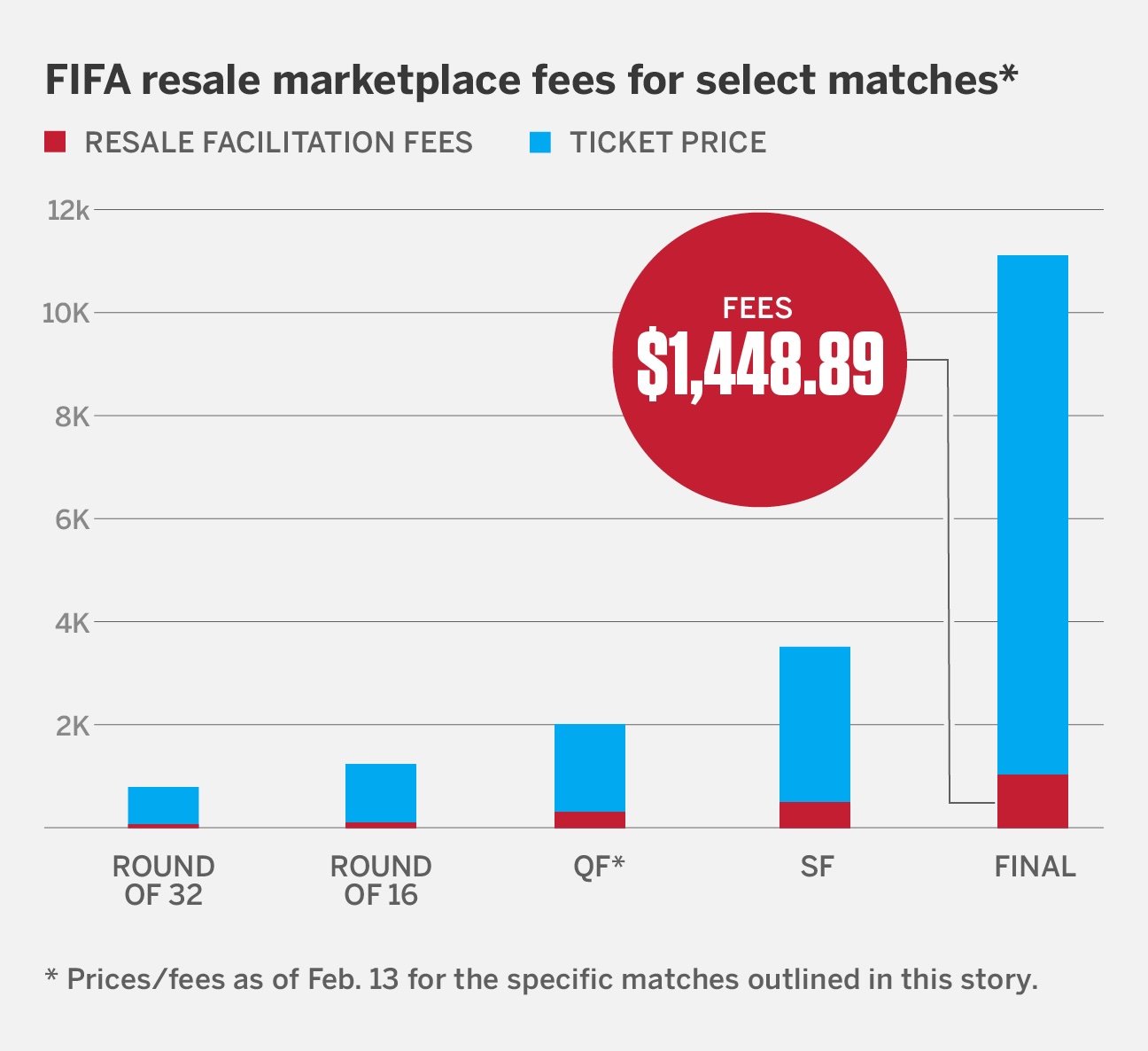
For many fans, secondary markets (aka resale platforms) are the only way to acquire tickets. In addition to sites such as StubHub and Vivid Seats, FIFA operates its own marketplace, though it is currently closed. (It will reopen April 2.) For the 2022 World Cup in Qatar, FIFA was in control of setting resale prices and charged fees of no more than 5% or $0.50, whichever was greater. But without any guardrails in 2026, resale prices have skyrocketed, while FIFA is charging fees of 13% or more to both buyer and seller per transaction on its resale marketplace.
For this project, face-value prices were used for the group stage matches, and prices listed on FIFA’s resale marketplace as of Feb. 13 were used for subsequent rounds. It’s fair to expect that if the U.S. gets off to a hot start at the World Cup, both interest — and prices — will rise.
“If the USMNT performs well in the group stage, it would likely drive up demand for the knockout-round ticket inventory tied to its path,” said Keith Pagello, who founded the ticket price tracking platform TicketData. “Once the tournament begins and the U.S. looks like it has a real chance to advance, it is likely that people who were not even thinking about the World Cup a week earlier suddenly become very interested.”
THE KNOCKOUT ROUNDS
U.S. finds its stride
The round-of-32 match against Switzerland a week later is at Levi’s Stadium in Santa Clara, California. You decide that making the 5½-hour drive is your most affordable option. Gas prices have been sky-high for months — over 25% more expensive than a year ago — but you’re still saving hundreds.
Switzerland boasts a talented roster, strong enough to defeat the U.S. 4-0 in a friendly last June, but this isn’t the same U.S. team. Despite the Swiss generating chances, goalkeeper Matt Freese holds firm, and Balogun and Weston McKennie make the most of two big chances in front of goal.
Another 2-0 win! Next up: a date with Belgium in the round of 16.
Despite Belgium’s veteran stars, led by midfielder Kevin De Bruyne, it’s immediately clear a few days later in Seattle which team is built for the here and now. Up and down the pitch, the Americans are winning duels and taking names. Just like that, the U.S. has reached the World Cup quarterfinals for the first time since 2002.
The bad news? Your savings are running dry. What now?
REALITY: Fly, drive or take a train? No perfect options
Transportation will take up a sizable portion of any World Cup attendee’s budget. Plan on driving to a match? Spots at official FIFA parking lots cost more than the tickets themselves at some locations. Despite that, some lots are already sold out for big matches, such as the final in New Jersey. The U.S. government announced in early March that $100.3 million in funding will be provided to World Cup host cities for improving public transit. But it remains to be seen how those funds will be used and how efficiently the systems will operate come tournament time.
The airplane fares used in this project were the cheapest nonstop flights to the host cities available on Google Flights as of Feb. 13, arriving the day before each match and departing the day after. Car rental prices from Kayak and average state gas prices also factored into the total transportation cost.
Whatever it takes
Over dinner, you make your case to your parents for a loan or an early Christmas gift. After all, surely they could understand your plight? What price would they pay for their memory of Earnie Stewart slipping the ball past Colombia’s goalkeeper back in 1994?
They’re not overly pleased by your request, but by the end of the night, you’ve got enough to get you through the quarterfinal against Uruguay (along with 100 hours of scheduled yard work for August).
Mercifully, the match is in L.A. It feels like a fever dream — everything is working for the U.S. and even from the upper reaches of SoFi Stadium, you can see the glorious smile on Pochettino’s face. But how will you bankroll the next leg of your trip?
Sitting in your office, your eyes drift toward the signed Donovan print. The thought hurts, but you know what you have to do.
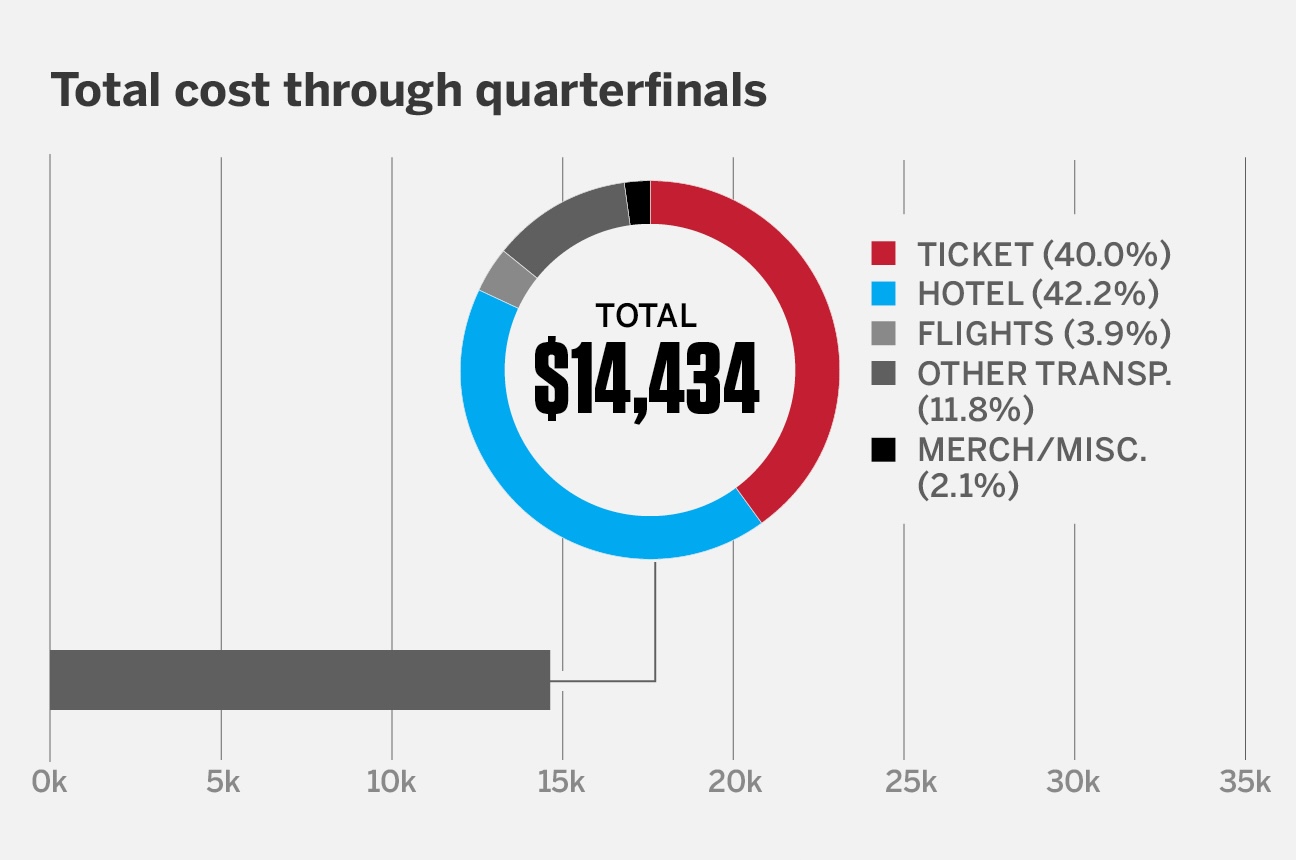
One frenzied eBay bidding war later, you’re on a plane to catch the semifinal in Dallas. Should you question the decision-making of a person willing to shell out $6,000 for a photo? Perhaps, but it’s not your fault USMNT memorabilia has never been hotter.
By now, you’ve developed a few gently irrational game-day traditions. For one, you order the same thing at the concession stand, every time: hot dog, bottle of water. Nothing special, but it hasn’t let you down yet.
REALITY: A concessions premium at big games
While concession prices overall haven’t seen as dramatic a spike as other areas have — an average fan at the 1985 MLB All-Star Game spent about $15 in today’s dollars on concessions, not far from prices commonly seen at NFL games today — they can rise higher for major events. Super Bowl LX’s cheapest alcoholic beverage was canned wine ($16.50), hot dogs ran at $15 each, and bottles of water cost $7. These were used as the benchmark for this piece.
United States vs. France
Facing 2018 World Cup champion France and Kylian Mbappé, the U.S. finally look outmatched. Didier Deschamps’ deep and talented squad dominates possession, and Mbappé leaves center back Tim Ream in the dust in transition to put Les Bleus ahead.
Yet the U.S. keeps fighting. You feel as though you’re watching the culmination of all the generations of U.S. soccer that have preceded this team — heart, desire, skill — and in the end, it’s Christian Pulisic who nabs the equalizer in the 87th minute. Fireworks shatter the night sky. Tears are streaming down the face of the woman next to you. The match continues to a penalty shootout, and when the moment of truth arrives, you know there’s only one outcome for a team of destiny.
As for finding the money to get to the final?
And where you go, we’ll follow.
THE WORLD CUP FINAL
Getting to the big game
For the first time this summer, you won’t need a car to get to the stadium. Trains and the subway are all you’ll need to get from the airport to the city to MetLife Stadium, and for less than $100.
When match day arrives, the streets of Manhattan are bursting with red, white and blue. The party begins as soon as you step out of your hotel and continues through to the tailgate of all tailgates outside the stadium. On the concourse, you stop to buy a memento. You’ve purchased a few items over your monthlong adventure — a hat here, a scarf there, in addition to the new kit. But for the final, it only feels right to buy the replica World Cup trophy.
REALITY: Kit price increase is speeding up
In the longer run, adjusting for U.K. inflation, kits haven’t become considerably more expensive — in 1992, replica Premier League shirts sold for around $89 in today’s dollars, comparable to the $80 to $105 you might spend today. The latest U.S. kits are retailing at $100 for replicas and $180 for authentic versions identical to those worn by players. But the increase has been particularly rapid over the past decade, with costs for adult Premier League kits rising 50.7% in 10 years. (U.K. inflation has ticked up 39.9% in that span.)
It’s no surprise that fans would be drawn to the market of counterfeit shirts. Illegally produced fake shirts can result in savings of $50 or more. But though the kits are superficially identical, the lack of regulation creates the risk of potentially harmful materials being used, or your personal details being shared with unwanted parties.
The end of the road
You get to your upper-bowl seat and look down at the pristine pitch. You snap a few pictures of the view, sharing them with your friends and family, and bask in the glow of the moment.
When you began this journey, you imagined you’d get four games’ worth of memories — five if you were lucky. Now, the U.S. men are playing in the World Cup final for the first time ever, and you’re about to see it live. You’re living the dream of every USMNT fan in the country … aren’t you?
CONCLUSION
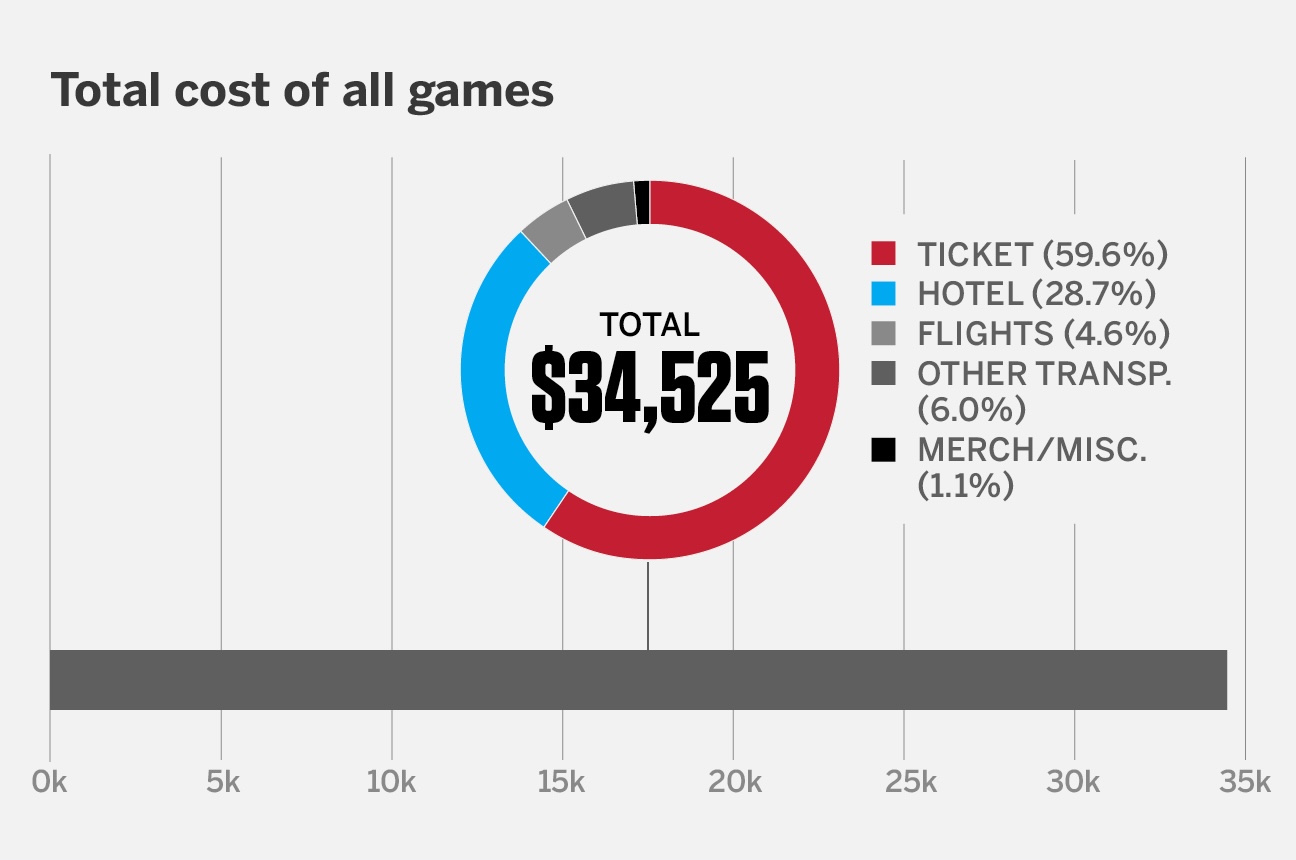
Altogether, the 2026 World Cup is set to be the most expensive edition yet. From tickets and hotels to parking and kits, just about everything is outpacing inflation, and there’s no sign of the price hikes slowing down. Put alongside other major expenditures, it’s clear that experiencing the World Cup live in any capacity would deal a significant dent to the average American’s budget.
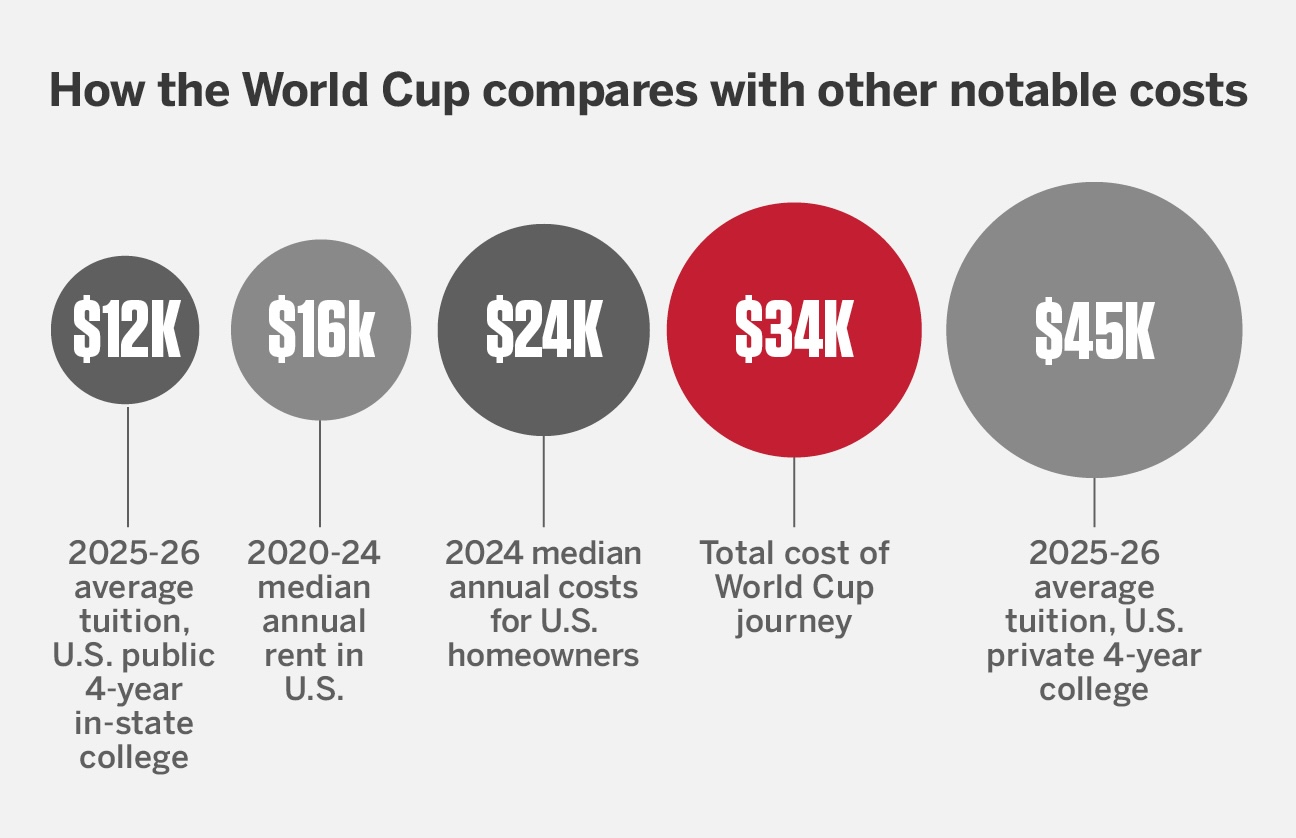
Could the U.S. make a shocking run to the World Cup final? Nothing’s impossible. But if it does happen, it won’t be cheap.





Leave a Reply