

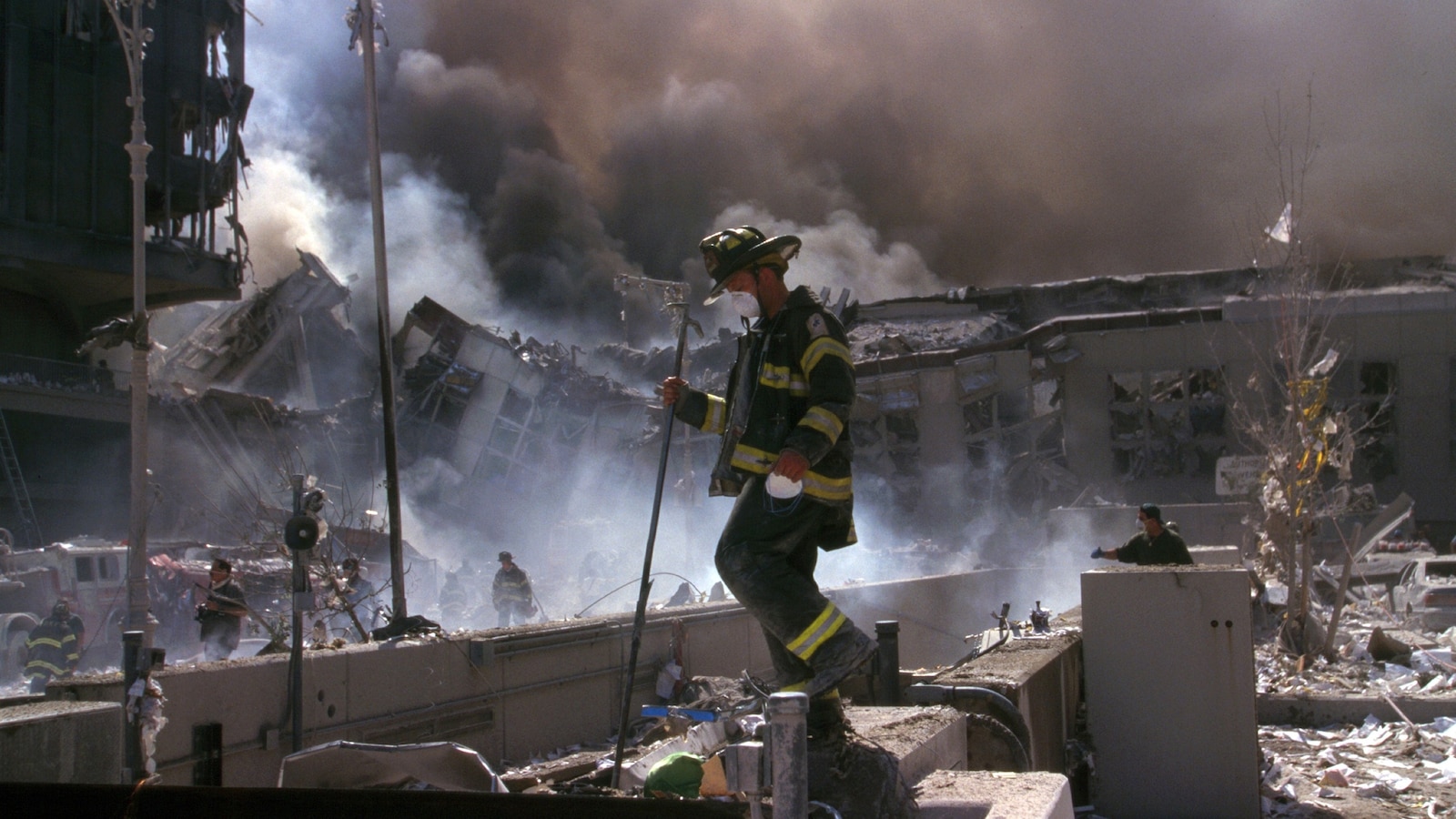
A year after staffing cuts, leadership disruptions and communication restrictions slowed the World Trade Center Health Program, decisions on whether to add new conditions remain unresolved, with no clear timeline, advocates told ABC News.
The program serves roughly 140,000 responders and survivors with cancers, respiratory illness, and other conditions linked to 9/11 exposure. It is currently staffed well below capacity with about 83 employees, down from 93 a year ago and far short of the 120 positions authorized by the federal Office of Management and Budget, according to Ben Chevat, executive director of 9/11 Health Watch.
Some decisions on whether to certify new conditions are years overdue, leaving patients unable to get full coverage until their illnesses are officially tied to 9/11 exposure, Chevat said.
That has left people like retired Nassau County police officer Allison Beyerlein in limbo.

In this Sept. 18, 2001, file photo obtained from FEMA, hundreds of firefighters and rescue workers stand amid the piles of twisted steel and rubble of the collapsed World Trade Center in New York.
Michael Rieger/FEMA via AFP via Getty Images, FILE
Beyerlein, who spent weeks helping to clean up Ground Zero, told ABC News she still does not know whether the program will certify her rare blood disorder, which has been linked to benzene exposure, a toxic chemical that was present at high levels at the site.
“Even if it’s considered, the process could still take years,” she said. “Whatever happened to ‘Never Forget’?”
Some of the current slowdown traces back to a period of disruption that began almost exactly one year ago, advocates claimed.
On April 1, 2025, Dr. John Howard, the program’s longtime administrator, was removed as part of the “reduction in force” effort within Health Human Services, setting off weeks of confusion about who had the authority to run the program, ABC News reported.
Dr. Howard was eventually reinstated, but his tenure, which is up for renewal later this year, remains uncertain, advocates said.
Chevat told ABC News the lack of clarity surrounding the program has been striking.
“This is a program where we used to have regular, consistent communication,” he said. “Now we’re barely hearing from them, and that makes it very difficult to understand what’s happening or when anything will change.”

Flowers stand on the National September 11 Memorial ahead of the 22nd anniversary of the 9/11 attacks, Sept. 7, 2023, in New York City.
Gary Hershorn/ABC News
Meanwhile, a key decision on whether to expand coverage to include autoimmune, cardiac, and cognitive conditions, already more than two years overdue, was expected in March and remains pending.
The program’s annual research funding cycle, which typically begins in March and distributes about $20 million each year, also has yet to restart. Officials had said it would launch in February, but that timeline has come and gone, advocates said.
“We’re still asking the same questions we were asking months ago and not getting answers,” Chevat said. “That’s what’s most concerning — there’s no clear direction on how or when this gets fixed.”
This has become one of the rare issues drawing bipartisan frustration in Washington.
A letter penned by Rep. Nick LaLota, R-N.Y., and backed by seven GOP lawmakers raising concerns about staffing shortages and delays in care prompted a recent closed-door briefing with officials from the U.S. Department of Health and Human Services (HHS).
Democrats have also pressed for answers, sending their own letters to HHS Secretary Robert F. Kennedy Jr. and requesting briefings from the agency.
Although LaLota has said he is cautiously optimistic about moving the program forward, Rep. Dan Goldman, D-N.Y., said he has gotten no clear answers from the administration.
“The WTCHP has been heavily mismanaged under Secretary Kennedy, and any action that further reduces staffing at the WTCHP and risks making wait times even longer is unacceptable,” Goldman told ABC News. “Our 9/11 heroes and families deserve better than this.”
In a statement, Andrew Nixon, a spokesperson for HHS, responded that decisions about pending petitions to add conditions to the list of World Trade Center-related health conditions rest with the World Trade Center Health Program administrator, not the secretary of Health and Human Services.
“Work is currently underway to advance the pending petitions, and ensure these important decisions are considered without further delay,” Nixon told ABC News.






Leave a Reply