


The CDC was expected last month to publish a study showing that Covid vaccines reduced the likelihood of severe illness, but the agency’s acting director, Dr. Jay Bhattacharya, delayed its release due to concerns about the methodology.
Subscribe to read this story ad-free
Get unlimited access to ad-free articles and exclusive content.

The study was scheduled to come out in the Centers for Disease Control and Prevention’s flagship scientific publication, the Morbidity and Mortality Weekly Report (MMWR). But Andrew Nixon, a spokesperson for the Department of Health and Human Services, said in an email that Bhattacharya “expressed concerns about the observational method used in this study to calculate vaccine effectiveness.”
“It’s routine for CDC leadership to review and flag concerns about MMWR papers, especially relating to their methodology, leading up to planned publication,” Nixon said. “Dr. Bhattacharya wants to make sure that the paper uses the most appropriate methodology for such a study.”
Top health officials in the Trump administration have criticized the way that vaccine research is typically conducted, calling into question methods that have been used for decades and are widely accepted among scientists. Many public health experts see this as part of a broader effort to sow doubt in vaccine safety and make vaccines less available to the public.
Although the Trump administration has pledged to restore what it calls “gold-standard science” to federal health agencies, some experts say the aim is to invalidate studies that don’t align with the administration’s views on vaccines. Health Secretary Robert F. Kennedy Jr., who oversees federal health agencies including the CDC, has a long history of anti-vaccine activism.
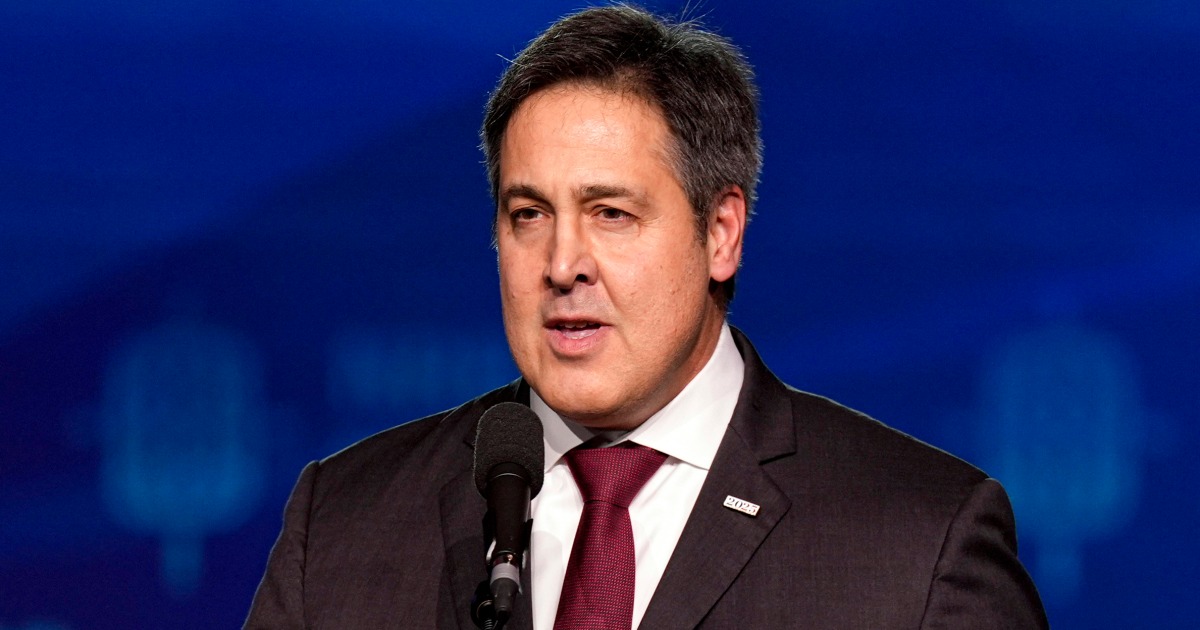
Bhattacharya, a political appointee who was tapped to run the CDC in February until Trump nominates a permanent director, did not respond to a request for comment.
A preliminary summary of the study’s results viewed by NBC News suggested that the 2025-26 Covid vaccine formulation reduced the likelihood of severe illness by about half among adults.
An epidemiologist in the CDC’s National Center for Immunization and Respiratory Diseases, who asked not to be named due to concerns about job security, said the paper was due to come out March 19.
The Washington Post was first to report the news of the delay.
The epidemiologist and two former CDC employees said it’s very unusual for a political appointee within the agency such as Bhattacharya to hold back an MMWR paper that had undergone scientific review and was approved by the publication’s editors.
Publication of the MMWR journal has been paused under Trump before, but it’s much rarer for one paper to get pulled. The CDC held the release of some MMWR papers in January 2025, when the Trump administration imposed a temporary communication freeze. The publication was again paused in the fall due to the government shutdown and layoffs of MMWR staff, which were later reversed.
“I’m not saying that they haven’t stopped other publications or forced changes to them, but to wholesale stop this report from coming out, given that it is such a well-established platform and such a well-established methodology, does strike me as a new level of political interference into CDC’s scientific process,” said Fiona Havers, a former medical epidemiologist at the CDC who oversaw the agency’s Covid hospitalization data.
00:24
Federal judge blocks RFK Jr.’s vaccine schedule changes
00:0000:00
Havers resigned from the CDC in protest in June after Kennedy fired the agency’s vaccine advisory committee and appointed a new group, many of whom are skeptical of vaccines. (A judge has since ruled that most of Kennedy’s selections were unqualified and put their appointments on hold.)
The Covid paper that Bhattacharya took issue with relied on a methodology known as a test-negative design, according to one former and one current CDC employee familiar with it. The researchers had compared the vaccination status of people who tested positive for Covid to the vaccination status of people who tested negative, showing that people who had received Covid shots were less likely to be hospitalized or visit the emergency department. Several of the journal’s editors and at least two of the paper’s authors could not be reached for comment.
Current and former CDC employees said that’s a common way to evaluate the effectiveness of vaccines. Many other MMWR papers, including a March 12 report on the effectiveness of seasonal flu shots and a December report on the effectiveness of Covid vaccines in children, have used the same methodology. An HHS official said Bhattacharya did not assume his acting director role in time to vet the flu vaccine paper but would have raised the same concern.
Other methodologies are either too expensive or wouldn’t produce timely results, current and former CDC scientists said. For example, a type of design known as a cohort study — which tracks vaccinated and unvaccinated people over time, then compares the rates of illness — is far costlier and typically requires a larger sample size and longer follow-up period.
Several top federal health officials have called for more randomized controlled trials — another type of study design, which for vaccine research would compare a group of vaccinated people to a group that got a placebo. But in the case of Covid shots, the method poses ethical concerns because such a trial would require withholding an approved vaccine from some participants. The first Covid vaccines were evaluated in randomized controlled trials, and the resulting data led to their approval by the Food and Drug Administration.
“You can’t do randomized controlled trials every year once a vaccine is licensed and proven to be effective,” Havers said.
The CDC epidemiologist said agency employees gave a presentation in late March, at Bhattacharya’s request, explaining the test-negative design and why other methodologies weren’t as efficient. But there has been no resolution yet as to when, or if, the study will be published by the agency, the employee said.
If the paper does not wind up published in MMWR, it’s possible its authors could still submit it for publication in an independent medical journal.
Nixon said the CDC “engages in scientific discourse on how best to measure vaccine effectiveness across all CDC publications,” and that “taking time to ensure analyses are methodologically sound and clearly communicated is always preferable to risking error.”
He added that the agency “remains committed to timely publication and to transparency about the data and methods that underpin its conclusions.”









Leave a Reply