

For 25 years, the Roadless Area Conservation Rule, commonly called the “Roadless Rule”, established broad prohibitions on road construction and timber harvesting on nearly 45 million acres of National Forest System lands.
However, the Trump administration announced this week that it is moving ahead with plans to rescind the 2001 rule that blocked road construction, logging and other development on national forest lands, saying the “one-size-fits-all restriction” has frustrated land managers and served as a barrier to reducing wildfire risk across the nation’s national forests.
“Our forests can’t afford another decade of inaction. Across the country, we’ve watched preventable conditions – overgrown stands, insect outbreaks and disease – turn healthy landscapes into tinderboxes,” said Agriculture Secretary Brooke Rollins in a statement. “For too long, outdated restrictions have kept tens of millions of forested acres off-limits to the very treatments that improve forest health and reduce wildfire risk to our communities.”
“The Roadless Rule prohibits timber harvesting and new road construction on some 45 million acres of federal lands, including in vast areas of the Tongass National Forest in Alaska. If the rule is repealed as proposed, those prohibitions will go away. Subjecting these special places to new roads and commercial forestry would be a loss for the American people, and another blow by this administration to the global climate,” said Michael Burger, Executive Director at Columbia’s Sabin Center for Climate Change Law.
The USDA, which oversees the U.S. Forest Service, filed the proposed rule and corresponding draft environmental impact statement in the Federal Register on Tuesday.
“Active forest management is not an option. It’s essential,” said Forest Service Chief Tom Schultz in a statement. “More than 40% of inventoried roadless areas, primarily in the West, have high or very high wildfire hazard potential. And only 5% of those areas have received hazardous fuels reduction treatments since 2014.”
Officials said the repeal would shift more decision-making to local forest managers “who know the land best” and could consider local conditions when making management decisions. The change itself would not authorize road construction or logging projects.
Opponents warn of significant environmental impacts
Environmental groups quickly criticized the proposal, citing concerns about the potential impacts on forests, wildlife and water resources.
“The Roadless Area Conservation Rule is the only thing preventing much of our wildest remaining national forests from industrial development,” said Alex Craven, Sierra Club Forest Campaign manager, in a statement. “These forests offer critical habitat for wildlife; provide clean, fresh air and water for millions; and contain vast swaths of the last remaining old-growth forests in the country.”
Opponents of the repeal also highlight the broader role these forests play, saying the roadless areas are an important part of local communities and economies.

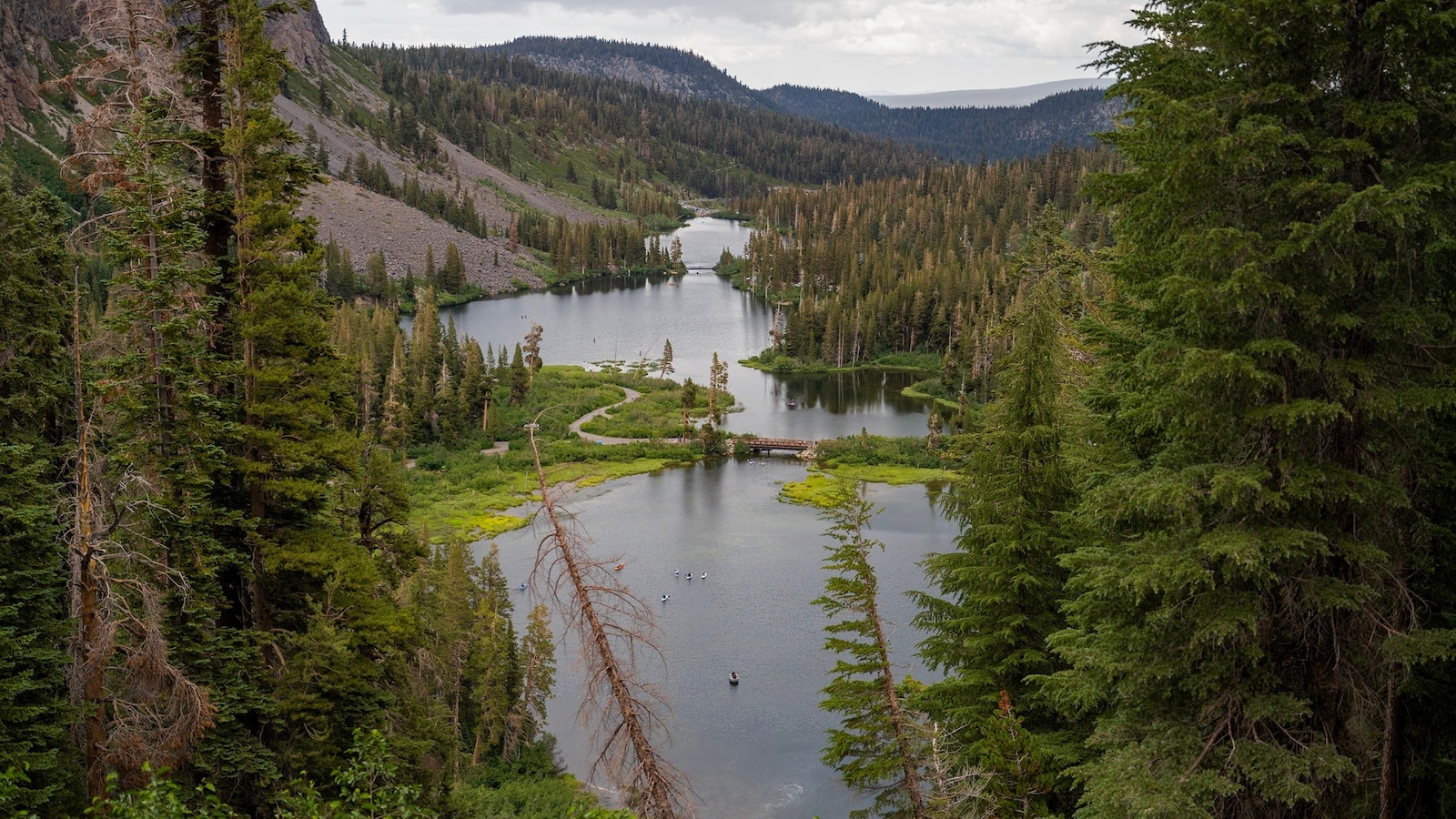
As you gaze upon the breathtaking view of George Lake in Mammoth Lakes, California, you find yourself immersed in a scene of unparalleled natural beauty. The lake is nestled within the majestic Eastern Sierra region, surrounded by rugged mountains that reflect on the crystal-clear waters.
Getty Images
“Roadless forests provide some of the nation’s most intact habitat, help maintain clean and reliable water supplies, and include places of deep cultural importance to Indigenous communities,” said David Dreher, senior manager for public lands policy at the National Wildlife Federation. “These landscapes also sustain hunting, fishing, and other outdoor recreation that contributes to local economies.”
New analysis recommends strengthening the regulations
A new policy analysis by ecologists and forest management experts examined the potential local and large-scale impacts of repealing the Roadless Rule. The analysis, published in the journal Biological Conservation, concluded that the justifications for rescinding the Roadless Rule are “will degrade these forest ecosystem functions, increase fire risk, and is grossly uneconomic.”
“The proposed rescission of the Roadless Area Conservation Rule endangers irreplaceable intact forest landscapes in the US. These areas are part of a global network of intact forests vital to regional and planetary health,” the authors wrote.
Rather than weakening the rule, the authors recommended strengthening it by passing the Roadless Area Conservation Act, which would turn the agency regulations into federal law.
Supporters argue for local control
Supporters of the decision say that the USDA lacked legal authority to impose the Roadless Rule and that the rule has made it more difficult for rural communities to pursue infrastructure and energy projects.
Inside Passage Electric Cooperative (IPEC), a nonprofit, consumer-owned electric utility serving over 1,300 members in rural Southeast Alaska, says the rule has made it more difficult to pursue lower-cost energy alternatives.
The Pacific Legal Foundation, which represents IPEC, has argued that the rule’s restrictions limit the ability for certain communities to pursue cost-saving energy initiatives which would also help the environment.
“The Roadless Rule has restricted IPEC’s ability to pursue promising hydroelectric and geothermal projects that could reduce its dependence on high-cost diesel fuel for electricity,” Pacific Legal Foundation Senior Attorney Luke Wake said in a statement.
“IPEC’s members currently face some of the highest utility rates in the nation, and they should be free to pursue responsible energy projects that could make electricity more affordable and reduce their reliance on expensive diesel generation,” Wake added.
Republican governors in several Western states affected by the proposed change have also voiced support for the repeal, arguing that land-management decisions should be made by states and local governments that are closer to the impacted communities and forests.
The proposed rule would not apply to national forests in Colorado and Idaho, where separate state-specific roadless regulations are in place. Supporters point to those states as potential models for how the land can be effectively managed outside of a national framework.
“Utahns love our forests, and loving these places means taking care of them,” Utah Gov. Spencer J. Cox said in a statement. “For 25 years, the Roadless Rule has tied the hands of local land managers with a one-size-fits-all federal policy. Rescinding it restores the flexibility to make thoughtful decisions based on the needs of each forest and each community. We can protect the landscapes we treasure by actively managing them for the next generation.”
Wyoming Gov. Mark Gordon also praised the proposed change, saying it would promote local decision-making.
“This step reflects a commitment to locally-driven, durable planning and empowering those who know these lands the best,” Gordon said in a statement.
What happens next?
The public will have an opportunity to comment on the proposed rule and draft environmental statement before it becomes final. The 30-day comment period ends at midnight on Sept. 21.
“Litigation will most likely follow upon publication of a final rule – though it is possible lawsuits may come sooner to challenge procedural aspects of the process, such as the extraordinarily short comment period,” said Burger.









Leave a Reply