

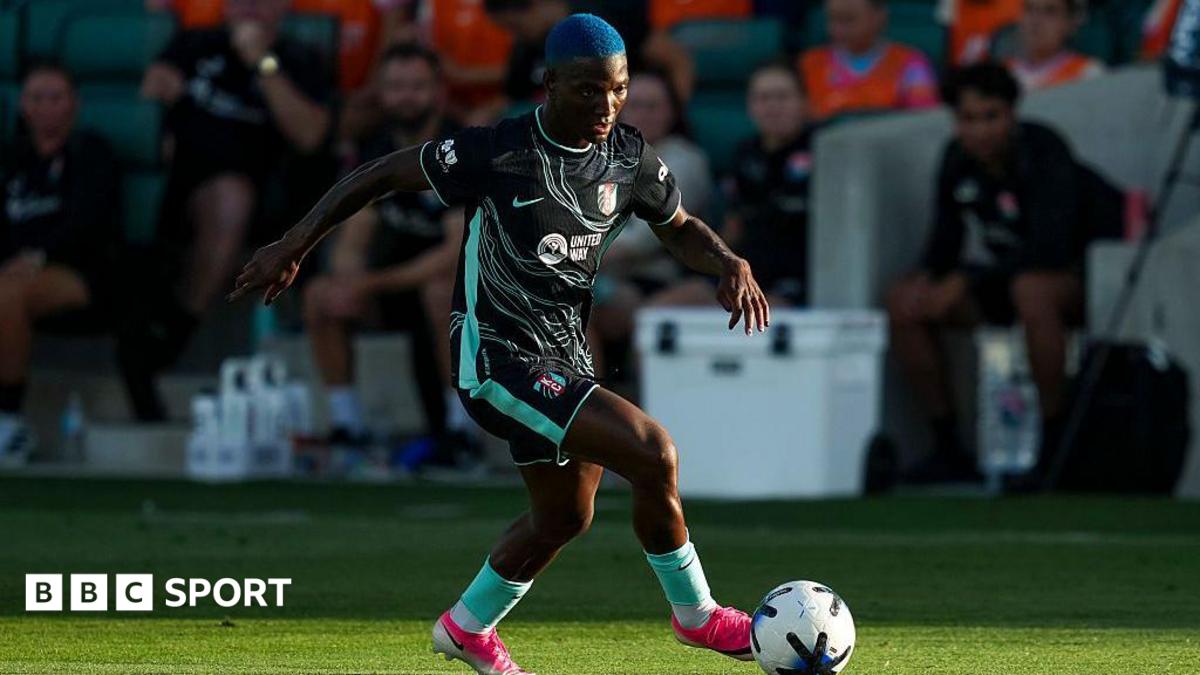
A major barrier for WSL clubs hoping to sign African talent is the Governing Body Endorsement (GBE) criteria set out in the league’s registration rules.
Foreign players must earn a minimum number of points in five categories to be eligible for a GBE visa.
The number of caps they have for their national team, appearances in the Women’s Champions League and the ranking of their former clubs play a part.
WSL sides also have to compete with the wages and transfer fees being offered by NWSL clubs, who are targeting the best African footballers.
They have to use resources for scouting which, at the moment, is prioritised across Europe.
Another major issue is the lack of coverage given to the domestic game in Africa, as well as issues around Wafcon.
There was confusion in this edition when the Confederation of African Football (CAF) named Channel 4 as the UK broadcast partner, but no matches were shown live in the opening round as an agreement had not been formally reached.
The tournament had also been postponed just 12 days before it was set to kick off in Morocco, eventually taking place three months later.
Switzerland captain Lia Walti, who signed for Brighton this summer, told BBC Sport that, globally, coverage of women’s football has room for improvement.
“I think you have to bring the game to the people. You kind of have to force people to watch it. I felt that was how it maybe started in England,” she said.
“In a lot of other countries I think they have bad coverage. It’s not shown at all, or if it’s shown, from where they film the game [makes it look] really poor.
“It affects the way you watch a game. You don’t really see the speed, the tactics or anything and you don’t enjoy watching the game.”



Leave a Reply