

The Democratic National Committee’s Rules and Bylaws Committee voted on Friday to recommend South Carolina again be the first state to hold a presidential nominating contest in 2028.
The committee also recommended greenlighting New Hampshire, Michigan and Nevada to go in the early period of the primaries and caucuses.
Former DNC chair Donna Brazile, an ABC News contributor, made a passionate argument to have South Carolina go first, saying it will show that the party will not retreat from supporting Black voters.
“We’re not a party that is afraid. We’re not a party of fear. We’re the party that will give every American citizen, every eligible voter a seat at our table, and again, that starts in the South,” Brazile said.
The 2028 order will still need to be approved by the full Democratic National Committee at its meeting in Austin, Texas next month.

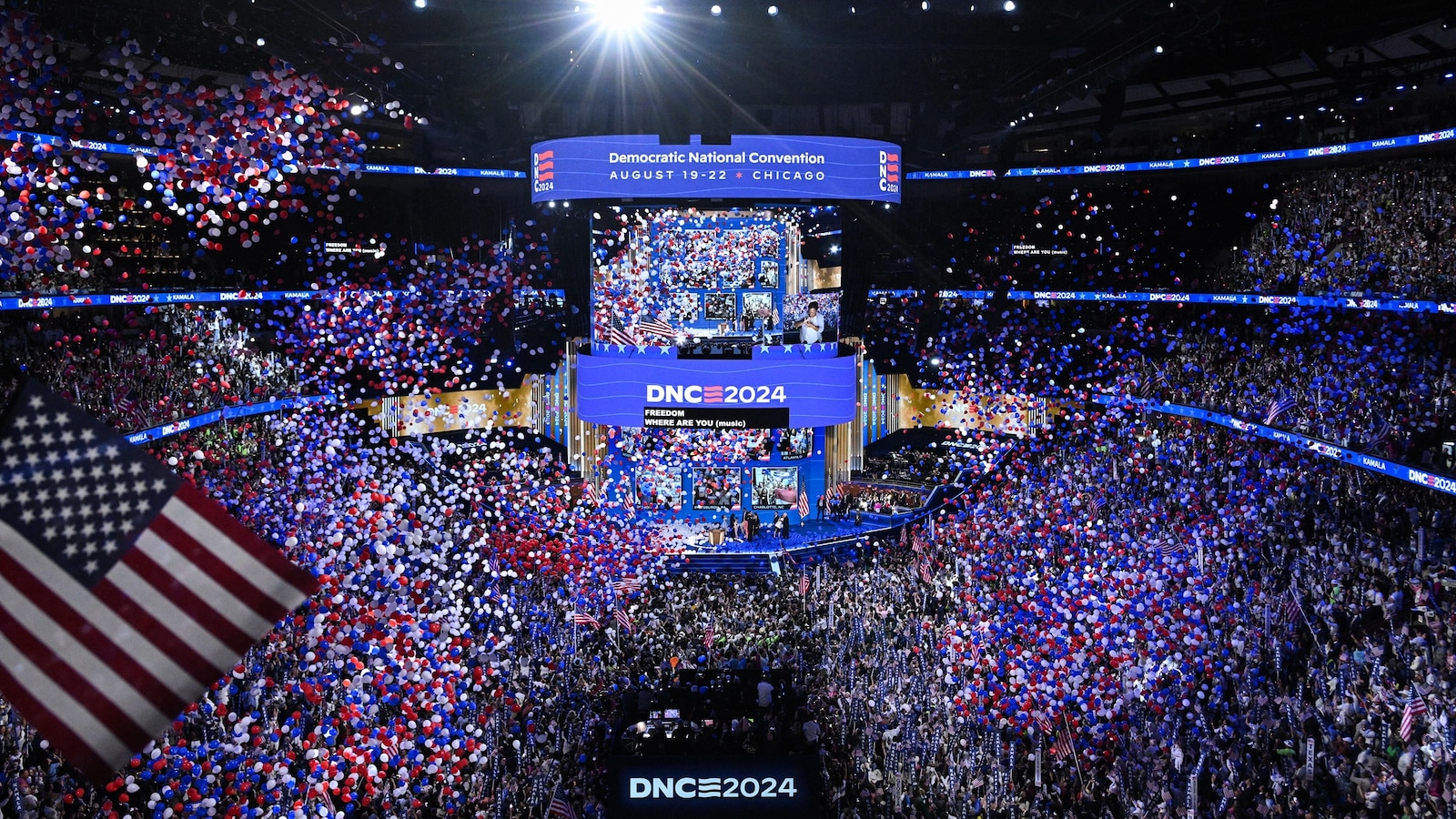
Balloons fall as US Vice President and Democratic presidential candidate Kamala Harris concludes her remarks at the end of the fourth and last day of the Democratic National Convention (DNC) at the United Center in Chicago, Aug. 22, 2024.
Mandel Ngan/AFP via Getty Images
It’s a decision that will determine which voters get the earliest opportunities to shape the race and one that will test whether candidates are able to rebuild the coalitions that Democrats struggled to reach during the 2024 election.
The order of the primaries can also help spur or stymie presidential candidates as they try to prove they’re the right choice to lead the ticket, as results and enthusiasm in the early states help indicate which candidates have momentum and are striking a chord with voters.
Debates surrounding what states should go first also tie into ongoing debates within the party over racial representation, reaching working-class voters and other groups the Democrats did not feel they reached successfully in 2024, and how to remain competitive with a Republican Party that is flush with cash.

The Democratic National Committee (DNC) headquarters, Nov. 16, 2023, in Washington, D.C.
Kevin Dietsch/Getty Images
The calendar could spark further party intrigue down the line if some state parties don’t follow the DNC’s designated order.
The DNC’s Rules and Bylaws Committee approved last month potential penalties for states that hold contests outside of the order. State parties, however, can alleviate penalties if they demonstrate they tried to stay in compliance and were dealing with state laws or other challenges.
Presidential candidates themselves could be barred from participating in DNC-approved debates or getting any benefit from the votes in those states. That proposal will also need to be fully signed off on at the August meeting.
Republicans have indicated they plan to hew closely to the calendar they followed in 2024, where Iowa and New Hampshire went first in line.
ABC News’ Juhi Doshi contributed to this report.








Leave a Reply