

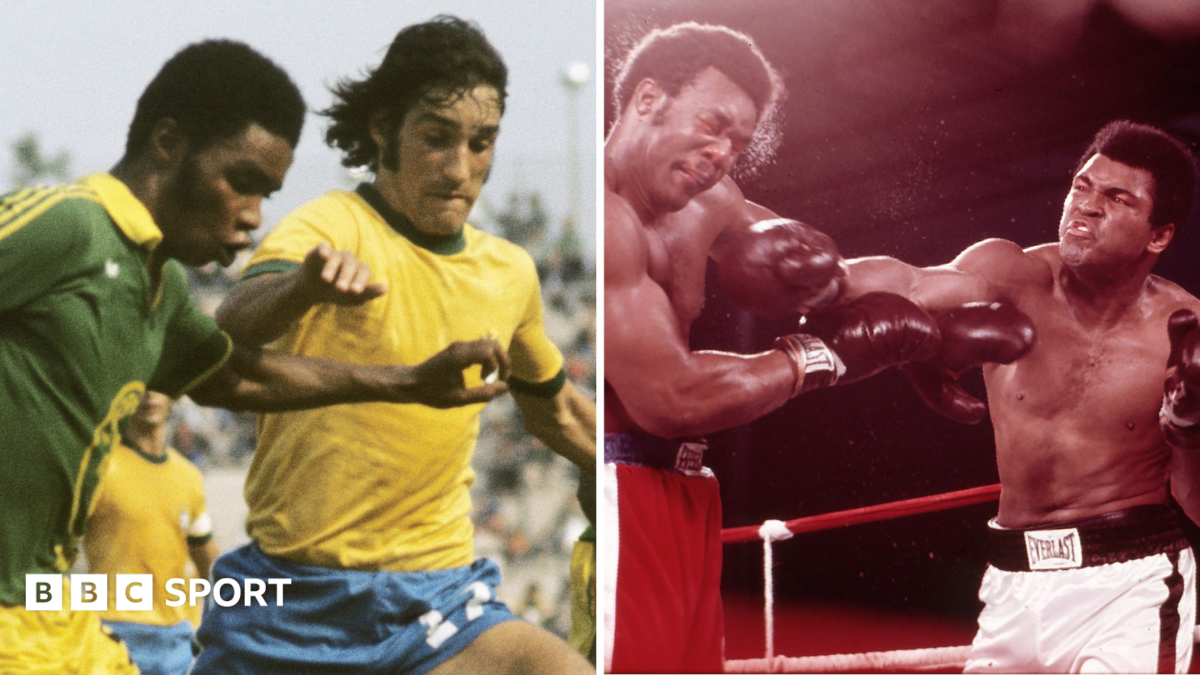
The current squad have managed to achieve things the Leopards of 1974 would have targeted – a first World Cup goal and point came against Portugal in their opening game, then a first victory against Uzbekistan to reach the knockout stage.
DR Congo still endures its struggles today, with conflict raging in the east of the country and a recent outbreak of the Ebola virus which affected preparations for the World Cup.
“When we were last here, our jerseys looked different, the country was known as Zaire, it was a whole different time,” supporter Tanya Maria told BBC Sport Africa in the United States.
“The World Cup has given people an investment into our country.
“And I think when people care about a country, when they care about the people that live there. That’s when change can happen.”
There is hope that new leadership of Fecofa, elected in May, can build on World Cup qualification and revive the domestic league.
Conditions are much better for the players, too.
“We’re very privileged to have everything that we need,” centre-back Axel Tuanzebe told the BBC just before scoring the crucial goal which booked the team’s World Cup spot via an intercontinental play-off against Jamaica in March.
“We’re not longing for anything and it enables us to go and perform the best we can.”
The squad know they are playing for a bigger cause than mere success on the football field.
“It’s not easy in our country,” striker Yoane Wissa said after the victory over Uzbekistan.
“There’s a war in East Congo. Every day, every time we wear this shirt, we think about them.
“Because we want peace and for them, I just say ‘thank you’. Thank you because we came from far. We came from nothing to be here.
“Now we write our story.”
For Kabala, Wednesday’s last-32 tie is “almost” bigger than the Rumble in the Jungle.
The Leopards could certainly land a huge blow to England’s ambitions of claiming a second World Cup title.
Compiled by BBC Sport Africa’s Rob Stevens from interviews by Peter Musembi, Lucy Provan, Ian Williams, Alassane Dia and Celestine Karoney.

Leave a Reply