

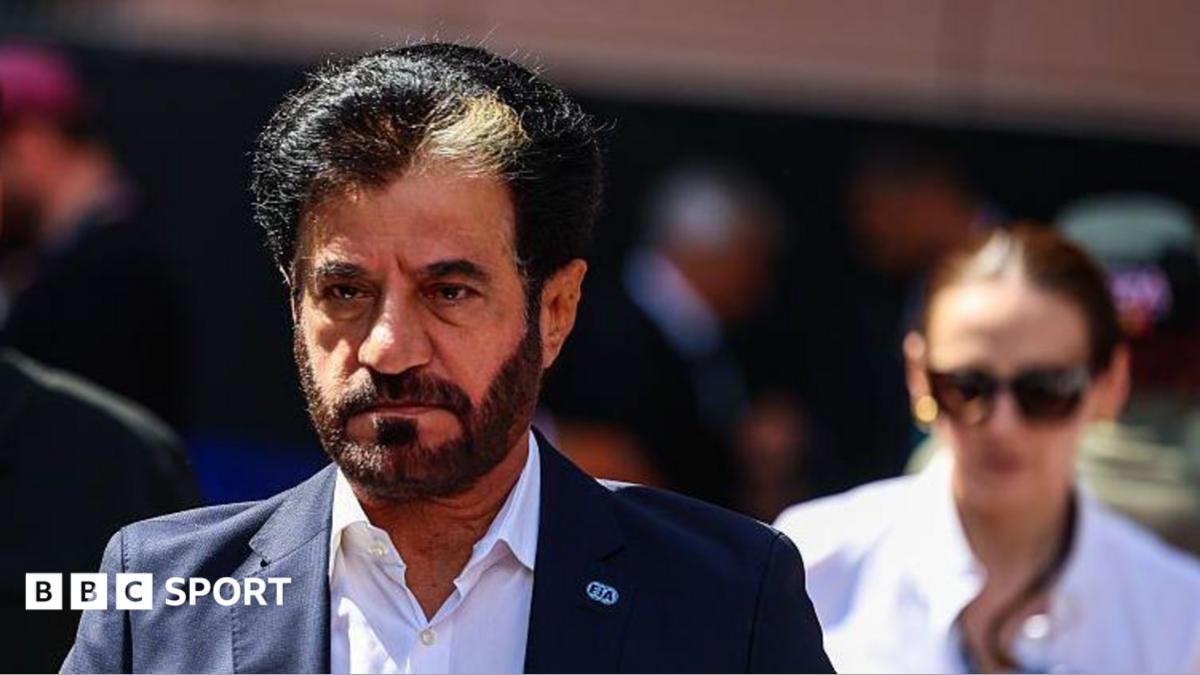
The FIA has previously justified the move to end term limits by saying it was to “establish a consistent approach to tenure across all FIA bodies, similar to what currently exists for the world councils and the senate”.
Other FIA roles that formerly had term limits included the president of the anti-doping committee, and the head of the F1 cost-cap committee.
When the plan to remove term limits was first revealed by BBC Sport, the FIA did not provide a specific answer to a question as to why it was decided to abolish term limits for all posts, rather than instate them for those that did not currently have them.
However, a spokesperson pointed to the NFL in the US, saying Roger Goodell had been commissioner since 2006 and had “transformed the sport into a global brand and it has an outstanding governance record”.
In 2024, the then president of the International Olympic Committee, Thomas Bach, rejected the chance to stay on longer than 12 years – a move that would have required a change of the IOC’s statutes – saying “our organisation is best served with a change in leadership; new times are calling for new leaders”.
The current three-term limit was put in place by Ben Sulayem’s predecessor Jean Todt. The Frenchman replaced Max Mosley, who served as FIA president from 1993 until agreeing not to stand again following a dispute with F1 teams in 2009.
Other proposed changes have also passed, including making stricter the rules for presidential candidates.
A requirement for candidates to “demonstrate sufficient experience within an FIA member or an FIA body” has been added.
And the time by which prospective presidential candidates have to submit the list detailing their support team of vice-presidents has more than doubled from 49 days to 100 days before the date of the election.
Both would make it more difficult for someone to challenge Ben Sulayem at a subsequent election.
Robert Reid, who resigned as FIA vice-president for sport last year citing a “standards breakdown”, this week said the moves “changed how authority is challenged, renewed and handed on”.
Writing in a post on LinkedIn,, external the Scot said: “Term limits are not a perfect safeguard. They do not guarantee good governance. They do not prevent poor judgement. But they do create a point at which renewal must happen.
“They also remind an institution that office is temporary, that legitimacy must be refreshed, and that no individual should become structurally indispensable.”
On the stricter rules governing elections, Reid added: “Of course a presidential candidate should understand the FIA. Of course credibility, seriousness and relevant experience matter.
“But the wording of eligibility rules matters. If the standard is not clearly defined, power shifts to those applying it. A requirement for experience can become a judgement of acceptability. A safeguard against unserious candidates can become a barrier against inconvenient ones.
“That is the concern here. The judgement of what is sufficient remains within the FIA’s own structures. In an organisation where recent election processes have already been challenged, that is not a small drafting point. It is the point at which process and power meet.”







Leave a Reply