

The date: 2 May 2009. The place: Santiago Bernabeu Stadium, Madrid. La Liga game.
Guardiola made a decision. He pulled Messi off the right wing and placed him at the tip of the forward formation – but without the job of a traditional striker.
Samuel Eto’o went right, Thierry Henry went left, and Messi was told: drop, receive, decide. By full-time it was 6-2. The false nine was reborn.
It was nothing new. Gusztav Sebes’ Hungary had dismantled England in their own backyard back in 1953, when in their 6–3 win over England he repeatedly dropped Nandor Hidegkuti into midfield, pulling centre‑backs out of shape and creating space for Ferenc Puskas and Sandor Kocsis.
Johann Cruyff, first under Rinus Michels, played a roaming forward role within the Total Football philosophy for the Netherlands.
At first, Messi became a problem without a solution. When he dropped between the lines, Madrid’s centre-backs had to decide: follow him and leave a hole, or stay and give him lots of space.
Neither option worked. Messi walked through the gap unchallenged. With Xavi, Andres Iniesta and Yaya Toure behind him and Henry and Eto’o stretching the defence wide, every decision the opposition made was the wrong one.
Guardiola repeated the experiment weeks later in the Champions League final against Manchester United. Messi scored with his head 20 minutes from time.
Between 2011 and 2013, Messi scored 96 goals over 69 La Liga matches.
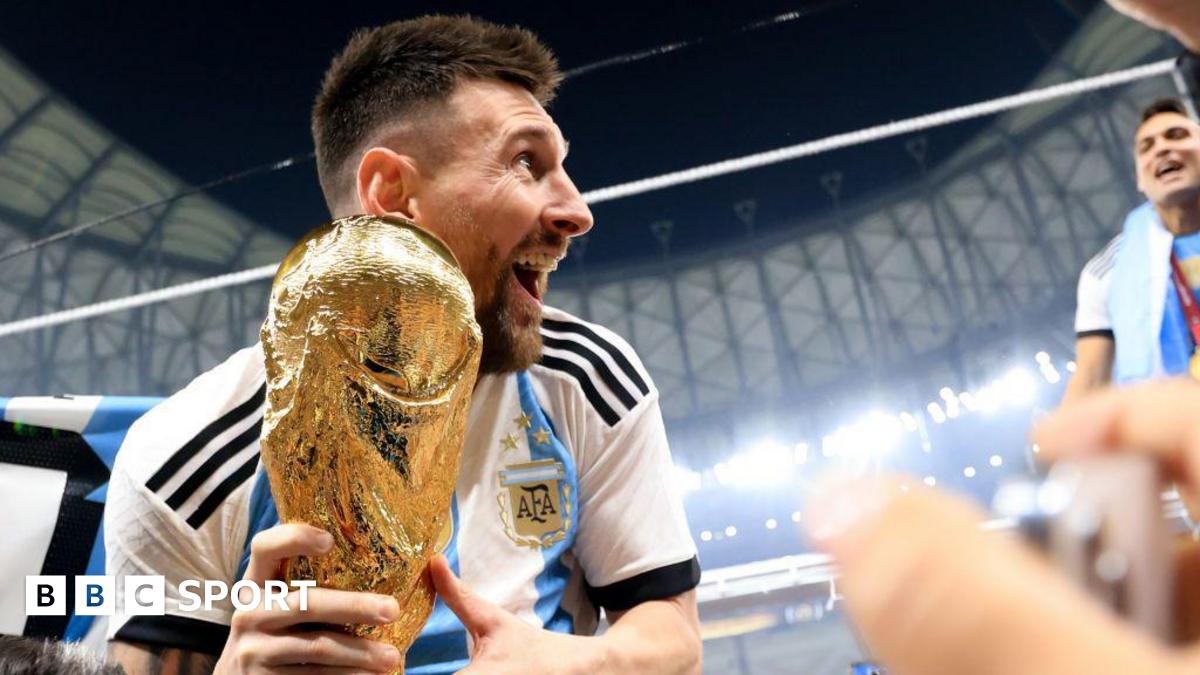
The Ballon d’Or that had been handed to him in 2009 became a near-permanent fixture – he won it in 2010, 2011, 2012, 2015 and 2019 as well, and would eventually accumulate eight. The first arrived when he was 22. The most recent when he was 36.
“I didn’t used to pay much attention to tactics,” Messi told journalist Juan Pablo Varsky in 2024.
“But with Guardiola I learned an enormous amount. I started to understand spaces, ball retention, how the game really works.”
Leave a Reply