

A contractor that administers the military’s healthcare benefits to more than 4 million people issued a broad apology to its beneficiaries this week for problems with its coverage.
Subscribe to read this story ad-free
Get unlimited access to ad-free articles and exclusive content.

In a publicly posted letter to all beneficiaries, TriWest Healthcare Alliance’s president and CEO David McIntyre Jr. wrote, “I want to personally take this opportunity to apologize to those of you who have experienced challenges with Other Health Insurance on our watch, and to assure you of my and my whole team’s commitment to your beneficiary experience.” McIntyre was referring to errors in beneficiaries’ patient portals that incorrectly stated they had other coverage, leading to denials.
TriWest Healthcare Alliance is one of the contractors that administers TRICARE, the military’s healthcare program for active service members, veterans and their families.
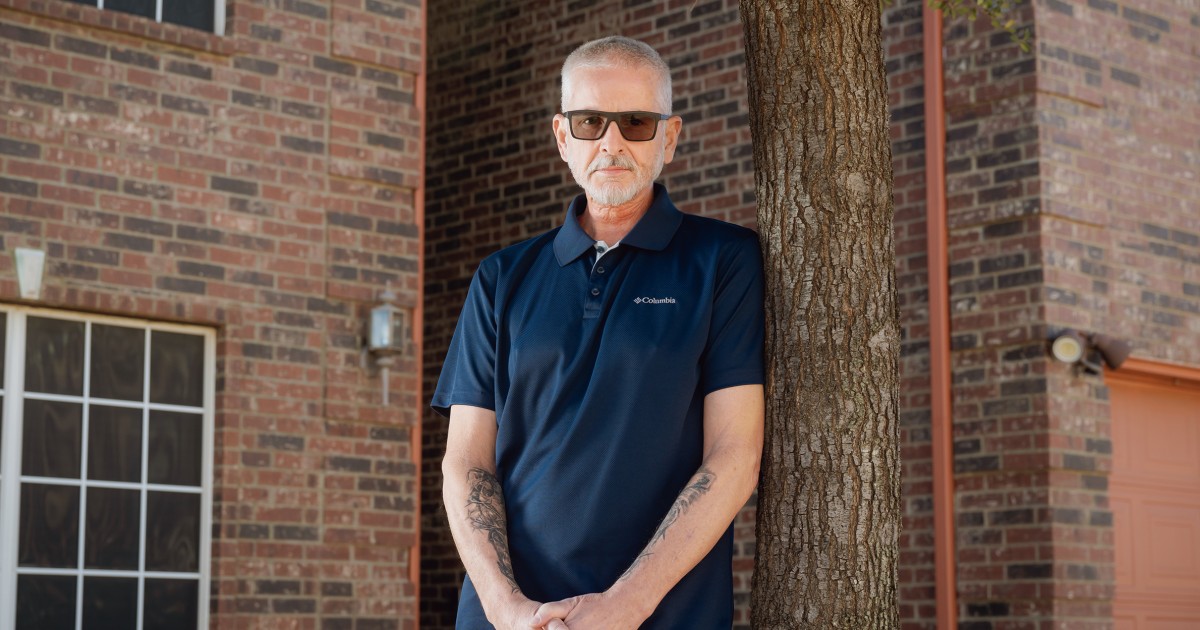
NBC News reported earlier this month on persistent challenges beneficiaries have faced since TRICARE transitioned its contract from Health Net Federal Services to TriWest in 2025. One retired service member, Guy Shoemaker, 64, of Fort Worth, Texas, said he had tens of thousands of dollars in previously approved claims overturned and money that had been paid to providers clawed back.
For more, watch “NBC Nightly News with Tom Llamas” tonight at 6:30 p.m. ET/5:30 p.m. CT.
Shoemaker, a retired Army sergeant first class and recruiter who spent a year in Afghanistan, was diagnosed with Stage 2 throat cancer in 2021. After chemotherapy and radiation, he needed regular therapy with a speech-language pathologist to ensure he can speak and safely swallow. When the denials started rolling in last year, he stopped going to his appointments, putting himself at risk of serious complications. Then, when he finally returned to those appointments in January, the speech-pathologist told him his health had deteriorated so much, due to the delays in care, that he should consider a feeding tube.
His insurance portal indicated the denials Shoemaker faced stemmed from an “Other Health Insurance,” or OHI, error. He didn’t have other health insurance, just a vision plan. For months, he tried to get the error fixed, to no avail.
It wasn’t until NBC News reached out to TriWest about his case that he was contacted by a customer service representative and TriWest began to correctly process his claims.
McIntyre’s apology letter directly addressed the OHI issue.
“I understand that some beneficiaries’ claims incorrectly reflected that they had OHI, which resulted in the claims initially being denied — as well as delay and frustration,” McIntyre wrote. “What’s more, the encounters for some with our customer service operation were not efficient or effective. This is not acceptable, and our team has been working diligently to fix this issue.”
Shoemaker said reading the letter gave him goosebumps. “What they’ve done is acknowledged the fact that they have an issue,” he said.
If you are dealing with bills that seem to be out of line or a denial of coverage, care or repairs, whether for health, home or auto, please email us at Costofdenial@nbcuni.com.
It’s unclear how many other TriWest beneficiaries have faced denials stemming from an OHI error. A spokesperson on Thursday said that a little over a year ago, the denial rate for OHI errors was 2.3%. McIntyre’s letter stated that it is now down to 1.3%. TriWest previously told NBC News that it processes more than 2 millions claims per month. “We are not going to rest until we are convinced that we have smoothed this process as much as we can,” McIntyre wrote.
NBC News spoke with 13 other TriWest beneficiaries about problems with their coverage. Their concerns do not only come from OHI errors. All of these beneficiaries said that TriWest representatives have been in touch with them since NBC News’ first story aired in early May and, in some of those cases, the representatives have been aggressively trying to get their coverage claims resolved, they said. But not all have been.
TRICARE is overseen by the Defense Health Agency, a part of the Defense Department. Its coverage is divided into two regions, East and West. The eastern region is covered by Humana Military, and beginning in 2025, TriWest took over the West region, replacing the previously contracted provider, Health Net.
NBC News previously reported that after TriWest was awarded the contract, the Defense Health Agency was repeatedly warned that the company wasn’t ready to take on the work, according to two sources with direct knowledge of the transition.
The Defense Health Agency said in an earlier statement to NBC News that it had conducted rigorous testing before transitioning to TriWest, but “the inability to perform testing on live operational systems contributed to some unforeseen challenges emerging after go-live.”
The Defense Health Agency did not immediately respond to a request for comment Thursday.










Leave a Reply