

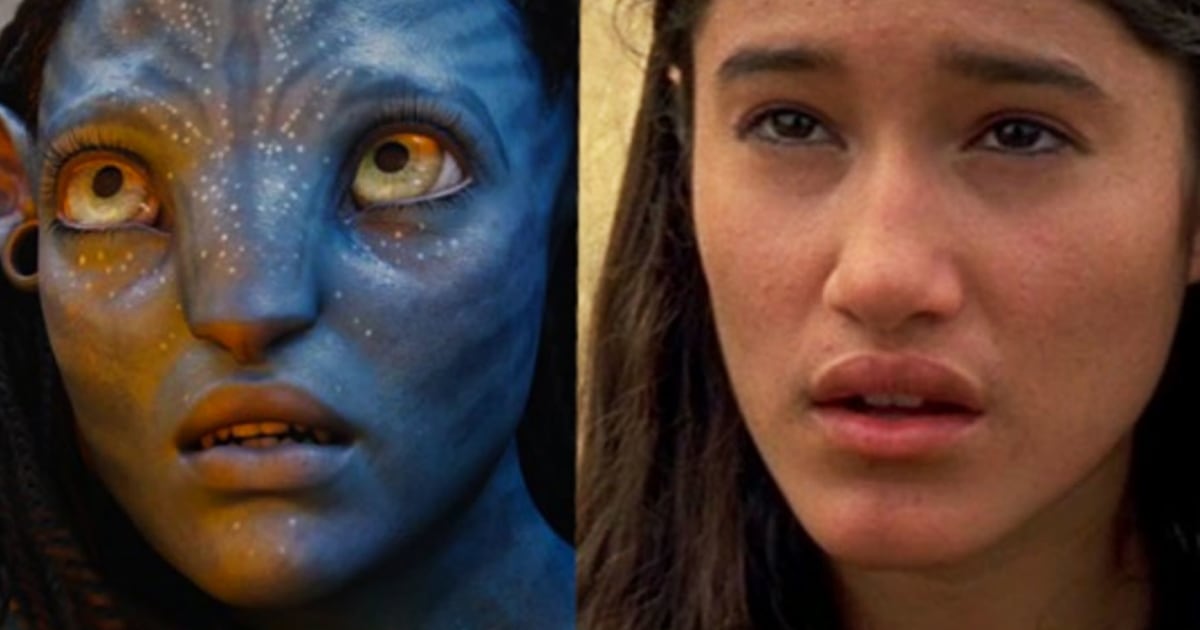
A new lawsuit filed against filmmaker James Cameron and The Walt Disney Company alleges that Cameron used the facial features of a then-14-year-old actress as the basis for one of the main characters in the “Avatar” films.
Subscribe to read this story ad-free
Get unlimited access to ad-free articles and exclusive content.

The suit, filed Tuesday by actress Q’orianka Kilcher, alleges that in 2005, when she was 14, Cameron “extracted her facial features” from a photograph of her portraying Pocahontas in film “The New World” and “directed his design team to use it as the foundation for the character of Neytiri,” a release about the suit said.
The complaint includes excerpts from interviews between Cameron and his production team that mention Kilcher by name and describe how her likeness was used as inspiration for the fictional character who was played onscreen by Zoe Saldaña.
“This case exposes how one of Hollywood’s most powerful filmmakers exploited a young Indigenous girl’s biometric identity and cultural heritage to create a record-breaking film franchise — without credit or compensation to her — through a series of deliberate, non-expressive commercial acts,” the suit reads. Kilcher is a Native Peruvian actress and activist.
Kilcher’s likeness was captured in production sketches, sculpted into maquettes, and laser-scanned into high-resolution digital models, then distributed across multiple visual effects vendors to render Neytiri’s final appearance — all according to the release. That image, derived from Kilcher’s face, went on to appear in the films, on movie posters, and on merchandise, without her knowledge or consent.

The suit further alleges that Cameron and his team concealed the truth about the inspiration behind the character’s image for years.
“The result was a hugely lucrative film franchise that presented itself as sympathetic to Indigenous struggles, all while silently exploiting a real Indigenous youth behind the scenes,” the suit says.
Cameron used real human inspiration to create the Na’vi humanoid race depicted in the “Avatar” film series — which has earned billions across three installments, the suit alleges. It states that in 2005, Cameron was struggling with the look of his characters, namely that of Neytiri, which looked “‘too alien’ to elicit empathy from audiences.”
The filmmaker then chose the image of Kilcher “as a source to form the basis of that humanoid design requirement as a facial anchor,” the suit says.
So when Kilcher’s image was placed in the “Los Angeles Times” as a part of promotion for “The New World,” Cameron “saw this photograph of the 14-year-old Q’orianka and realized he had found his muse,” the suit says, adding that Cameron himself has admitted he used that image as the foundation for his character.
Kilcher’s lips, chin, jawline and overall mouth shape were preserved in Neytiri’s final image, according to the lawsuit, which calls the use of her facial features “a literal transplant of a real teenager’s facial structure into a blockbuster movie character.”
Cameron and his team never sought permission from the girl, the suit alleges, nor did they compensate her for the use of her image.
Kilcher had no knowledge of the use of her face until meeting Cameron at an event in 2010, after “Avatar” had released. At the event, Cameron told Kilcher he had a gift for her at his office, the suit says — a framed, one off sketch of Neytiri drawn and signed by Cameron.
The gift included a handwritten note that read: “Your beauty was my early inspiration for Neytiri. Too bad you were shooting another movie. Next time.”
Still, the suit alleges that the “Avatar” team did not even attempt to engage Kilcher for a role in the series — even after her then-talent agent tried to get her in the door to read for the movie.
“When I received Cameron’s sketch, I believed it was a personal gesture, at most a loose inspiration tied to casting and my activism,” Kilcher said, according to the release.
She continued: “Millions of people opened their hearts to ‘Avatar’ because they believed in its message and I was one of them. I never imagined that someone I trusted would systematically use my face as part of an elaborate design process and integrate it into a production pipeline without my knowledge or consent. That crosses a major line. This act is deeply wrong.”
According to the lawsuit, Kilcher only learned that Cameron had so closely used her facial features late last year when a broadcast interview with Cameron started making rounds on social media. In the interview, Cameron is seen standing with the Neytiri sketch.
“The actual source for this was a photo in the LA Times, a young actress named Q’orianka Kilcher,” Cameron said in the interview, according to the lawsuit. “This is actually her…her lower face. She had a very interesting face.”
The suit also suggests that Cameron’s use of Kilcher’s face is in violation of a recently enacted deepfake pornography statute in California, because the movie used the likeness of a minor to create a character that was later depicted being intimate in a scene.
“It is deeply disturbing to learn that my face, as a 14-year-old girl, was taken and used without my knowledge or consent to help create a commercial asset that has generated enormous value for Disney and Cameron,” Kilcher said in the release.
Arnold P. Peter, Kilcher’s lead counsel, said Cameron’s tactics were “not inspiration, it was extraction.”
“He took the unique biometric facial features of a 14-year-old Indigenous girl, ran them through an industrial production process, and generated billions of dollars in profit without ever once asking her permission,” Peter said in the release. “That is not filmmaking. That is theft.”
According to the lawsuit, “This action does not seek to restrict or punish speech or artistic expression; it seeks to remedy the unlawful taking of Plaintiff’s property: her own face, used as a commercial production asset to generate billions of dollars in profit.”
Kilcher is seeking compensatory and punitive damages, disgorgement of profits attributable to the use of Kilcher’s likeness, injunctive relief, and corrective public disclosure.
Representatives for Cameron and The Walt Disney Company did not immediately respond to requests for comment on the suit.






Leave a Reply